
Bad Weather Email Templates


Why Bad Weather Emails Matter
When weather conditions deteriorate, people look to their organization for direction. They want to know if it is safe to travel, whether offices will open, if remote work is required or if services will be disrupted. A well-written message reduces uncertainty and prevents teams from making unsafe assumptions.
Clear communication supports three core priorities. It keeps people safe by providing accurate guidance. It helps maintain operational continuity by setting expectations early. And it protects the organization’s credibility by demonstrating preparedness and composure. When people receive a calm message during a stressful moment, they feel supported.
Bad weather can arrive suddenly. Prepared communication should not.
When to Use Bad Weather Email Templates
Bad weather can disrupt work quickly, and teams often need fast, reliable communication to stay safe and organized. Different pre-planned PR email templates help you share updates consistently, without scrambling to draft messages during stressful moments. They’re especially useful whenever conditions affect schedules, safety or access to the workplace.
Organizations typically use bad weather email templates when:
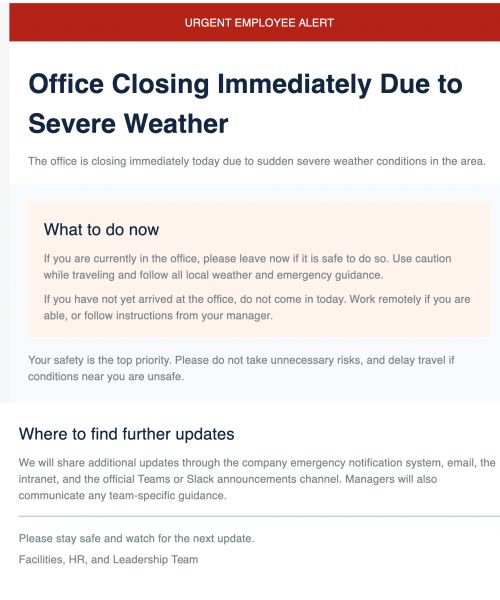
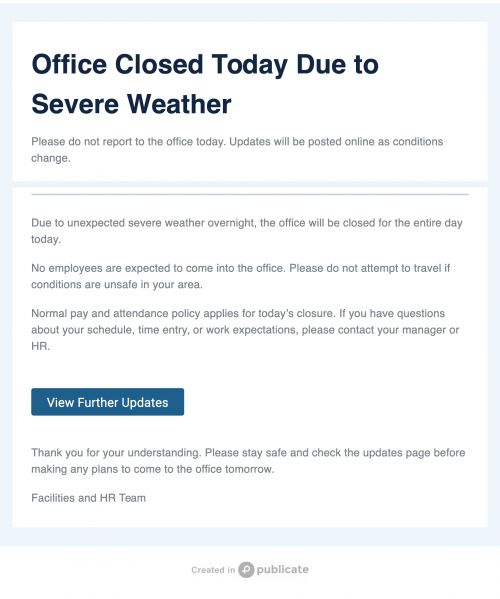
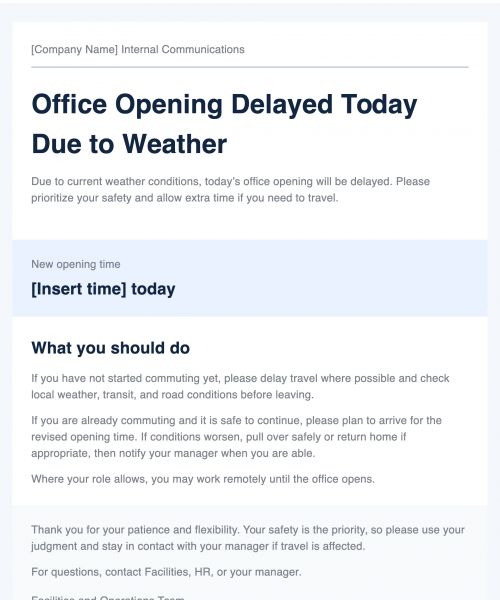
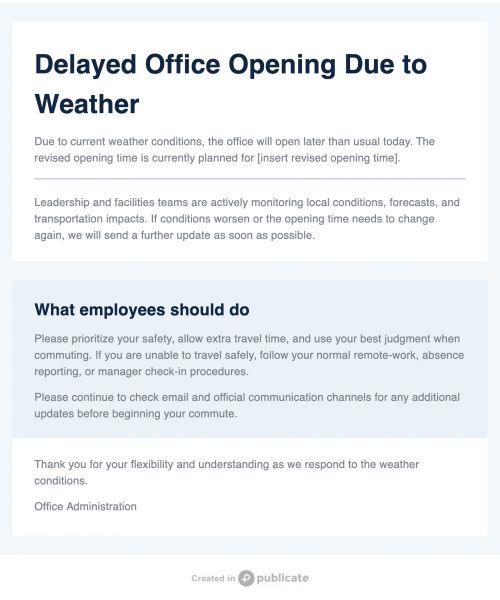
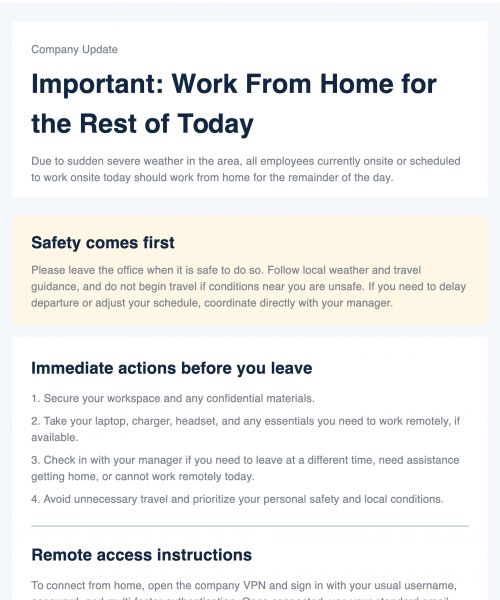
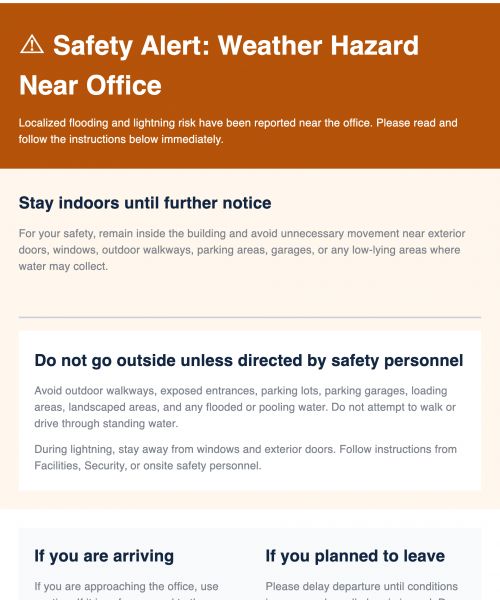
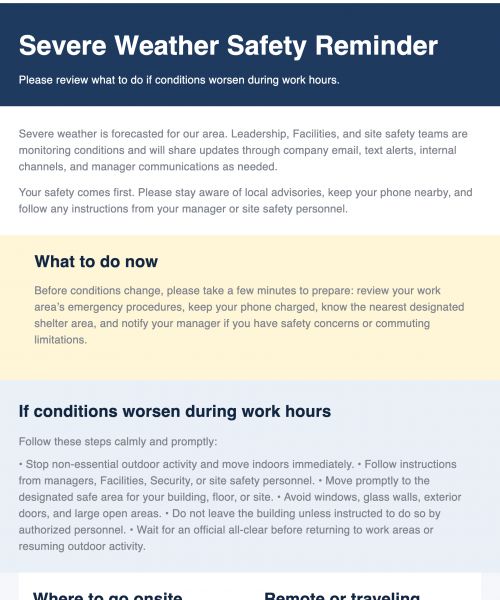
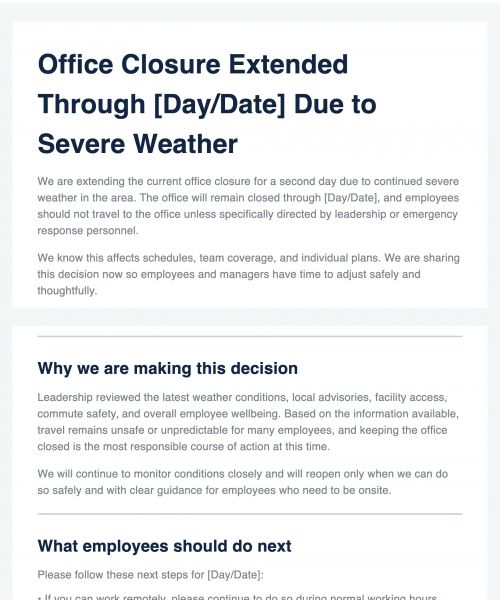
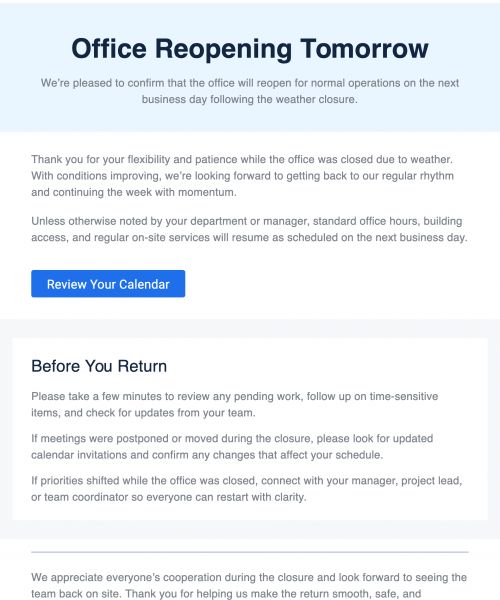
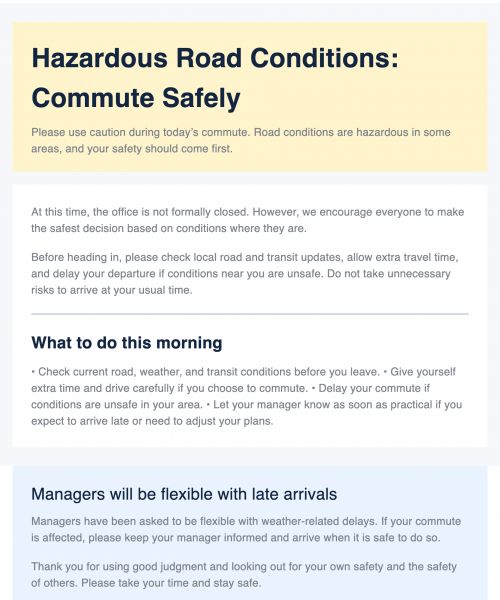
- Severe weather affects office openings: If a storm, flood or heavy snow makes it unsafe to commute, a clear email lets employees know whether the office is closed, delayed or open with caution.
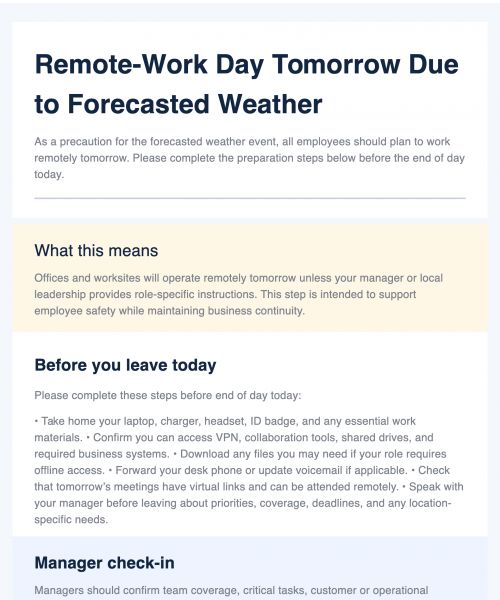
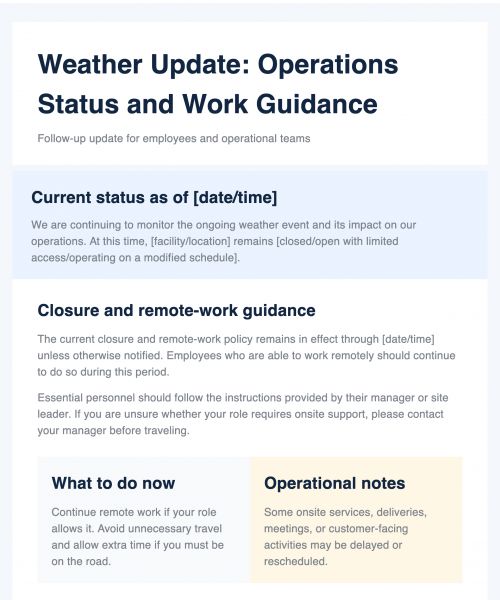
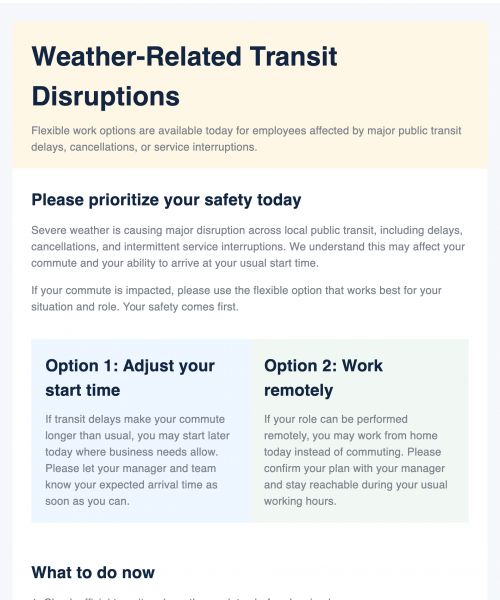
- Teams need to switch to remote work: When travel isn’t possible, a quick message outlining expectations for remote work keeps everyone aligned.
- Client meetings or appointments must be rescheduled: Templates make it easy to notify clients early, offer alternatives and maintain professional communication.
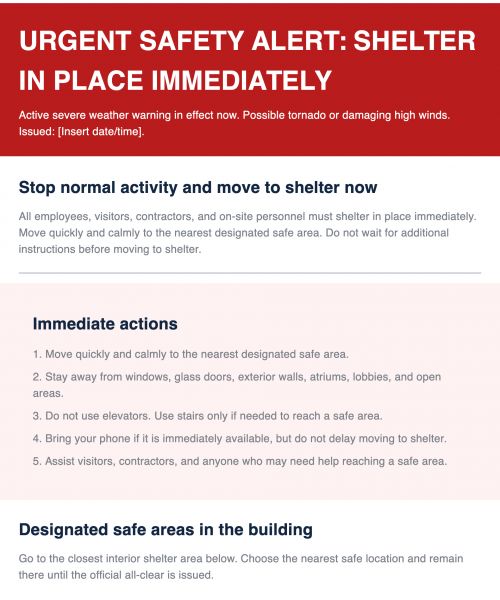
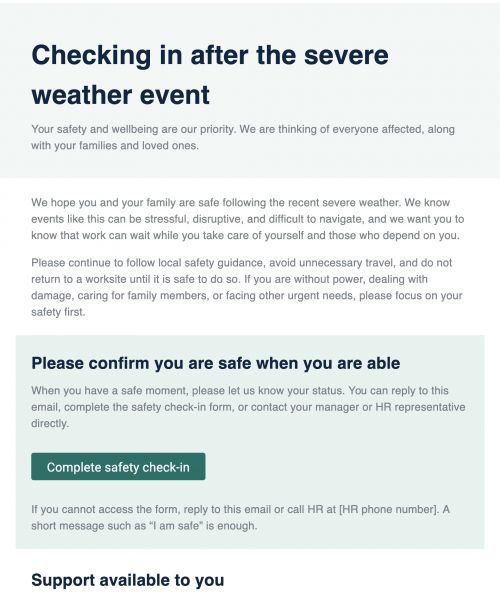
- Safety protocols need to be shared or reinforced: Weather-related risks may require reminders about emergency contacts, shelter plans or equipment procedures.
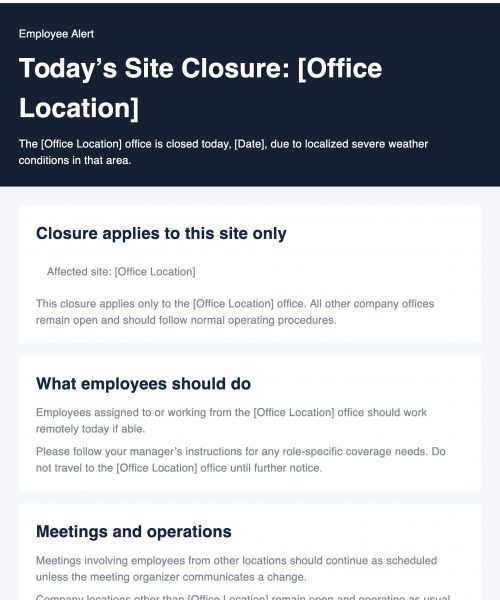
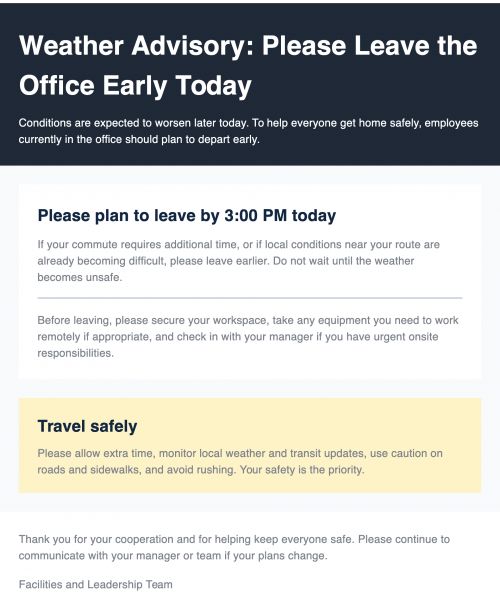
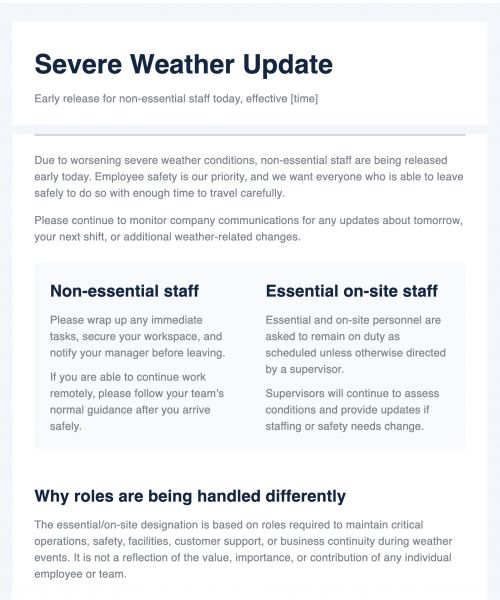
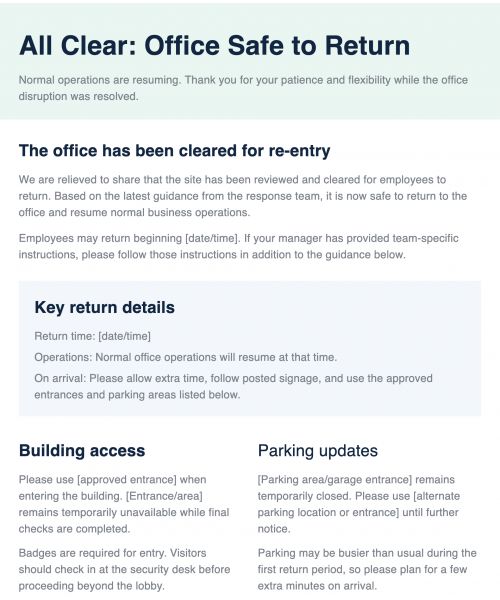
- Workplace access is limited: Power outages or facility issues might mean only certain areas are open or only essential staff should report.
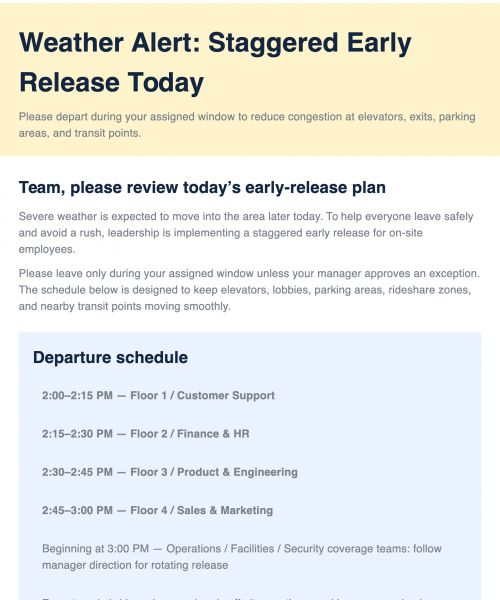
- Transportation delays affect staffing: When trains or roads are disrupted, teams need timely updates about adjusted schedules or coverage plans.
Using Publicate to Create and Share Bad Weather Templates
Weather disruptions require fast and accurate communication. Publicate gives organizations the features and tools to prepare templates in advance, collaborate across departments and share updates quickly when conditions change.
Here’s how Publicate supports better weather communication:
- AI Text Writing & Refinement: Weather-related communication can be sensitive. Publicate’s AI tools help ensure the tone stays steady, clear and measured while removing unnecessary complexity.
- Saved Modules: Seasonal storms and recurring weather risks make reusable templates essential. Saved Modules allow organizations to store their best versions and deploy them instantly when needed.
- Brand Kit: Even emergency communication should reflect the organization’s voice. The Brand Kit keeps all messages consistent in tone and style across teams.
- Real-Time Collaboration: Weather updates may require input from HR, operations, facilities and leadership. Publicate enables live collaboration, ensuring every message is accurate and aligned before being sent.
- Gmail & Outlook Integrations: Teams can build weather templates in Publicate and send them directly from their everyday inboxes for a fast and seamless workflow through integrations.
Tips for Writing Effective Bad Weather Emails
Bad weather updates need to be clear, timely and easy to act on. When conditions are unpredictable, people rely on straightforward information to make safe decisions. These tips help you write messages that keep teams informed without creating confusion or unnecessary worry.
- Acknowledge safety first: Remind employees that their wellbeing matters more than arriving on time or pushing through dangerous conditions.
- Share essential details upfront: Start with the key update: office closure, delayed opening, remote work instructions or safety alerts.
- Be specific about timing: Include when the update applies and when the next check-in or announcement will be shared.
- Offer clear instructions: Whether it’s shifting to remote work or avoiding travel, make the expected actions easy to follow.
- Share contact details for urgent questions: Let people know who to reach out to if they’re unsure about expectations or their situation.
- Update information consistently: If conditions change, send follow-up messages so no one is relying on outdated guidance.
- Prepare templates in advance: When you have ready-made formats, you can communicate faster during fast-changing weather events.
A clear bad weather email helps teams stay safe, informed and prepared. With the right structure and tone, you can share updates that people trust and understand immediately.
Building Your Own Bad Weather Templates With Publicate
No two regions face the same weather risks, and every organization has its own operational requirements. Publicate allows teams to tailor these templates to match local conditions, organizational policies and expected responses. Over time, these templates become part of the organization’s emergency communication framework.
Customization ensures communication remains relevant and effective.
Be Prepared with Easy-to-Deploy Bad Weather Email Templates
Bad weather is unpredictable, but communication should not be. With the right templates and tools, organizations can protect employees, support customers and keep operations stable even when conditions change suddenly. Clear, steady communication reassures people during uncertain moments and encourages safe decisions.
Publicate provides everything teams need to build polished, reliable and easy-to-deploy bad weather email templates. Encourage readers to explore Publicate and start developing communication that keeps people informed, safe and confident during environmental disruptions.
Try Publicate today


.svg)