The Industries Most Overwhelmed by Workplace Communication, Ranked
Try Publicate For Free Today
Start Now

From nonstop emails and back-to-back meetings to Slack notifications, LinkedIn updates, and constant workplace messages, many workers feel like communication has become impossible to escape.
But while some sectors thrive on constant collaboration and interaction, others appear to be experiencing full communication overload.

The feeling reflects a wider societal shift in how people are experiencing workplace communication, with workers now exposed to an almost constant stream of emails, notifications, updates, and professional conversations throughout the day. According to Statista, the United States now sends 9.8 billion emails daily, the highest figure globally, while the UK ranks joint third worldwide with 8.3 billion emails sent each day, further highlighting the sheer scale of communication many employees are expected to process on a daily basis.
That constant flow of messages appears to be taking a growing toll on workers, with research from Korbyt finding that 44% of employees already feel they receive too many workplace messages, suggesting communication fatigue is becoming an increasingly common part of modern working life.
At the same time, growing interest in disconnecting from digital noise suggests many people are actively looking for ways to step back from constant communication, with searches relating to “analogue living” and offline lifestyles increasing by 60% over the past year, while searches for “LinkedIn anxiety” have surged by 1,709% according to Glimpse data, pointing towards growing pressure around professional visibility, workplace communication, and always feeling connected to work-related conversations.
Against this backdrop of growing communication fatigue, Publicate has conducted a new study to examine which industries appear to be facing the highest levels of workplace communication pressure.
The study examined:
Each industry received a ranking across all three factors, with the combined scores used to determine which sectors are facing the highest levels of communication overload overall.
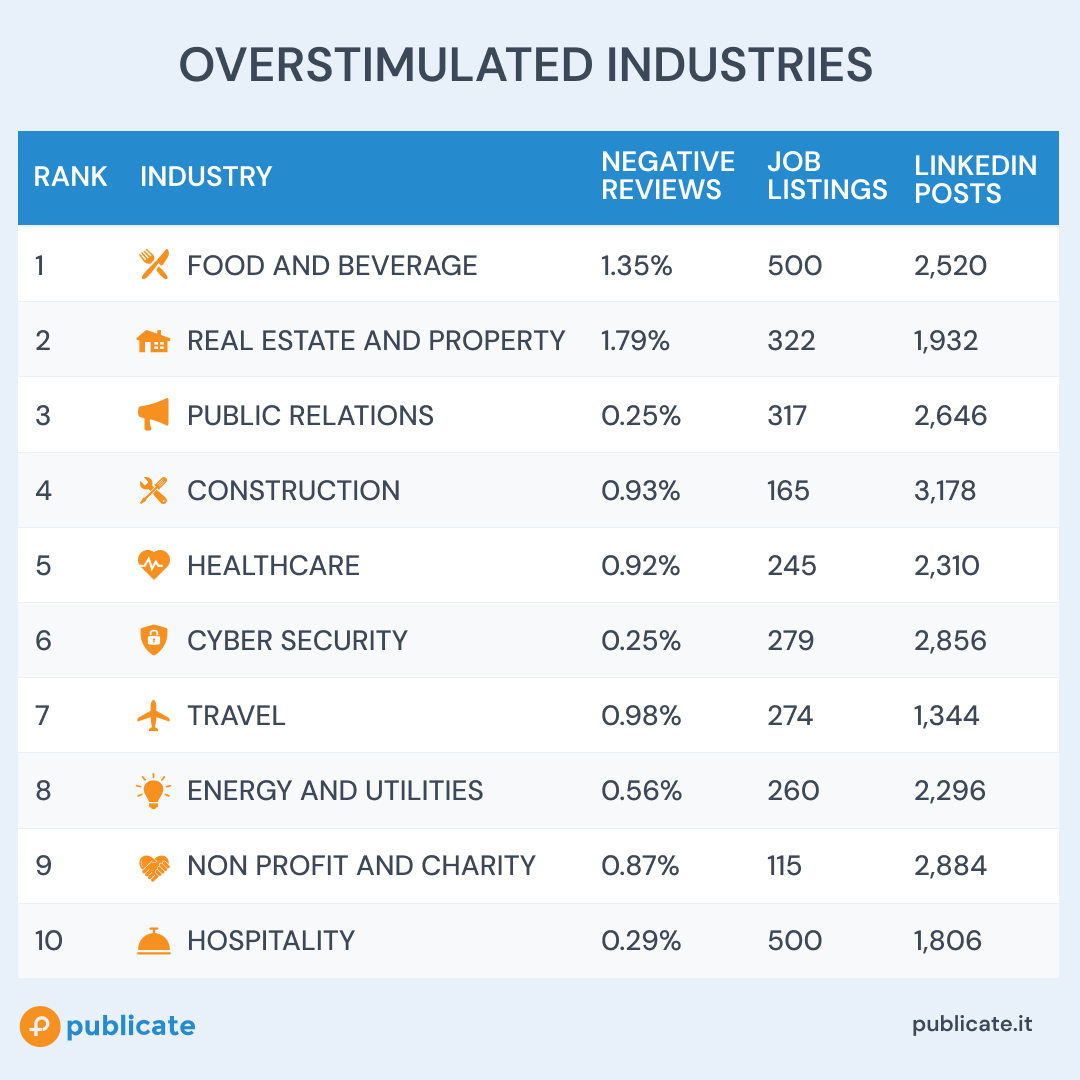
Food and beverage ranked first overall, placing higher than every other industry analysed across the three communication-related ranking factors.
The industry recorded one of the highest numbers of job listings mentioning communication, with 864 out of 1,000 analysed job descriptions referencing the skill directly, while almost 1% of negative employee reviews also mentioned communication-related issues.
The findings reflect the reality of modern food and beverage environments, where workers are often expected to juggle constant customer interactions, fast-paced service, shift handovers, supplier coordination, and internal updates all at once. In industries where delays, misunderstandings, or missed messages can quickly impact customer experience, communication often becomes both essential and overwhelming.
The sector also generated more than 2,500 LinkedIn posts within just seven days, highlighting the sheer volume of industry conversation professionals are exposed to online, from operational advice and hospitality trends to leadership content and career updates.
Real estate and property ranked second overall, while also recording the highest percentage of negative employee reviews mentioning communication.
A total of 1.79% of negative Glassdoor reviews referenced communication-related issues, suggesting frustrations around messaging, responsiveness, and internal coordination may be particularly common within the sector.
Given the nature of the industry, where employees are constantly balancing buyers, sellers, tenants, contractors, solicitors, and internal teams, communication pressure can quickly build throughout the working day. Property professionals are also increasingly expected to remain highly responsive across calls, emails, WhatsApp messages, and property platforms, contributing to the kind of “always on” culture many workers are beginning to push back against.
Public relations placed third overall, reflecting the industry's reliance on constant messaging, relationship management, and round-the-clock industry conversations.
The sector generated 2,646 LinkedIn posts within a seven-day period, alongside 634 out of 1,000 job listings mentioning communication directly within the job description.
Unlike some industries where communication is viewed as a supporting skill, communication itself sits at the centre of PR roles, with professionals often balancing client emails, journalist requests, media monitoring, campaign updates, internal meetings, and social media conversations simultaneously.
Despite PR recording one of the lowest rates of communication-related complaints on Glassdoor, the sheer volume of communication-focused conversations and hiring expectations suggests employees in the industry are constantly surrounded by communication both internally and externally.
Construction ranked fourth overall and recorded the second-highest number of LinkedIn posts overall, with 3,178 industry-related posts identified within just seven days.
The volume reflects how communication-heavy the industry has become in recent years, particularly as construction projects increasingly rely on real-time updates between contractors, suppliers, project managers, engineers, and health and safety teams.
While construction is often viewed as a physically demanding industry, the findings suggest communication pressure may also play a growing role within day-to-day operations, especially as digital tools, project management software, and instant messaging platforms become more embedded within the sector.
Healthcare ranked fifth overall, with the sector performing consistently highly across all communication-related ranking factors.
Almost 1% of negative employee reviews referenced communication issues, while the industry also generated more than 2,300 LinkedIn posts within a seven-day period.
The findings mirror wider research into communication overload within healthcare settings, where workers are often exposed to constant emails, shift updates, patient information, alerts, and internal messaging throughout the day. Studies have previously linked information overload in healthcare environments to higher stress, burnout, and reduced wellbeing among workers
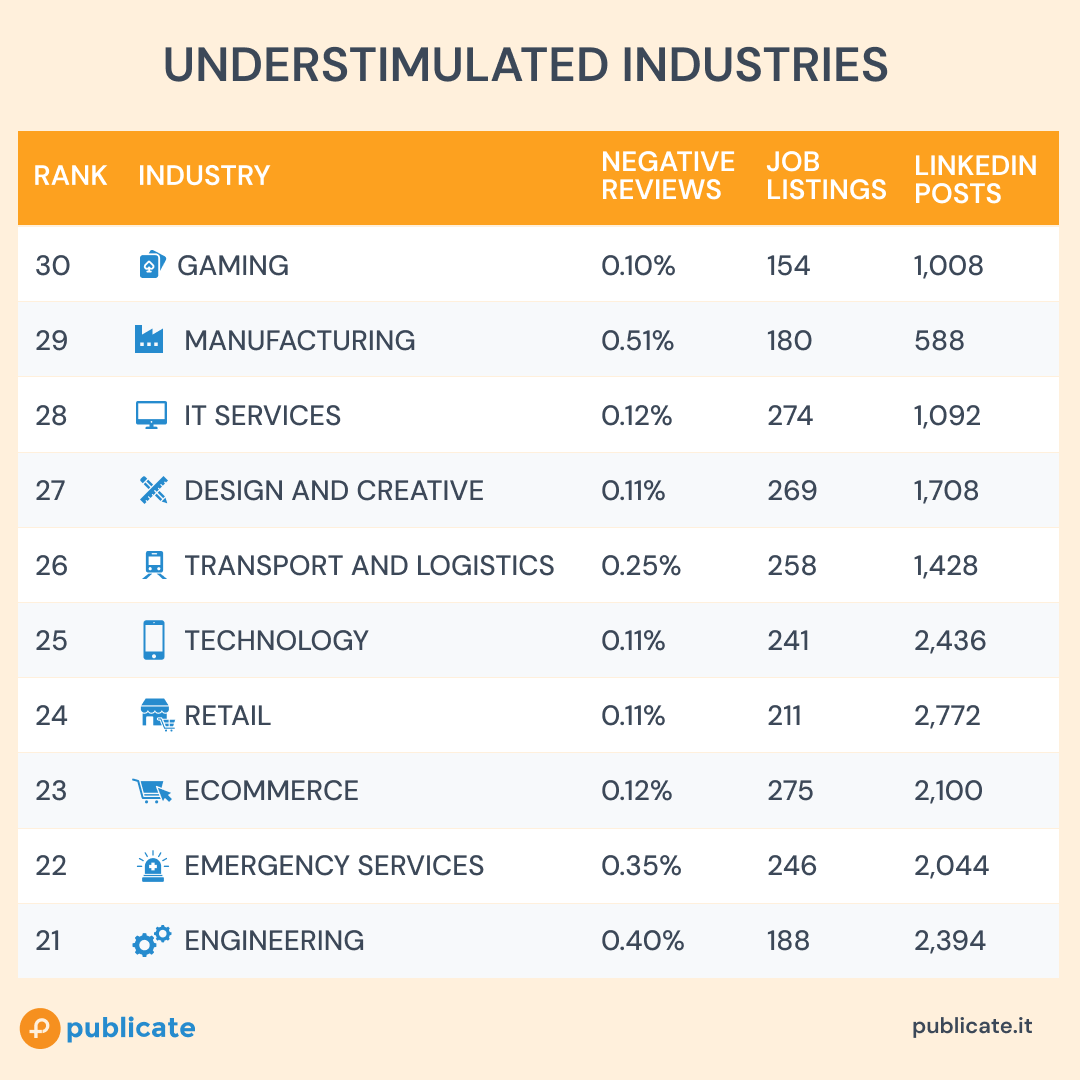
At the opposite end of the ranking, gaming placed last overall, followed by manufacturing and IT services.
Gaming recorded the lowest percentage of negative reviews mentioning communication at just 0.10%, alongside comparatively low volumes of communication-related job listings and LinkedIn activity.
Technology also ranked lower than many people may expect, placing 25th overall despite being one of the world’s largest and fastest-growing industries.
While technology workers are often exposed to large amounts of digital communication, the findings suggest communication may be less central to workplace frustrations compared to highly customer-facing or operational industries, where constant responsiveness is directly tied to performance.
The ranking was created using three separate communication-focused data points across 30 industries:
Each industry received a rank across all three categories, with the average of those rankings used to determine the final overall ranking.


Beautiful Designs
Powerful Analytics
Export Emails Anywhere
Built for Teamwork

