How to Create a Newsletter in Outlook (Step-by-Step Guide)
Try Publicate For Free Today
Start Now

To this day, Outlook is still one of the most widely used email platforms across businesses and sectors. Many teams rely on Outlook for internal communications, company wide announcements, newsletters and client updates. This is because it is a familiar tool and is already a part of daily workflows.
However, when it comes to creating modern newsletters, Outlook can fall short. It was never designed to function in this capacity and does not have the tools to create a professional newsletter directly within the app itself. When creating a newsletter with Outlook, it can become a frustrating manual process that involves broken formats, inconsistent layouts, odd image placement and time consuming editing.
For smaller business teams sending the occasional update, Outlook may be enough. But as newsletters evolve and become more visual and more frequent, those limitations become difficult to ignore and work around.
This is why many organisations are now creating newsletters using external email builders, and this is where Publicate comes into play.

Yes, you are able to create a newsletter in Outlook by using built-in formatting tools, templates or imported HTML emails. However, it is important to note that Outlooks design and formatting limitations can make it very challenging to create well-formatted, consistent newsletters in batches and at scale. This is why many teams turn to external email builders before sending a newsletter through Outlook.
Today, Outlook supports basic newsletter functions including images, basic format tables and templates. The difficulty is not whether it is possible but it is how much time and manual effort goes into producing newsletters that appear polished and consistent across all devices.
Essentially, for simple, text-heavy internal communications, Outlook may work well. However, when it comes to branded or visual newsletters, recurring campaigns or collaborative workflows, most teams prefer a more efficient and streamlined solution.
A newsletter in Outlook is a highly structured email that is sent through Microsoft Outlook and is used to share updates, announcements, news or recurring communication within a group. Businesses mostly use Outlook newsletters for internal company updates, event invitations, or roundups.
As opposed to large-scale email marketing campaigns that are run through dedicated and specialised platforms.
One of the biggest reasons teams continue to use Outlook for newsletters is the convenience. Outlook is installed across many organizations and employees and teams are familiar with the interface. However, it is important to note that Outlook works best as a sending platform rather than a design platform. As newsletters become increasingly visual and more frequent, manual formatting through Outlook can become difficult to manage.
Essentially, Outlook works best for sending newsletters, but not for designing them.
One of the greatest challenges with creating a newsletter in Outlook is that it was not built to function as a modern drag-and-drop email builder. Yes, you can create basic formatted emails inside of Outlook but the entire design process is limited when compared to modern software.
Outlook makes use of its own rendering engine which means that it works differently to most web browsers and email clients. This results in fonts, layouts and image formats appearing differently depending on which version of Outlook the recipient is using.
Other issues team run into include:
As there is no drag-and-drop function inside of Outlook, creating structured sections is a manual task that takes up a lot of time. For businesses sending regular newsletters, these limitations can quickly create unnecessary bottlenecks.
There are a variety of ways to create a newsletter using Outlook and you need to select the appropriate one based on your workflow, technical ability and design needs. Let’s take a closer look to help you make an informed decision:
This is a straightforward and simple method for creating a newsletter directly inside of Outlook:
Steps:
This method is best for simple updates with minimal design needs. If your newsletter is mostly text-driven with a few images, the native editor may be sufficient.
Limitations arise as formatting options are limited. Creating polished layouts also requires significant manual work. Scaling this process across departments and teams is also challenging.
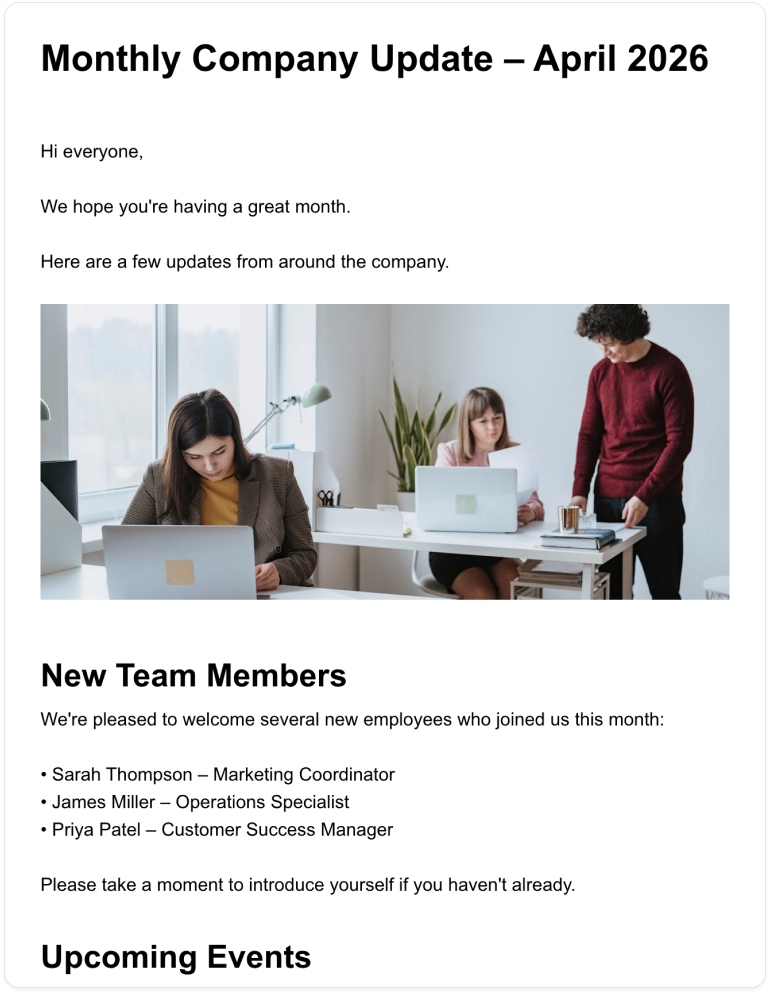
This option is about creating reusable Outlook templates. This empowers teams to save recurring newsletter layouts and reuse them for future communications.
To create an Outlook newsletter template:
By using an Outlook newsletter template you are able to save time and improve newsletter and branding consistency. Teams do not have to rebuild the same structure every time they send an update.
However, this process still comes with limitations. Outlook templates still have the same design limitations as Outlook. They can be difficult to visually customize and editing layouts remains restrictive and manual in production.
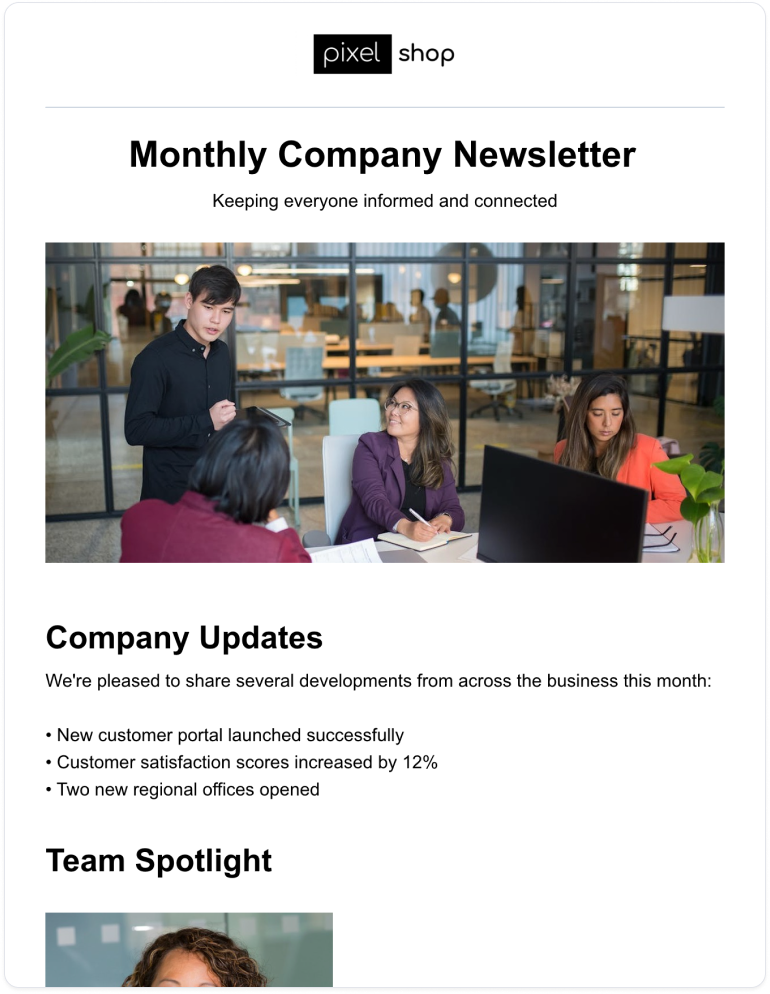
Microsoft provides newsletter templates through its related platforms like Word and Microsoft Create. These can help teams get started without designing newsletters from scratch.
However, the challenge is that many of the available templates were not designed specifically for Outlook email workflows. This means that importing them into Outlook can sometimes result in formatting issues, especially when it comes to tables, fonts and images.
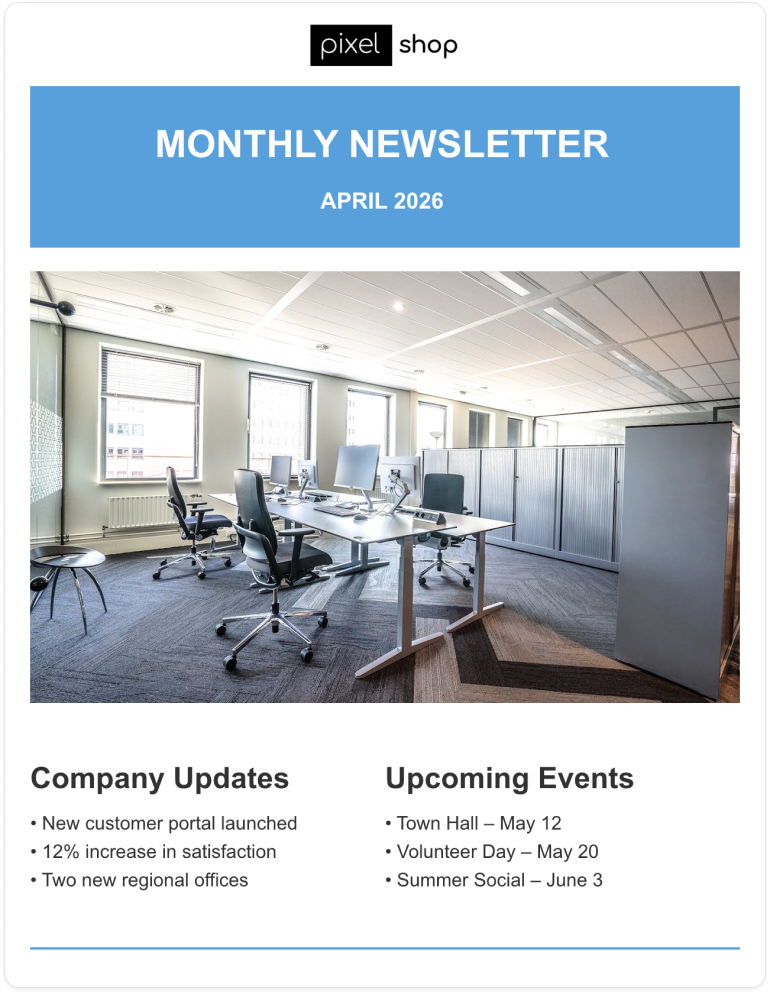
We would be remiss not to mention this. Many teams choose to create newsletters using PDF files or documents. They will then send them as an attachment through Outlook. While this may seem easier on the surface from a design standpoint, it usually creates massive engagement issues.
Email recipients are less likely to open an attachment, especially on mobile devices. Attachments also introduce more friction when it comes to the reading experience and make newsletters feel like more of a chore.
In most cases, it is best to place the newsletter inside the body of the email as recipients can engage with the content immediately and easily.
Using a dedicated and modern email builder is the most reliable and fastest way to create Outlook newsletters.
Rather than manually formatting emails inside of Outlook, teams are able to effortlessly:
This simple approach reduces formatting problems while making the design process fast and more scalable.
Email templates play a major role when it comes to improving newsletter consistency and reducing manual work. Rather than rebuilding every single newsletter from scratch, teams are able to use structured layouts that are expert designed for recurring communication.
Types of Outlook newsletter templates include:
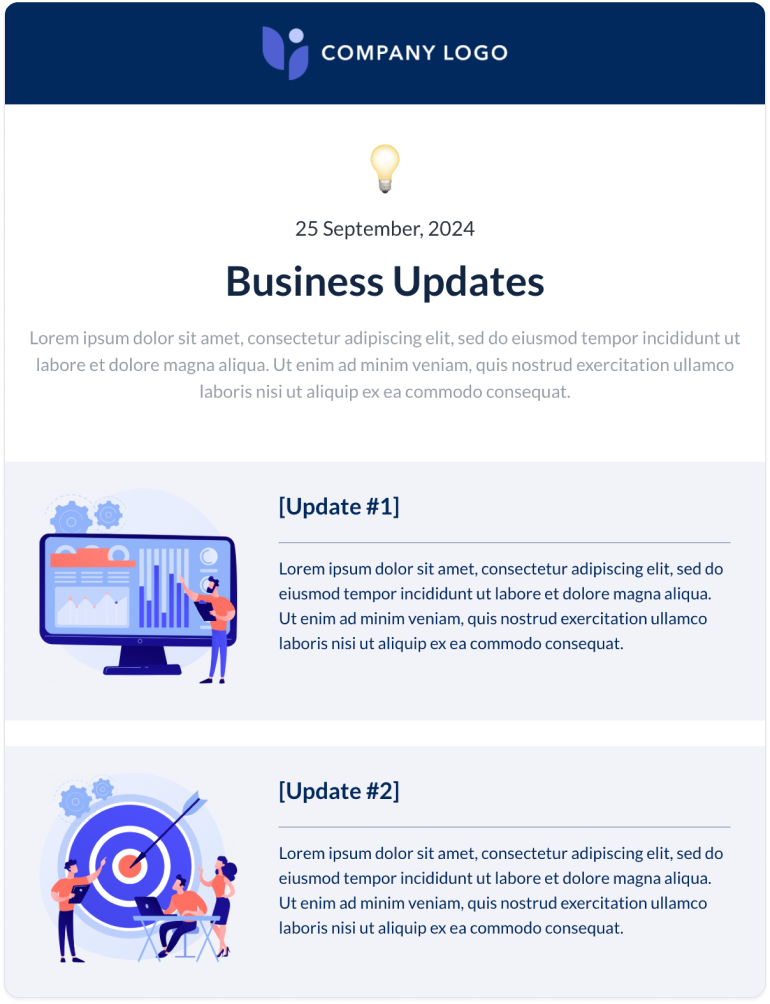
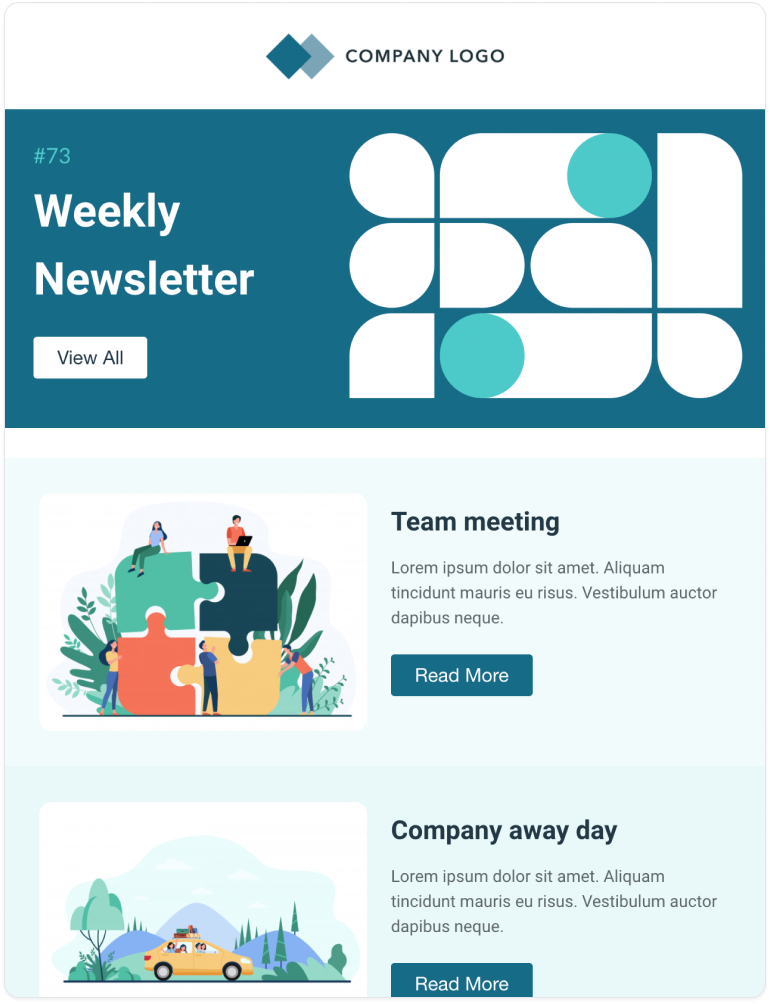
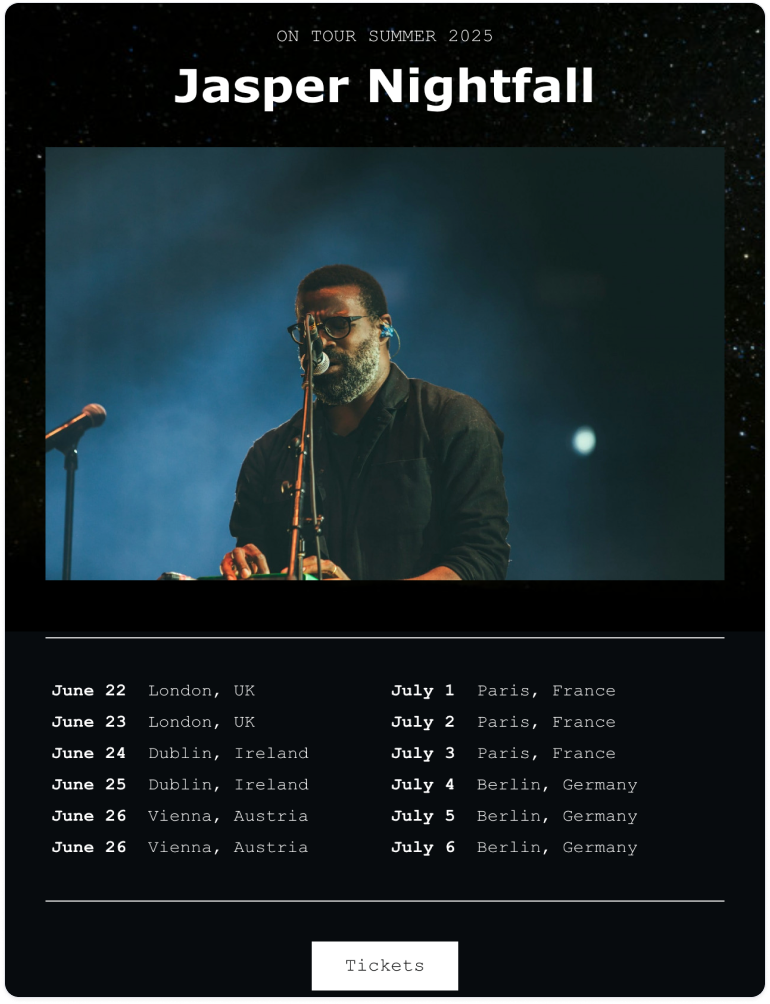
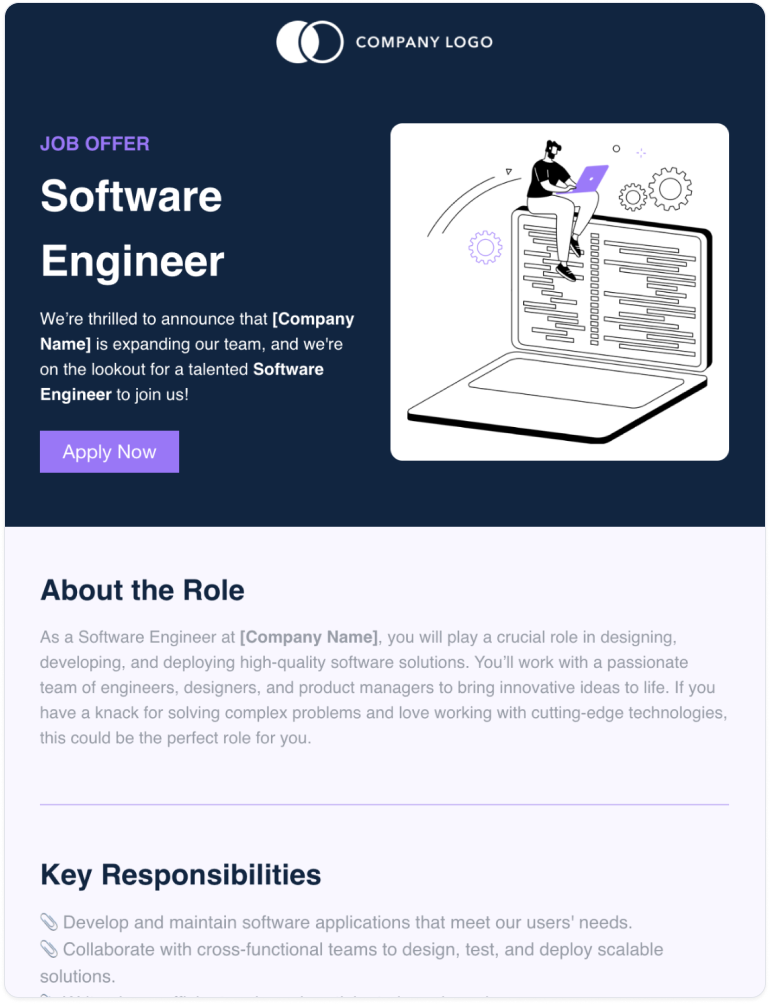


These kinds of templates remove the need to start from scratch, which makes it easier to scale across larger teams.
Take a look at our Outlook Email Newsletter types and empower your communication workflow today.
A good newsletter format is not simply about design. It also comes down to readability and structure.
When formatting your Outlook Newsletter, consider the following:
It is also important to note that simple layouts perform well in Outlook as they are less likely to break across devices. However, creating polished newsletter layouts inside of Outlook will still be restrictive. Creating and maintaining consistent visuals manually requires a lot more effort than teams may expect.
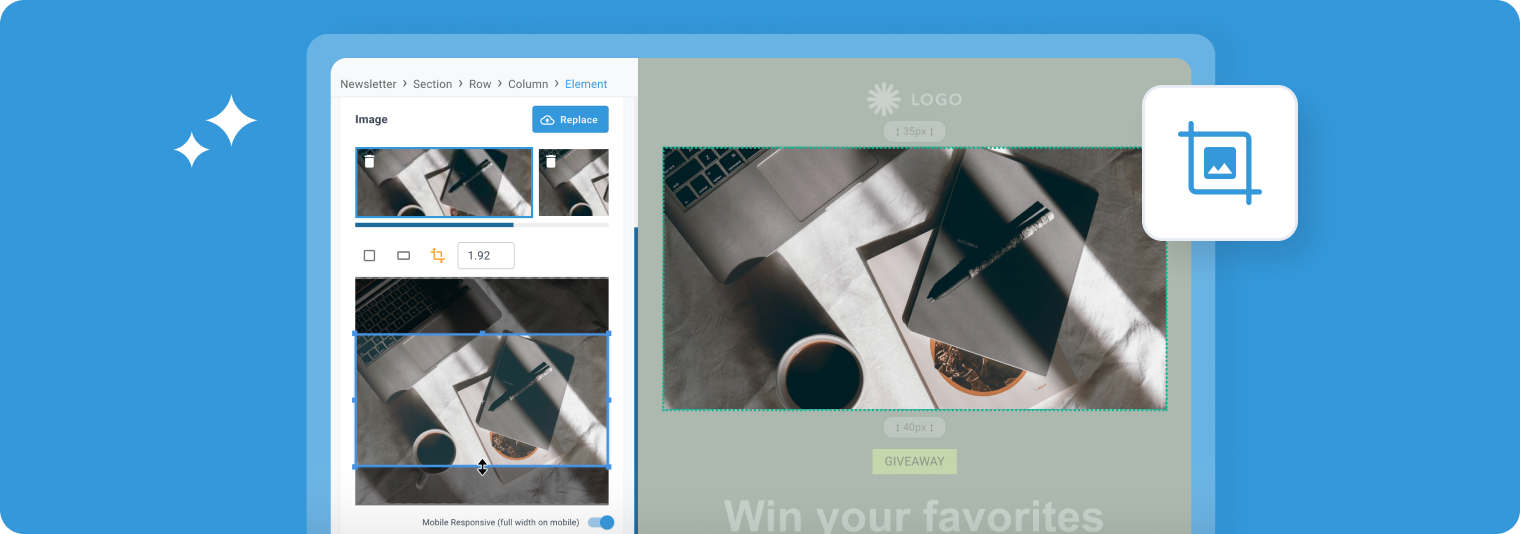
Adding images to an Outlook newsletter is straightforward but managing images can become difficult, unless you use an email builder.
To successfully insert an image:
However, one of the most common issues is image formatting. Images may look different across devices, spacing can break and resizing requires manual work.
Modern email builders like Publicate simplify this process by providing built-in image editing, inline cropping, responsive layouts and predictable formatting controls.
If you are regularly sending newsletters through Outlook, then creating mailing lists can help streamline your process.
To create an Outlook mailing list:
It is important to keep your mailing lists updated, as it helps improve consistency over time.
Recurring newsletters are easier to manage when teams produce a structured workflow around them.
We suggest using Outlook calendar reminders or recurring tasks in order to maintain schedules and ensure consistent communication.
Reusable templates also help to reduce production time as teams are able to update existing layouts rather than rebuilding from scratch.
As stated previously, the best designs are the simplest.
Rather than creating highly complex layouts inside of Outlook, you will achieve better results by placing your focus on clarity, consistency and readability.
Important best practices include:
Simple newsletters are easier to maintain and scale while also being less likely to break across versions of Outlook.
If you are looking to create visual newsletters that perform, Publicate has you covered. We help teams streamline newsletter creation through:
Rather than manually rebuilding newsletters inside of Outlook, teams are able to create visually consistent emails faster, while maintaining brand standards.
Today, Outlook remains a useful platform for sending newsletters, especially for businesses working with Microsoft. However, creating newsletters manually inside of Outlook can quickly become time-consuming and frustrating. With formatting limitations, manual editing and inconsistent layouts, communications may fail.
Using a dedicated email builder will help remove these limitations and improve overall consistency, scalability and collaboration across teams.
Start your free trial with Publicate today.


Beautiful Designs
Powerful Analytics
Export Emails Anywhere
Built for Teamwork