






Coming Up





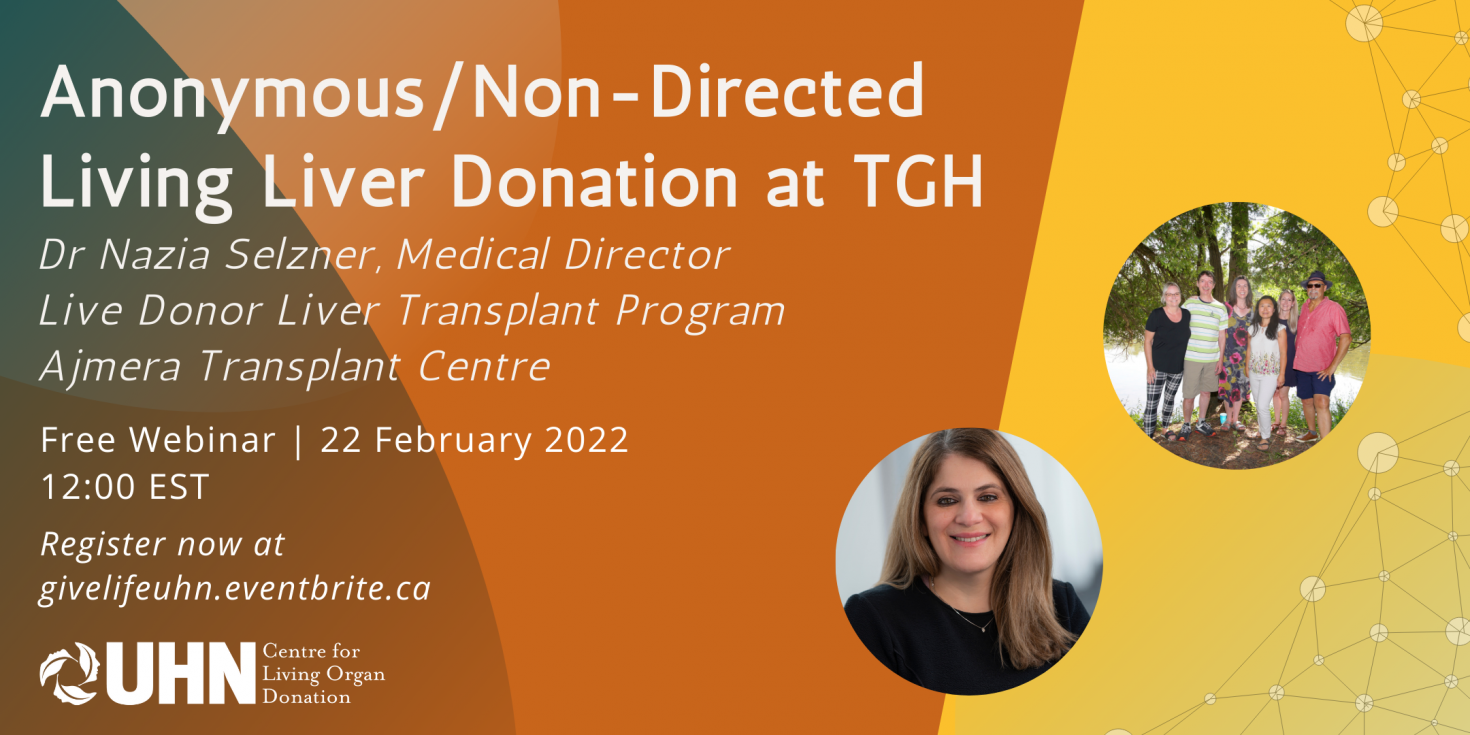
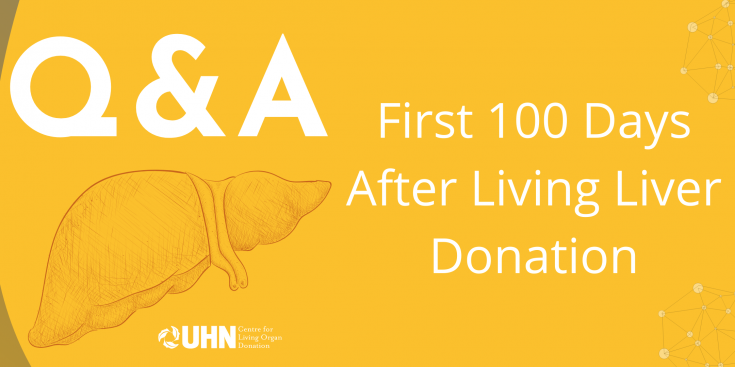
Since 2005, more than 100 men and women have donated a part of their liver to someone on the transplant list they did not know. Their act of generosity has saved over 100 lives, many of them children. This webinar will discuss the evolution of anonymous/non-directed living liver donation, the living donor assessment process and patient and donor outcomes to date.
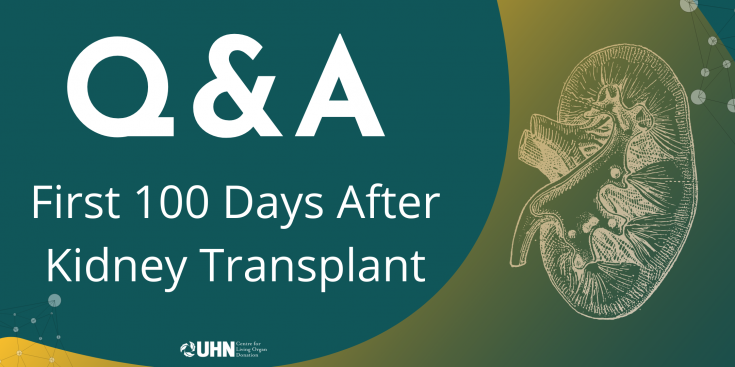
- 1st Tuesday of the Month: Information for Potential Living Kidney Donors
- 2nd Tuesday of the Month: Finding a Living Donor (registrants will receive access to a page with additional resources including Having Your Donor Find You, a free self-paced video series)
- 3rd Tuesday of the Month: Financial Resources for Living Donors (PRELOD and other provincial reimbursement programs, employer support and more)
- 4thTuesday of the Month: Information for Potential Living Liver Donors

In Case You Missed It












The UHN Patient & Family Learning Centres offer reliable and timely health information to patients, their families, community members, and staff. The image above showcases a selection of books relevant to Black History Month. Resources are available in different formats and different languages. To search the online catalogue, or access e-books, audiobooks, videos and other resources click here.
RESEARCH HIGHLIGHTS
Below are links to selected articles on living organ donation and transplantation published within the last six months. If you have a suggestion email us.
A Unifying Approach for GFR Estimation: Recommendations of the NKF-ASN Task Force on Reassessing the Inclusion of Race in Diagnosing Kidney Disease Presents the recommendations of Task Force established by National Kidney Foundation (NKF) and the American Society of Nephrology (ASN) to reassess inclusion of race in the estimation of glomerular filtration rate (GFR) in the United States. The Task Force recommends immediate replacement with the Chronic Kidney Disease Epidemiology Collaboration creatinine equation refit, which does not include race. For a 2021 CMAJ article on anti-Black racism in Canadian healthcare click here. See also responses, including Ontario decision to remove eGRF adjustment for race.
Ethical Analysis Examining the Prioritisation of Living Donor Transplantation in Times of Healthcare Rationing US-based United Network for Organ Sharing (UNOS) Ethics Workgroup considers the impact of Covid-19 on transplant activity and recommends that: 1) living donor programs not be uniformly suspended, 2) assessment of risk be comprehensive and involve donors and recipients in determining acceptable risk, 3) critical transplant workforce should remain in place, and 4) protocols for early detection of Covid-19 should be implemented and discussed with donors and recipients. For a description of the ethical decision-making framework used to guide service delivery at UHN during the pandemic click here.
Evaluation of PROMIS Preference Scoring System (PROPr) in Patients Undergoing Hemodialysis or Kidney Transplant Describes construct validity of new summary measure developed by UHN reserachers based on patient-reported outcomes in 7 PROMIS domains: cognitive function abilities, depression, fatigue, pain interference, physical functioning, sleep disturbance, and ability to participate in social roles.
Living-donor Lobar Lung Transplantation Describes the evolution and outcomes of living donor lung transplants performed at Kyoto University since 1998. The 5- and 10-year survival rates were 79.0% and 64.6% for recipients of living donor lung vs 65.7% and 60.3% for those who received a deceased donor lung. Living donor surgery was associated with a morbidity rate of <15%. All living donors returned to previous activity.
Results of Early Transplantation for Alcohol-Related Cirrhosis: Integrated Addiction Treatment With Low Rate of Relapse Presents the results of the Ontario ALD Pilot Program launched in 2018 to increase access to transplantation for patients with alcohol-related cirrhosis and less than 6 months of abstinence. Of 703 referrals over a 30 month period, 44 patients received a liver transplant, including 4 who underwent a live donor liver transplant.The pilot concluded that multidisciplinary assessment, relapse prevention therapy and ongoing biomarker monitoring contribute to low relapse and high survival rates for these patients. For a review of ethical and legal implications of alcohol and cannabis use among transplant candidates, see Canadian Society of Transplantation White Paper.
Surgical Site Complications in Kidney Transplant Recipients: Incidence, Risk Factors and Outcomes in the Modern era. Observational cohort study of adult patients who underwent living and deceased kidney transplantation at Toronto General Hospital between Jan. 1, 2005, and Dec. 31, 2015, with at least 1 year of follow-up. The probability of developing a surgical site complication within 30 days of transplant was low – 4.13% – but associated with a significant increase of poor outcomes including graft failure. Among other factors, patients with higher BMI, or who received a kidney with prolonged cold ischemia time, were more likely to have surgical complications.
Toronto General Hospital | Ajmera Transplant Centre
585 University Ave, 9 MaRS-9115, Toronto, ON M5G 2N2 Canada
livingorgandonation@uhn.ca | 416-340-5400
www.livingorgandonation.ca
Missed the previous issue of GiveLifeUHN newsletter? Read it now.
