Klaus Heinz Nienkämper, July 22, 1940 – October 28, 2024 / DIRTT Reports Third Quarter 2024 Financial Results / German Banks Look to Reduce US Office Exposure / Interface Third Quarter 2024 Earnings: Beats Expectations / New NoMad Collab Showroom in NYC Unites Six Top Design Brands in a Dynamic Collaborative Space / Growing Pains Hit Chicago's Emerging Lab Market Hard As Vacancy Hits 50% / Where are the iconic office furniture products of yesterday? / That conversation about hybrid working? Same as it ever was / Use These 10 Fitness Strategies To Thrive In The Workplace / Office design is at the heart of the RTO backlash / Is salutogenic design the next big issue for the workplace? / and much more…
The Working Space
Monday, November 11, 2024
Industry News
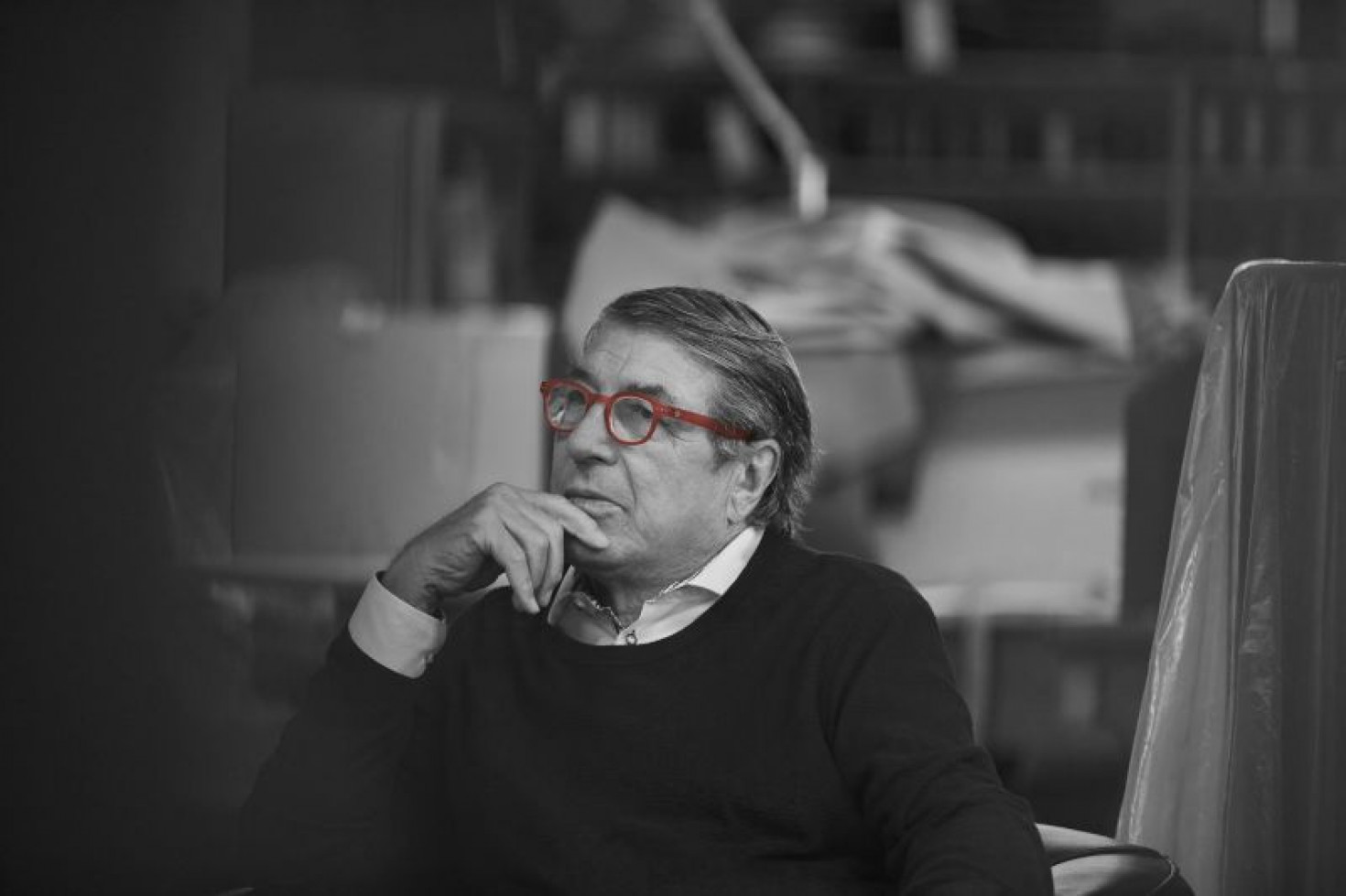
DIRTT Third Quarters Sales Fell 12% from the Previous Year
DIRTT Environmental Solutions reported a revenue of $43.4 million for Q3 2024, a 12% decrease from the previous year, but achieved a net income of $7.1 million compared to a net loss of $6.3 million in Q3 2023. The company improved its gross profit margin to 38.8% and maintained positive Adjusted EBITDA of $4.1 million. DIRTT is focusing on strategic priorities for growth, including revenue expansion and innovation, while navigating economic uncertainties. The outlook for 2024 and 2025 remains stable, with expected revenues of $165-175 million and $194-209 million, respectively.
Interface Third Quarter 2024 Earnings: Beats Expectations
Interface's third quarter 2024 earnings exceeded expectations with revenue of $344.3 million (up 11% from 3Q 2023) and net income of $28.4 million (up 191%). The profit margin increased to 8.3%, and earnings per share rose to $0.49. Revenue forecasts suggest a 4.1% annual growth over the next three years, while shares have risen 29% recently.
Feature Reads

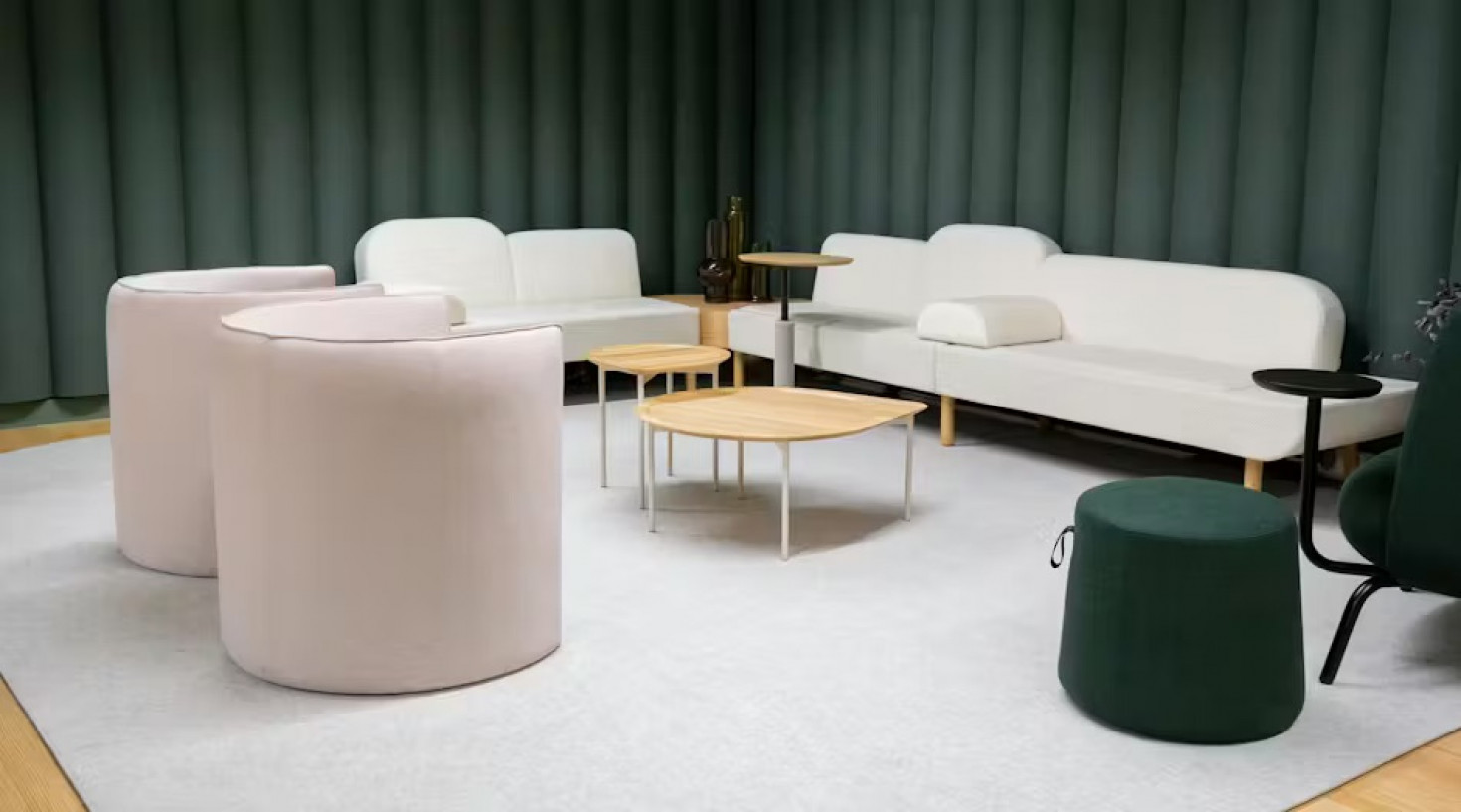
The article explores the enduring appeal of iconic office furniture designs from the Bauhaus and mid-20th century, questioning why contemporary designs have failed to achieve similar iconic status. It highlights the significance of products like the Aeron chair and Eames designs, which resonate beyond the design community and reflect cultural shifts. The author suggests that modern design lacks the revolutionary ideas of the past, attributing this to a focus on functionality over innovation and a shift towards themed product collections rather than individual iconic pieces.
Workplace News
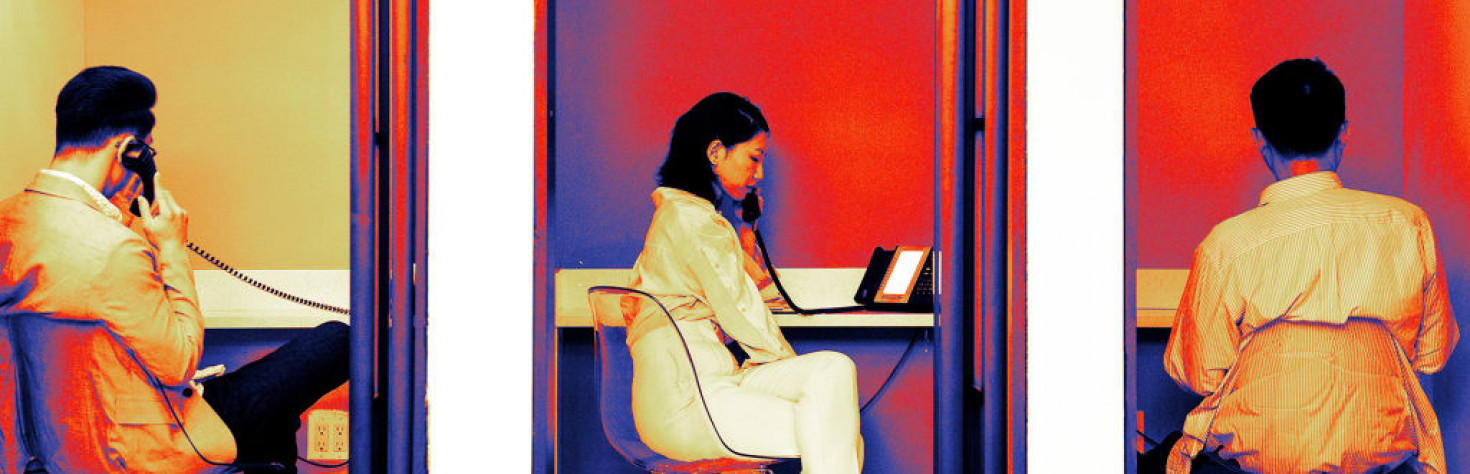
Office design plays a crucial role in addressing the challenges surrounding the return-to-office (RTO) movement. Effective designs should prioritize employee well-being and productivity, yet many existing spaces focus primarily on aesthetics and cost, often missing the mark on employees’ real needs. By redesigning offices to include areas for focused and creative work, enhance air quality, and incorporate natural elements, companies can foster happier, more productive employees. Ultimately, thoughtful office design is a key factor in attracting talent and boosting a company’s overall performance.
Technology

Kravet is introducing Arrange 3D, an augmented reality application for the Apple Vision Pro, allowing users to visualize virtual furniture in real environments. Despite past challenges with AR technology in the home industry, advancements in graphics and headset affordability may lead to broader adoption. While Kravet's initial rollout aims to enhance showroom experiences, the potential for AR to transform designer-client interactions is significant, though it may also introduce challenges related to client expectations and creative processes.
Trends
Design
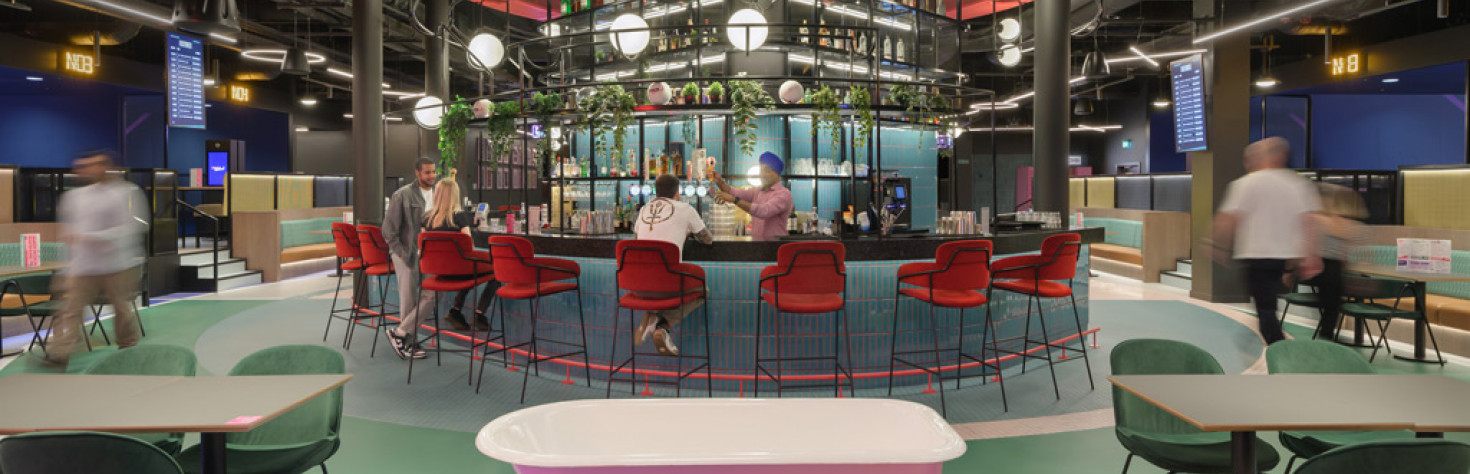
Food and beverage experiences are evolving to become immersive, engaging consumers through narrative storytelling and multi-sensory design. This trend is particularly appealing to Millennials and Gen Z, who prioritize experiences over material goods. Designers emphasize the importance of creating emotional connections through food, utilizing technology to enhance personalization and storytelling. Successful immersive dining experiences blend atmosphere, taste, and emotional resonance, transforming meals into memorable events that foster community and connection.
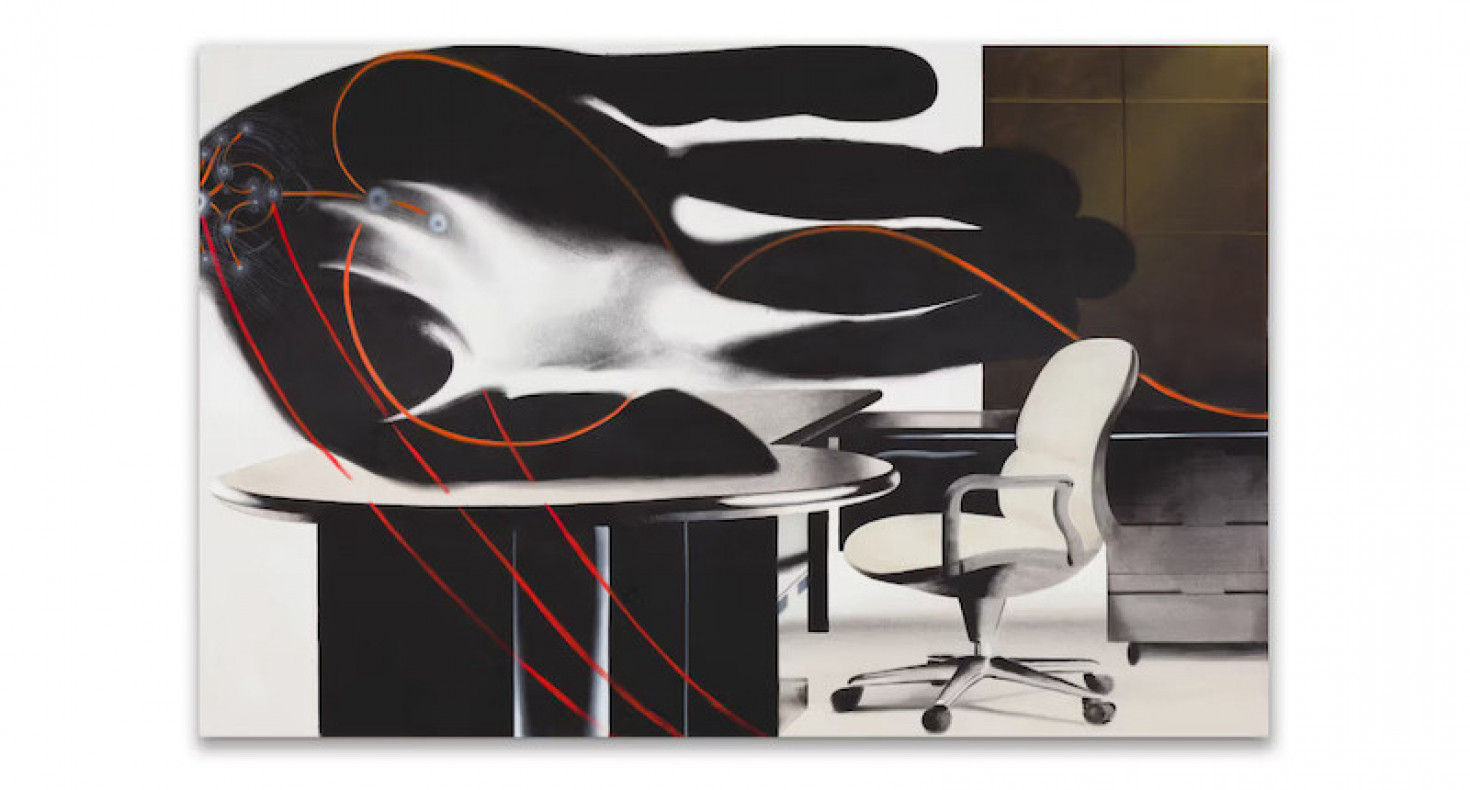
Jacopo Pagin's exhibition Office Illusions at Make Room Los Angeles critiques modern work culture through large-scale paintings that transform mundane office furniture into symbols of corporate absurdity. The show invites viewers to reflect on the disillusionment of corporate life, blending nostalgia with a sardonic examination of the promises of progress. Open until December 17, 2024, it challenges perceptions of success and stability in the workplace.
Green / Sustainability
Integra Seating Achieves BIFMA LEVEL®1 Certification for 35-Plus Products
Integra Seating has achieved BIFMA LEVEL® 1 certification for over 35 products, demonstrating its commitment to sustainability in furniture design and manufacturing. The certification confirms compliance with the ANSI/BIFMA e3 Furniture Sustainability Standard, allowing customers to choose products confidently. Integra emphasizes eco-friendly practices and offers a range of certified lounge seating, benches, and tables, reinforcing its position as a leader in sustainable furniture solutions.
Dealers

Latest Product News
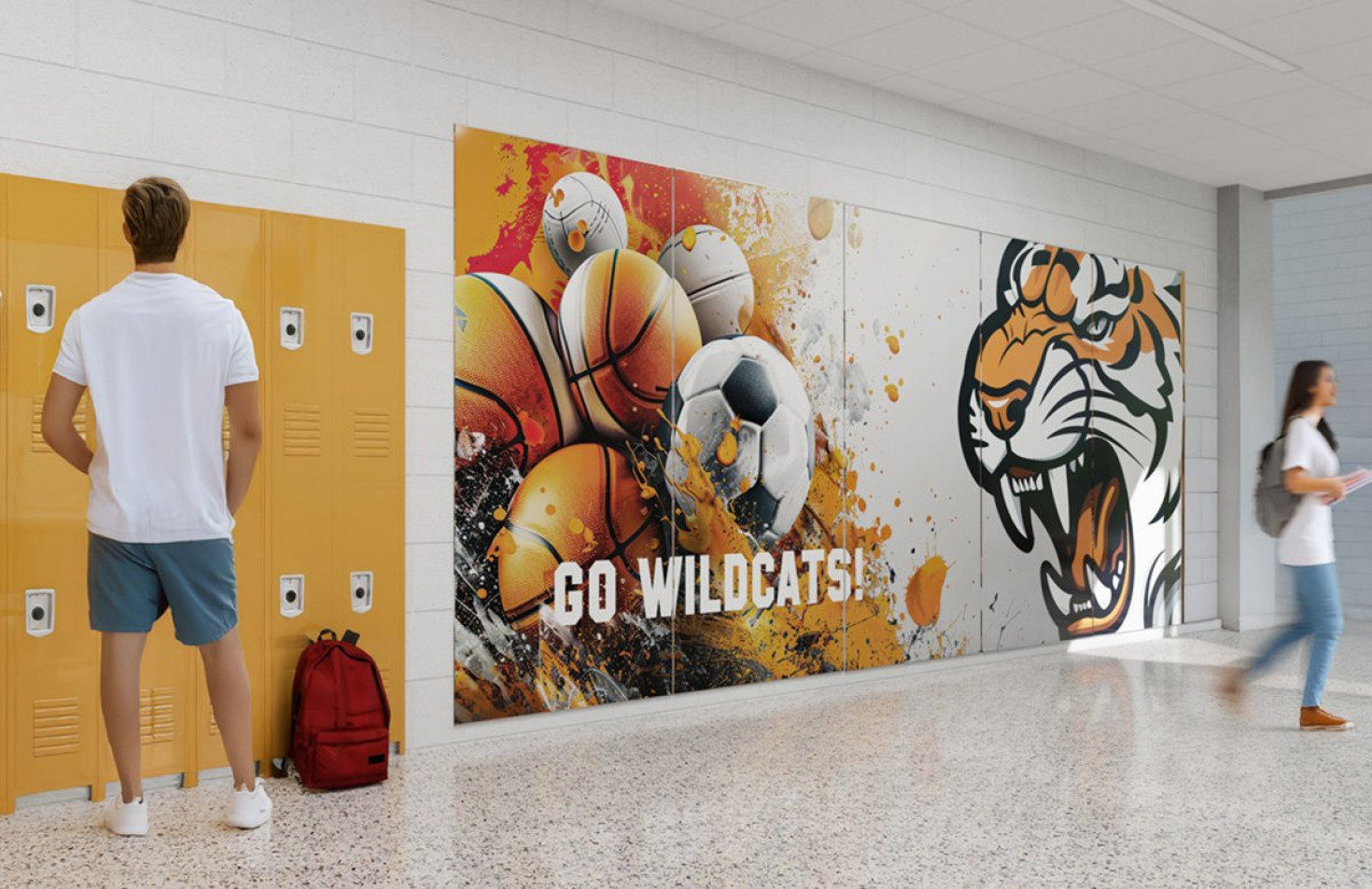
Custom digital printing on LCS Porcelain enhances school spirit by providing durable, scratch-resistant surfaces ideal for high-traffic areas like gyms and cafeterias. This allows for effective display of school branding, fostering pride within the school community.
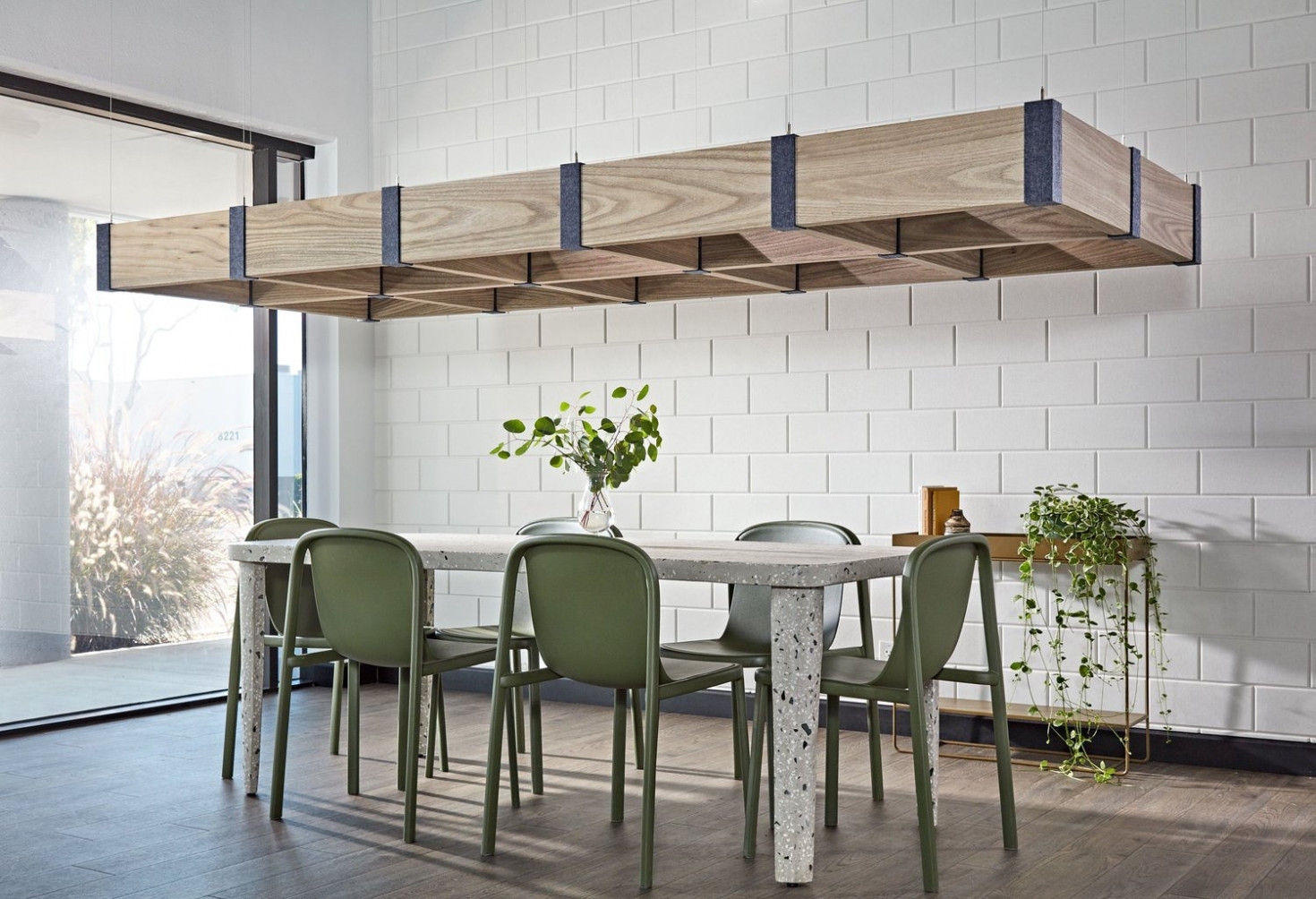
Kirei has launched three new acoustic design products—Matrix Grid, Ace Baffle, and Ramp Tile—part of Carnegie Acoustic Solutions' Tuned Collection. These products utilize innovative air gaps to enhance sound functionality while maintaining aesthetic appeal. Made from 60% recycled materials, they meet various sustainability standards and offer customizable options. The collection aims to provide effective acoustic solutions that are visually stunning and environmentally friendly, supported by complimentary design services from Carnegie.
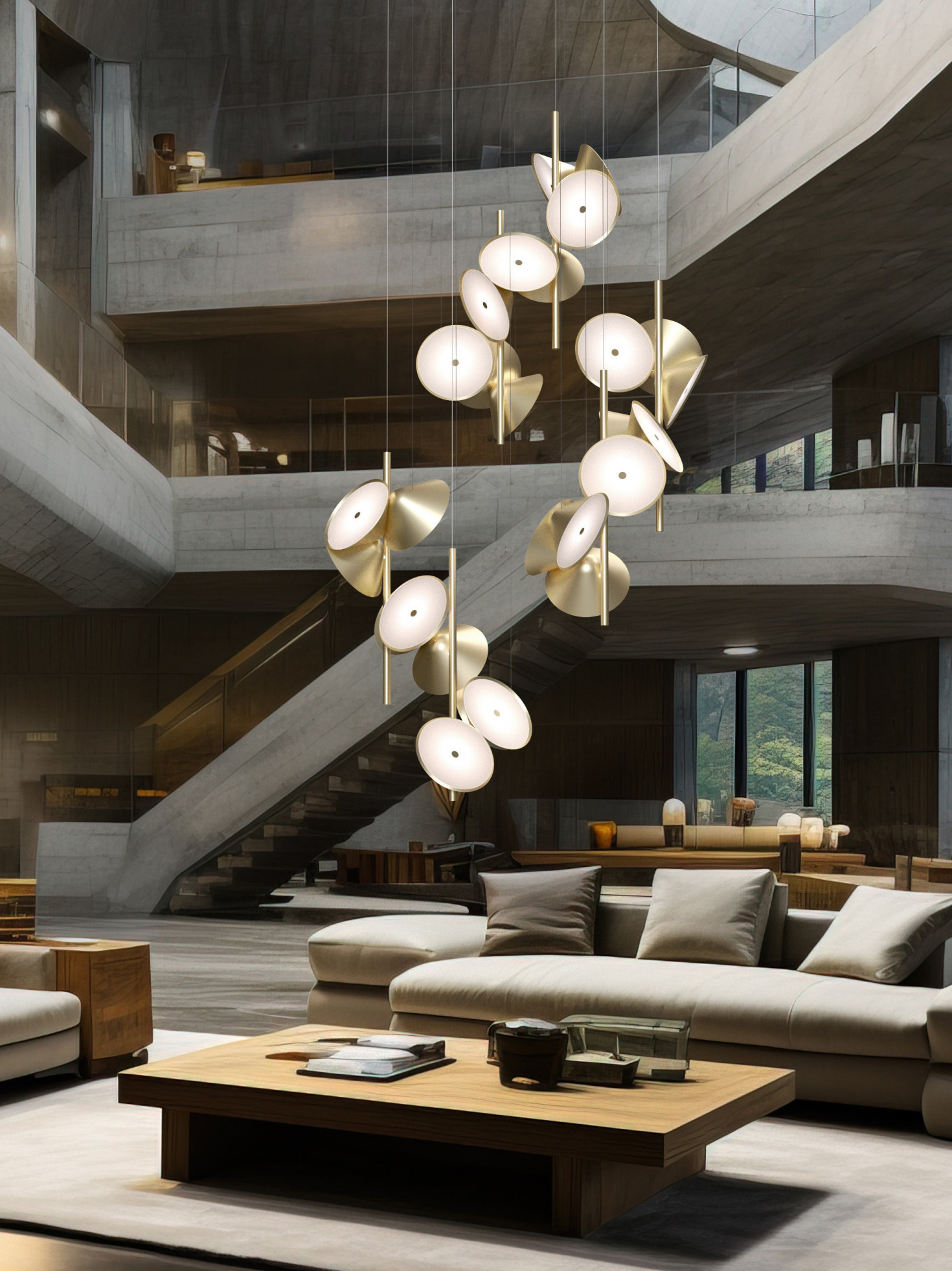
Yellow Goat Design has launched a new lighting collection called "Taking Note - A Balancing Act," inspired by musical composition. The collection features four designs—Crescendo, Legato, Mezzo, and Pizzicato—each reflecting different musical elements through innovative lighting fixtures. These customizable pieces aim to blend art and light, suitable for various environments, and incorporate energy-efficient LED technology. The collection emphasizes the harmony between design and functionality, catering to diverse architectural spaces.
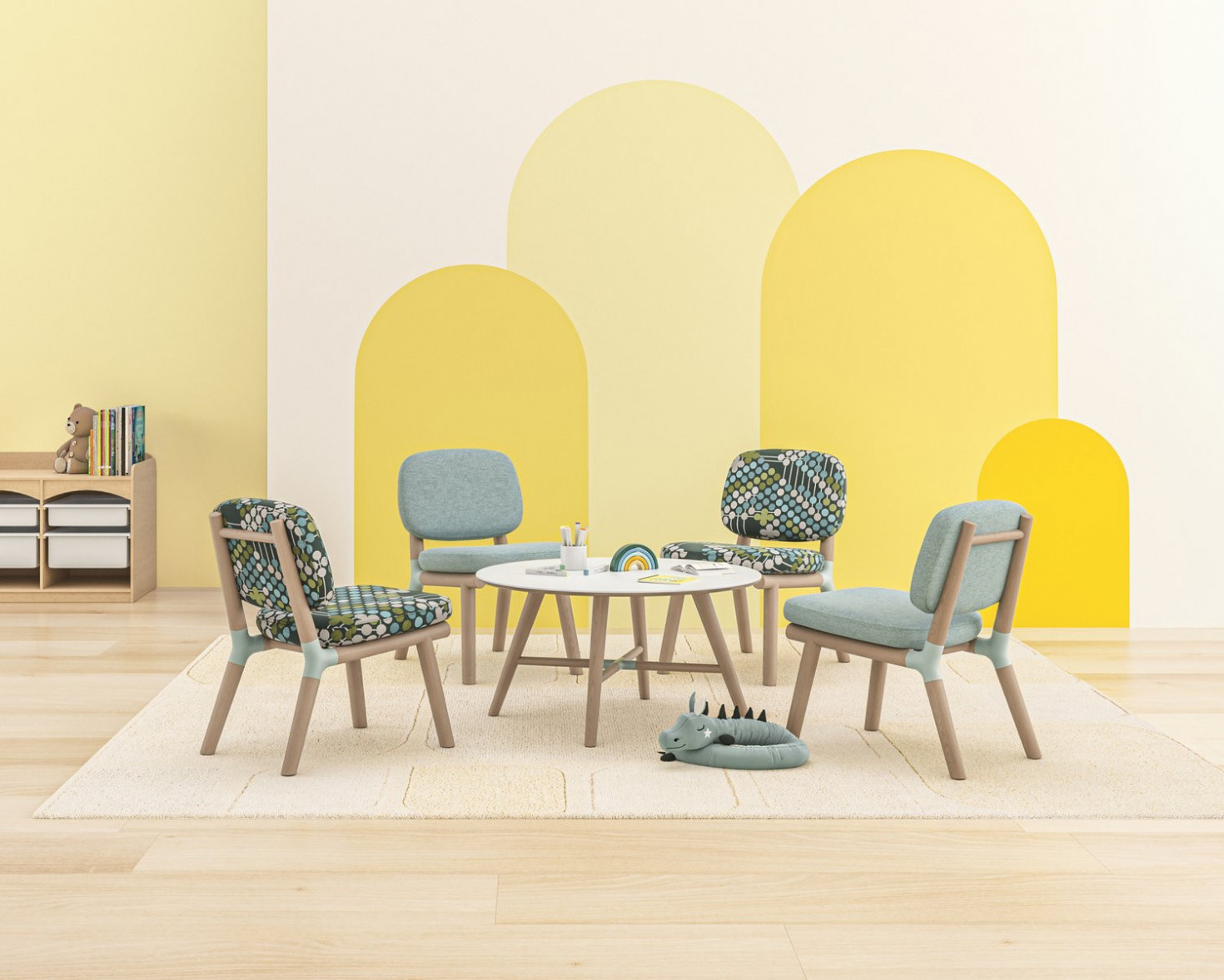
Encore has launched Sunny Kids, a guest chair designed for children that mirrors the adult Sunny collection while maintaining charm and durability. Inspired by California's surf culture, it features a welcoming design with a warm wood frame and plush cushions, making it suitable for various family-oriented environments. Sunny Kids aims to inspire imagination and creativity in young users.
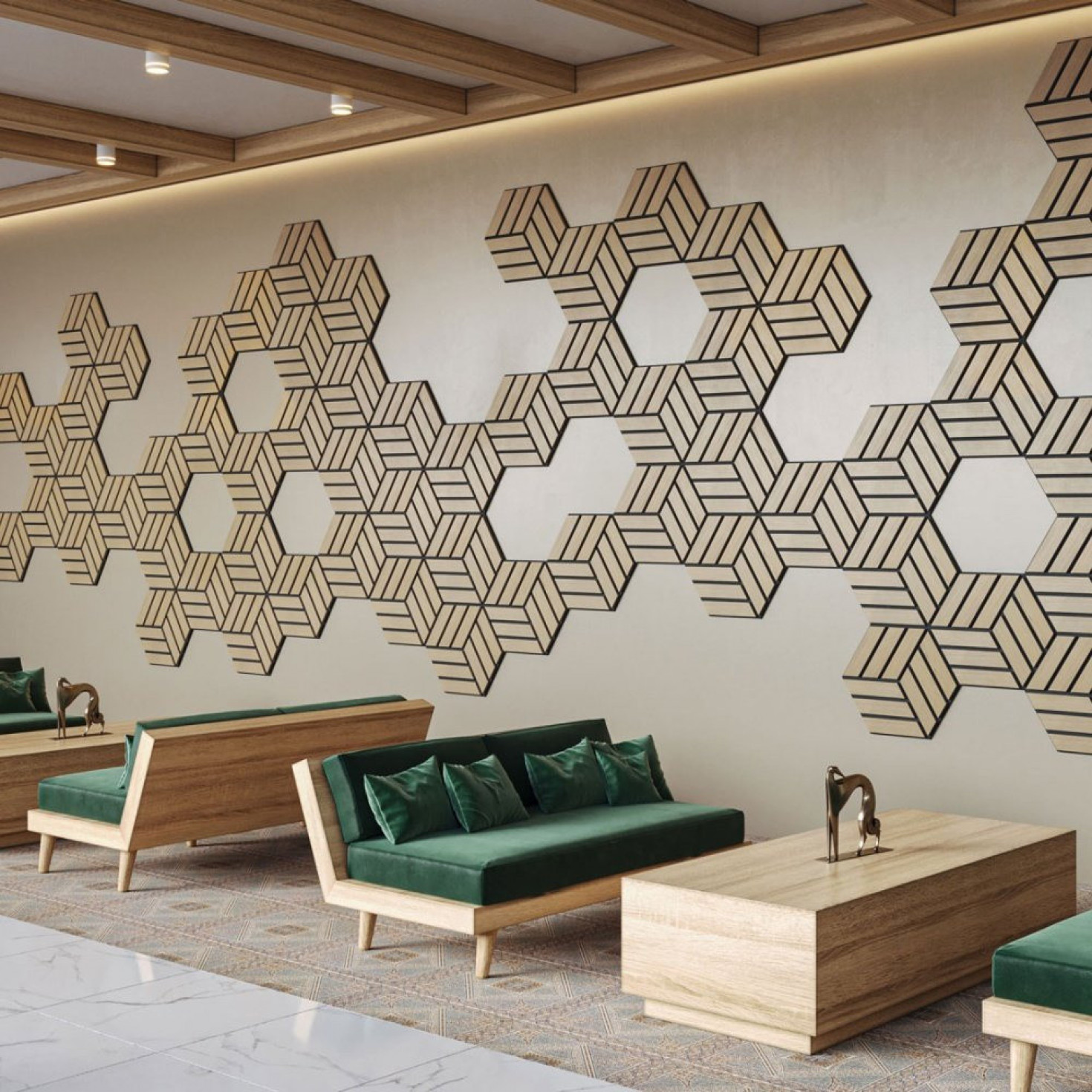
Fräsch has introduced HEX, a new addition to its STRATAWOOD collection, featuring hexagonal acoustic wall tiles available in four wood grain designs. Each tile is designed for superior acoustical performance, made from 100% PET with MDF veneer, and incorporates 55% post-consumer recycled content. The product aims to enhance design creativity in commercial spaces, following the success of previous STRATAWOOD products. For more details, visit frasch.com.
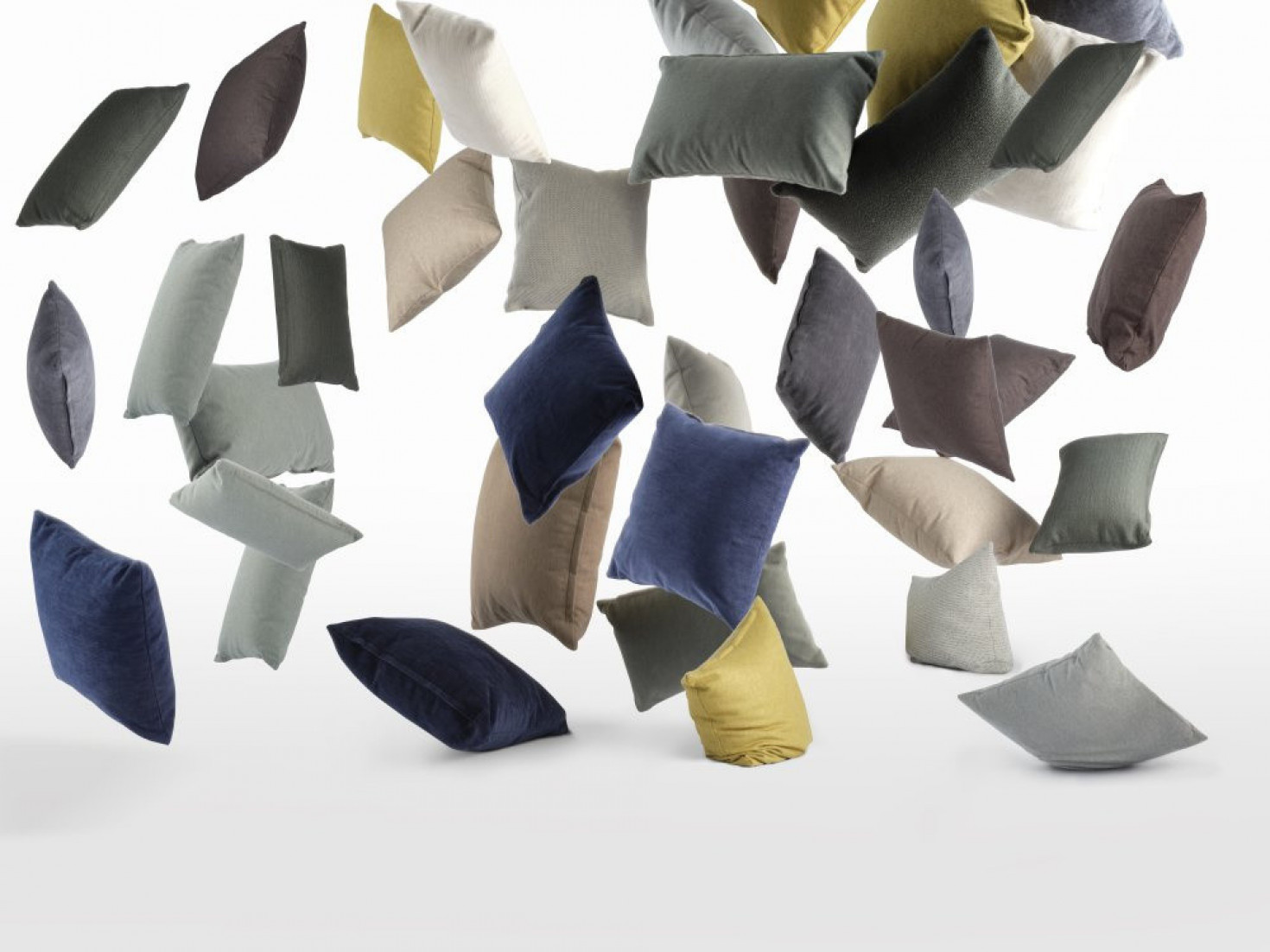
AIS has launched a new pillows program aimed at enhancing work environments with comfort and aesthetic appeal. The program offers a variety of upholstery options and three pillow sizes, allowing designers to personalize spaces effectively. The pillows are made in the USA and come with a three-year warranty, complementing the recently introduced Lounge Collection.
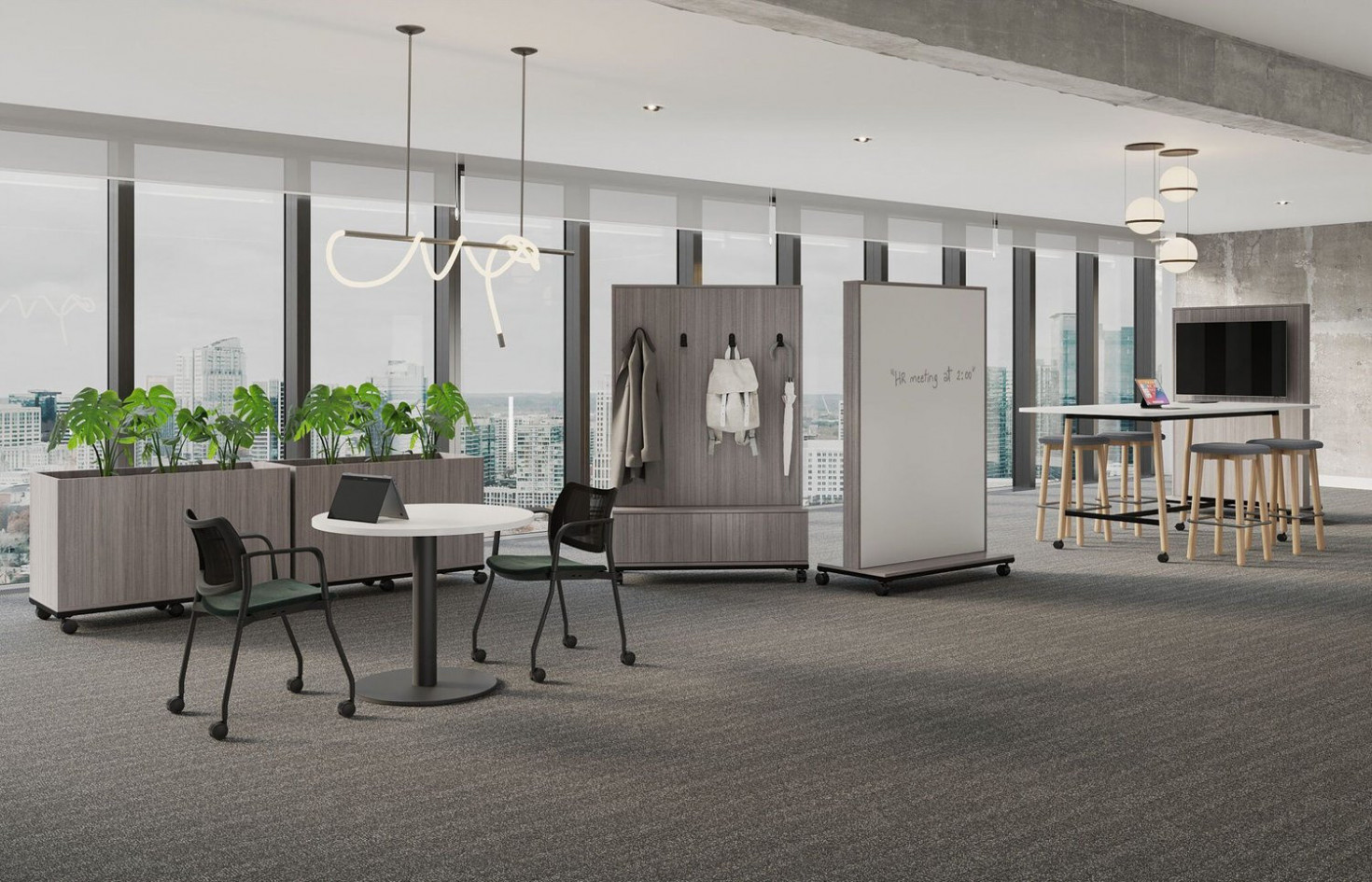
Indiana Furniture has launched the Synergy Collaborative collection, featuring partitions, tables, and seating designed for flexible office spaces that adapt to hybrid and collaborative work models. This collection allows users to easily configure spaces for individual or group work, promoting a dynamic work environment. The products are environmentally conscious, manufactured in the USA, and comply with various sustainability certifications.
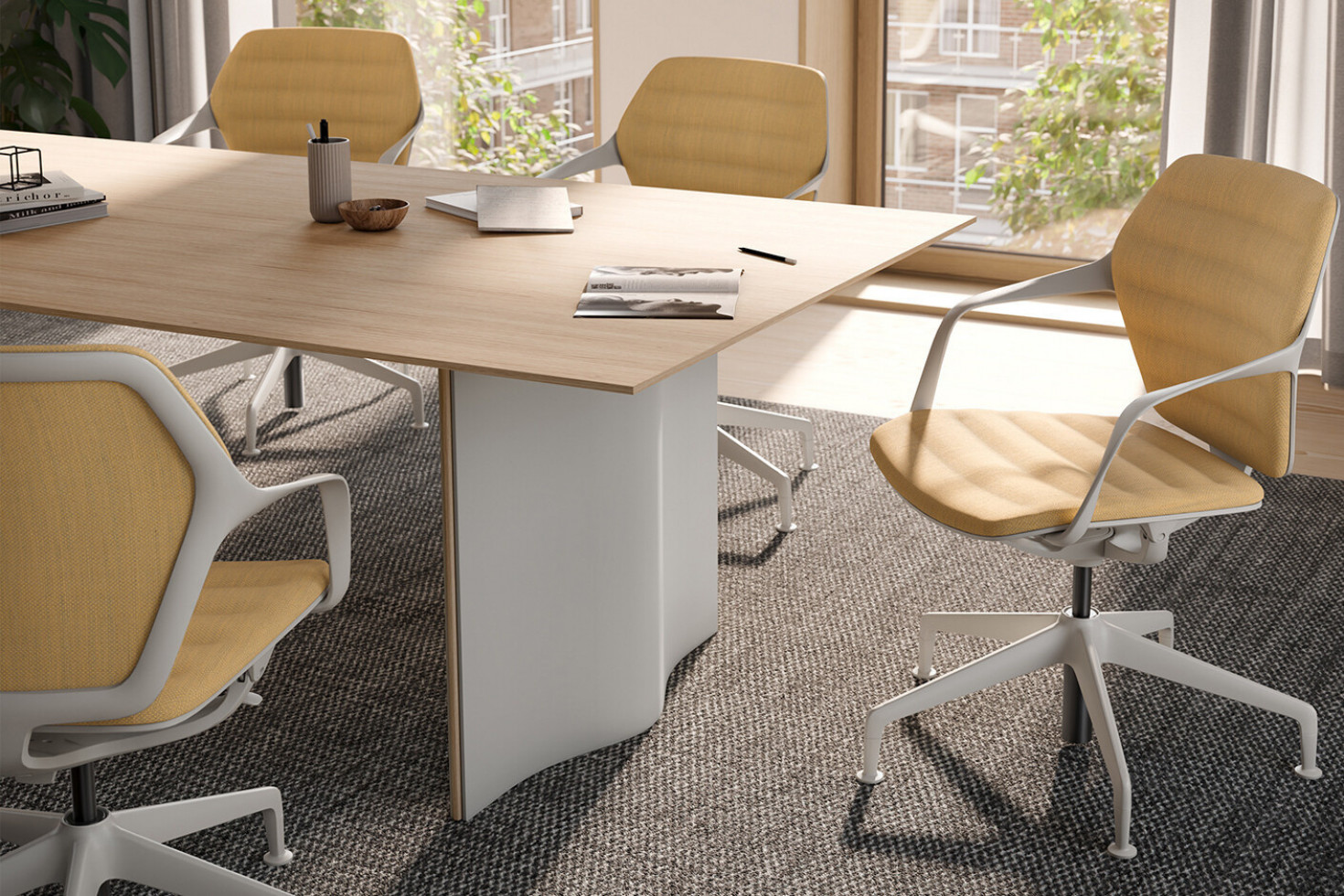
Brunner's new 'wave' table collection combines elegance and functionality for office, conference, and hospitality areas. Designed by Jürgen Laub and Markus Jehs, the tables feature a striking wave-shaped base that enhances stability and legroom. The collection offers customizable options in materials and finishes, catering to various design needs. Additionally, the 'wave light' variant is designed for informal settings, made from resource-saving plastic for easy mobility, and available in multiple heights and sizes, making it suitable for modern hotels and restaurants.
Industrial Design
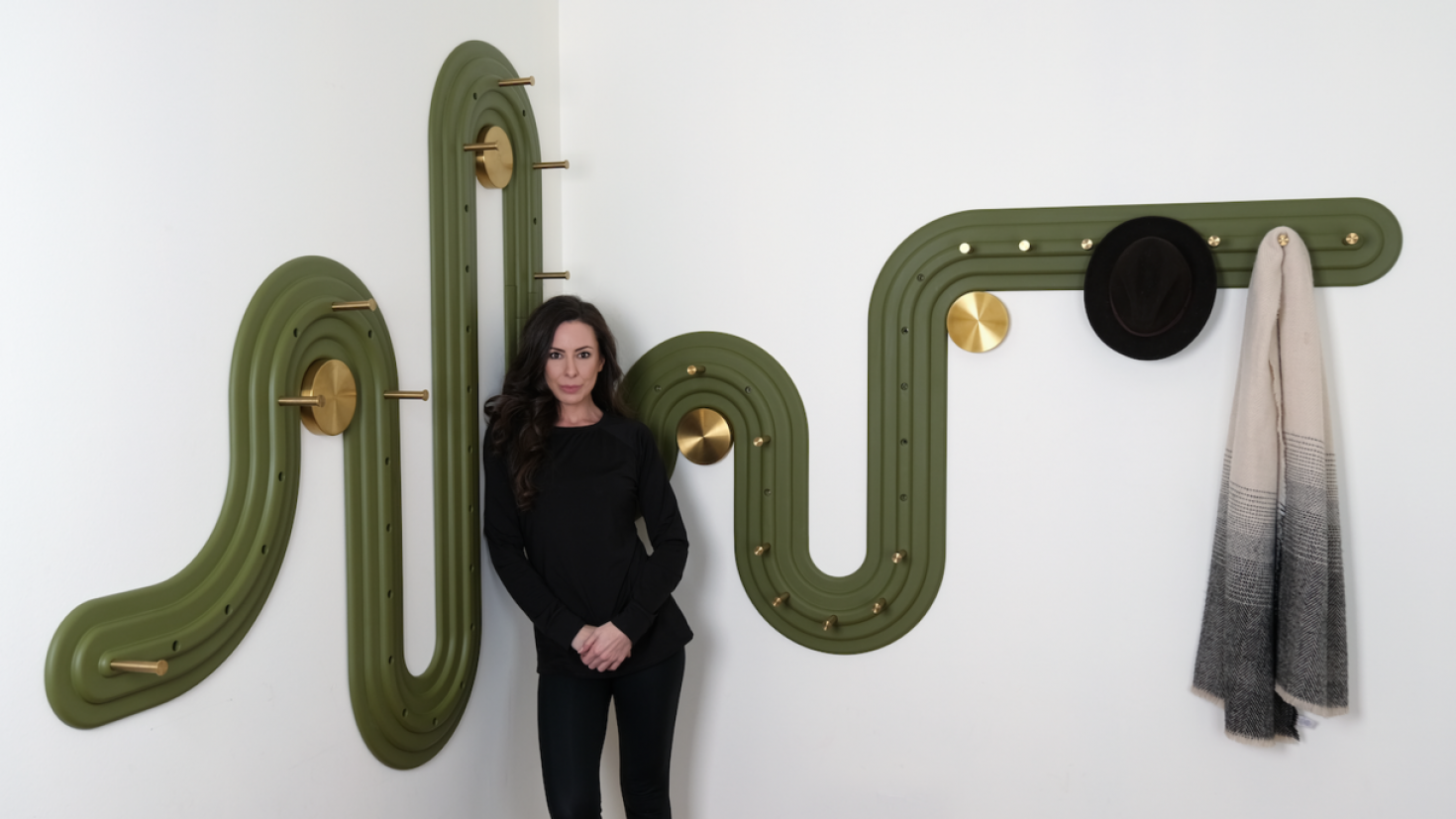
Erika Cross, a designer from Ann Arbor, Michigan, creates adaptable and interactive furniture pieces that enhance user engagement. With a background in art and design, she launched her studio in 2016, producing collections like Elements, which features innovative designs such as the Bolt table and Step coffee table. Cross combines traditional craftsmanship with modern technology, using sustainable materials like recyclable cork and eco-resins. Her work has received multiple awards, and she continues to explore custom projects, including a recent installation involving artificial flowers.
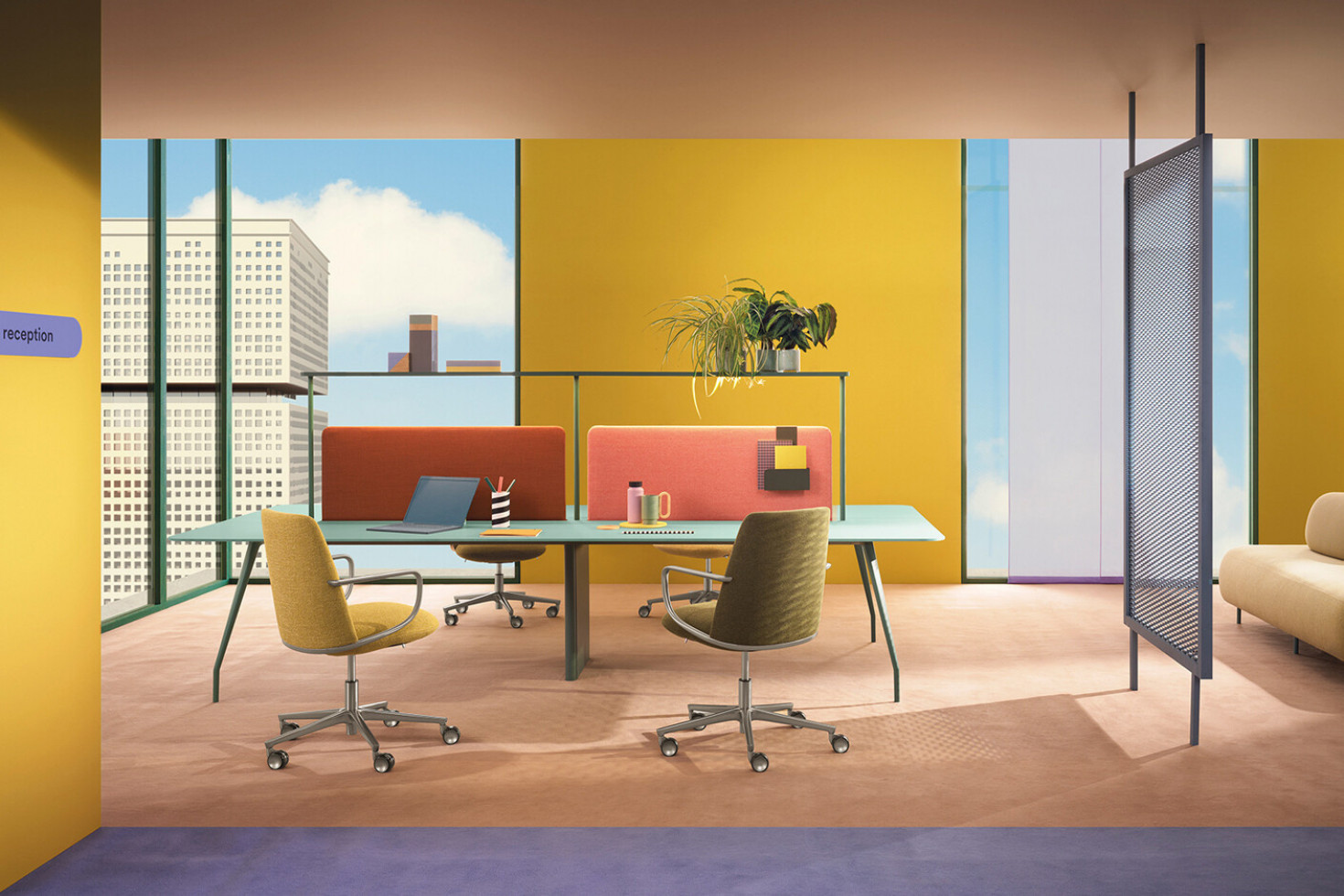
Robin Rizzini's "Rizz Workstation" for Pedrali is a multifunctional table designed for interior use, featuring a sturdy aluminum frame and customizable surfaces. It includes a cable management system and adjustable LED lighting, blending a modern office aesthetic with homely comfort. The workstation supports various configurations for individual or team use, emphasizing versatility and recyclability in its design.
Trends in Commercial Projects from Around the Globe
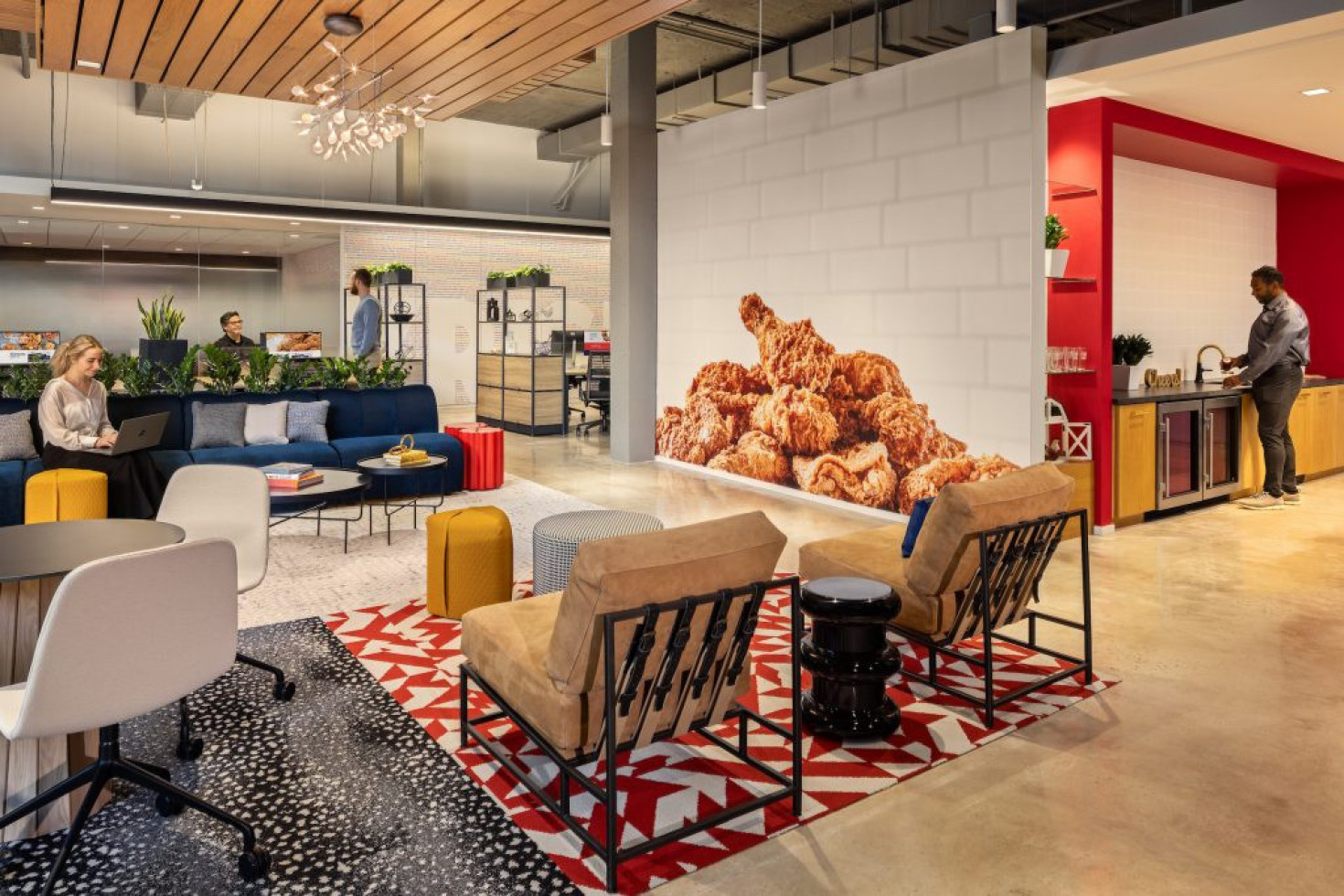
Hendrick designed the new headquarters for Krispy Krunchy Chicken in Atlanta, GA, focusing on inclusivity and flexibility to support a hybrid workforce. The 8,500 sq ft space features diverse areas for different work styles, accessibility features, and branded graphics that enhance the company's culture. Key elements include a Southern hospitality-inspired conference room, gaming areas, and a "Wall of Fame" for employee recognition. The redesign aims to foster collaboration and pride among employees while reinforcing the brand's identity.
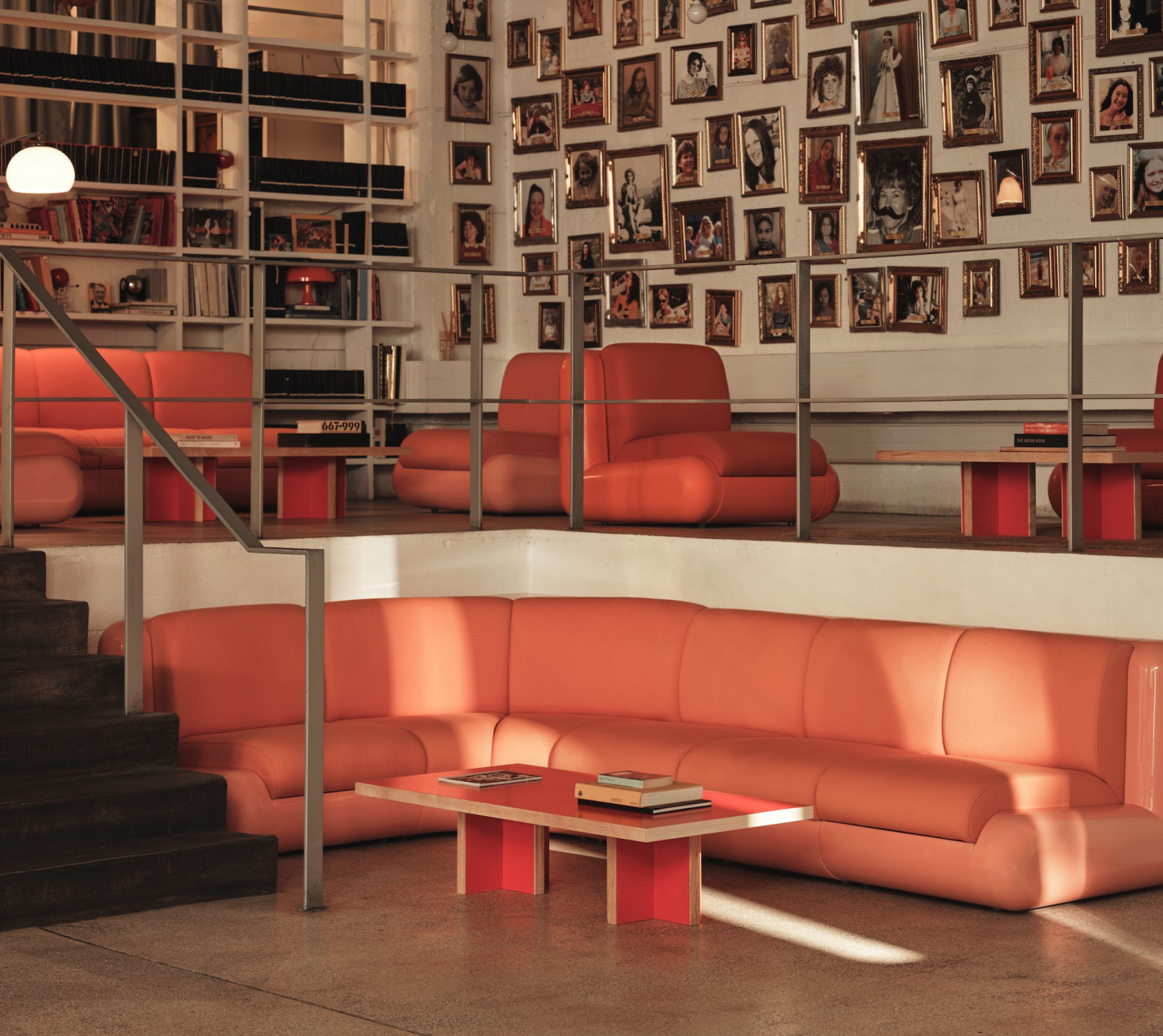
Holloway Li's recent refresh of an advertising agency has revitalized its identity and purpose, infusing it with new energy and direction. The changes aim to enhance the agency's engagement and effectiveness in the competitive advertising landscape.
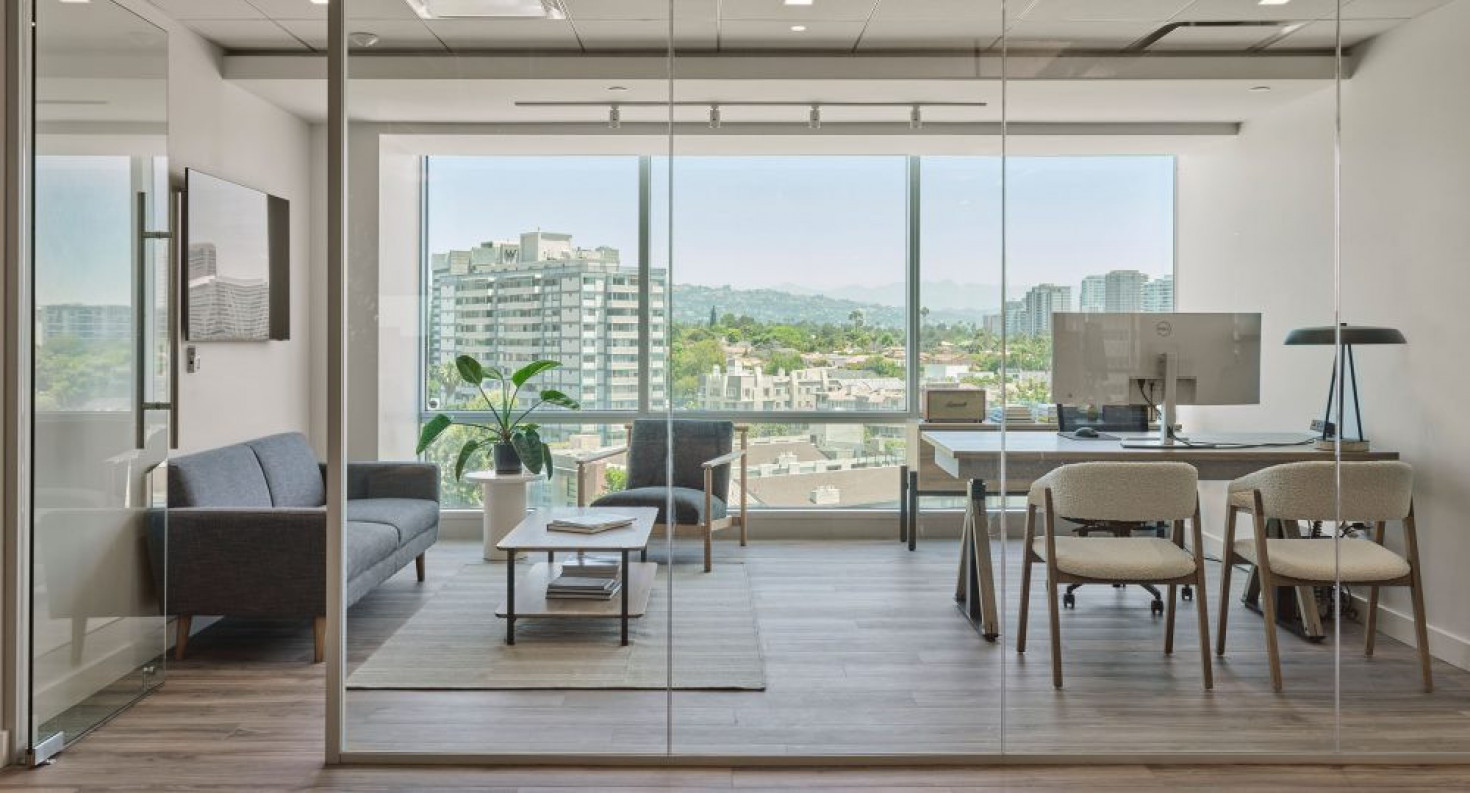
M Moser Associates renovated a 20,000 sq ft office for The Azoff Company's Global Music Rights in Los Angeles, blending timeless aesthetics with functionality. The design promotes collaboration and creativity, featuring a welcoming reception area, bespoke workstations, and a rotating art program. The project emphasizes natural light and greenery, creating an inviting environment that reflects the dynamic spirit of the entertainment industry and supports employee well-being.
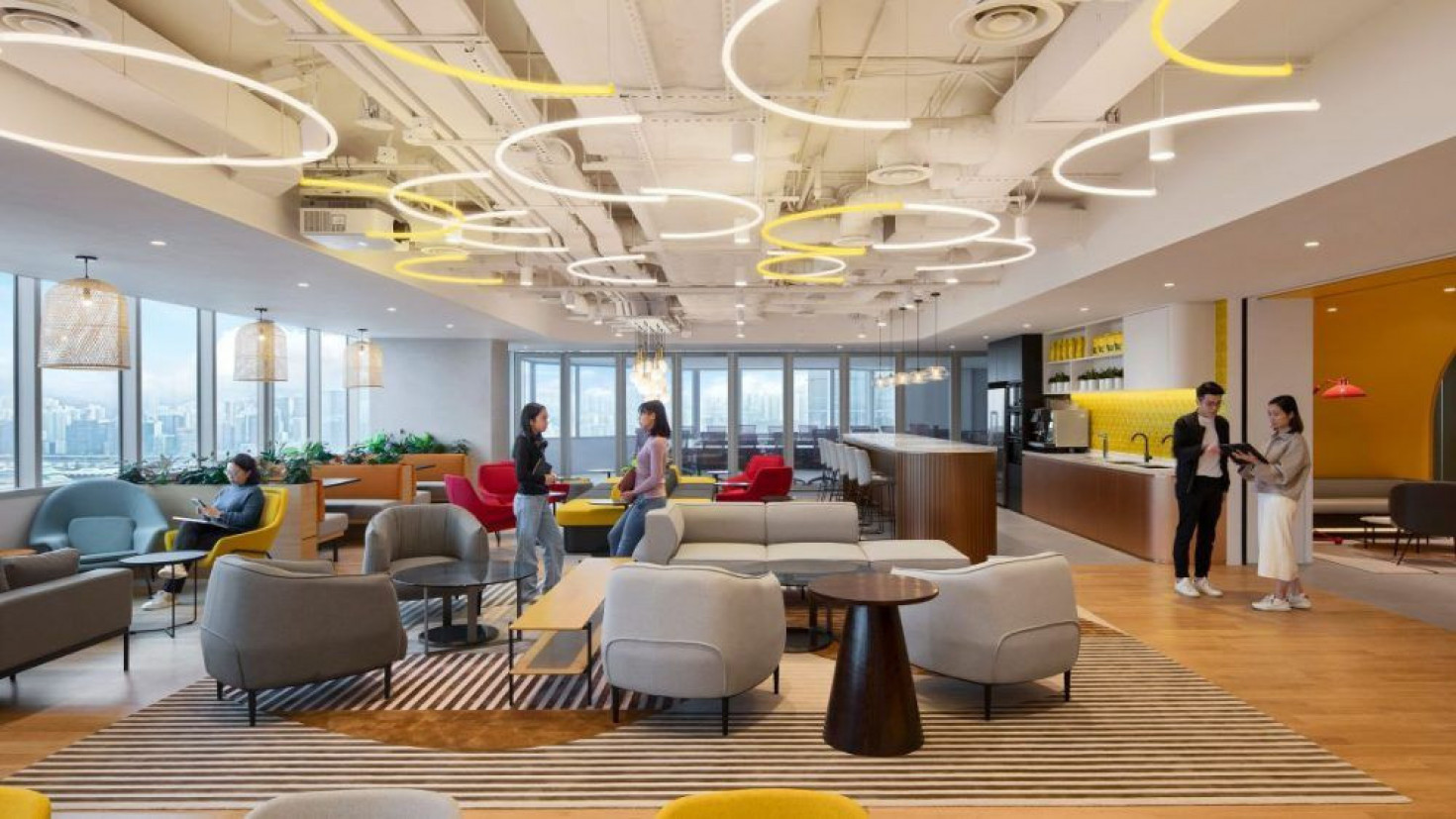
The McHappy Office in Hong Kong, designed by M Moser for McDonald's, emphasizes a people-centric and innovative work environment. Covering 30,000 sq ft, it features an open plan layout, advanced technology, and design elements inspired by McDonald's brand, including arched ceilings and a staircase reflecting the iconic logo. The office promotes employee wellbeing through adjustable workstations and natural light, aiming to enhance recruitment and operational efficiency.
Latest In Real Life WFH
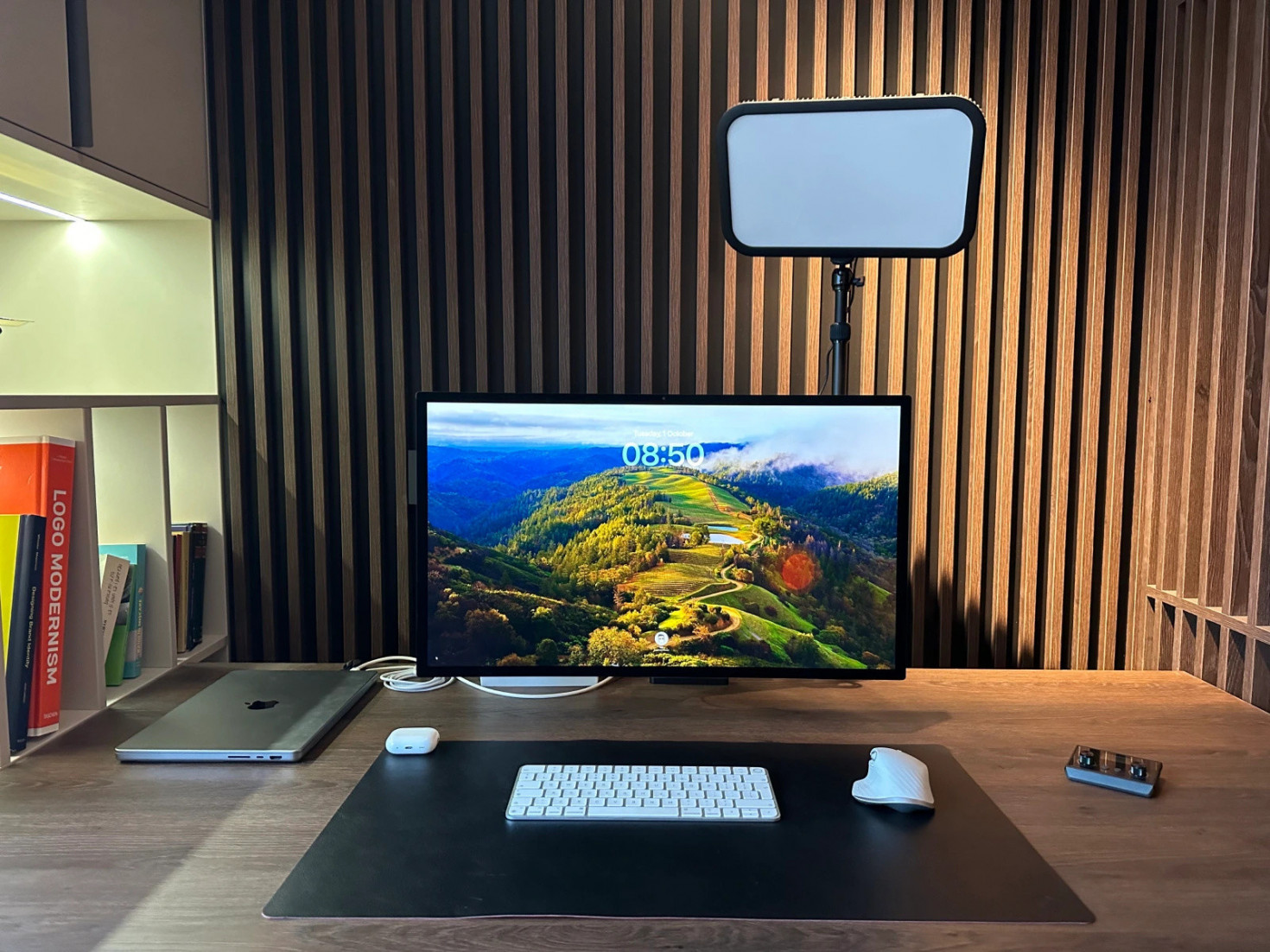
Calin Balea is a UI, UX, and Brand Design Partner with over a decade of experience, founding Contrast Studio to assist startups in achieving product-market fit. His workspace includes essential items like a MacBook Pro, AirPods Pro, and a standup desk. He emphasizes the importance of his laptop and AirPods for productivity and suggests taking breaks and engaging in workouts to overcome creative blocks. His typical day involves working in sessions, staying hydrated, and incorporating exercise into his routine..
Project Leads
Upcoming Industry Events
BDNY 2024: Redefining Hospitality Design With Unmatched Innovation and Networking Opportunities
Boutique Design New York (BDNY) will take place on November 10-11, 2024, at the Javits Center, NYC, featuring innovative design showcases, networking opportunities, and educational sessions. Highlights include immersive spaces by leading designers, a new Dine & Design PopUp, CEU-accredited seminars, the Platinum Circle Awards Gala honoring industry leaders, and the Gold Key Awards recognizing excellence in hospitality design.
Industry Briefing
Equity Council’s What is Unconscious Bias?
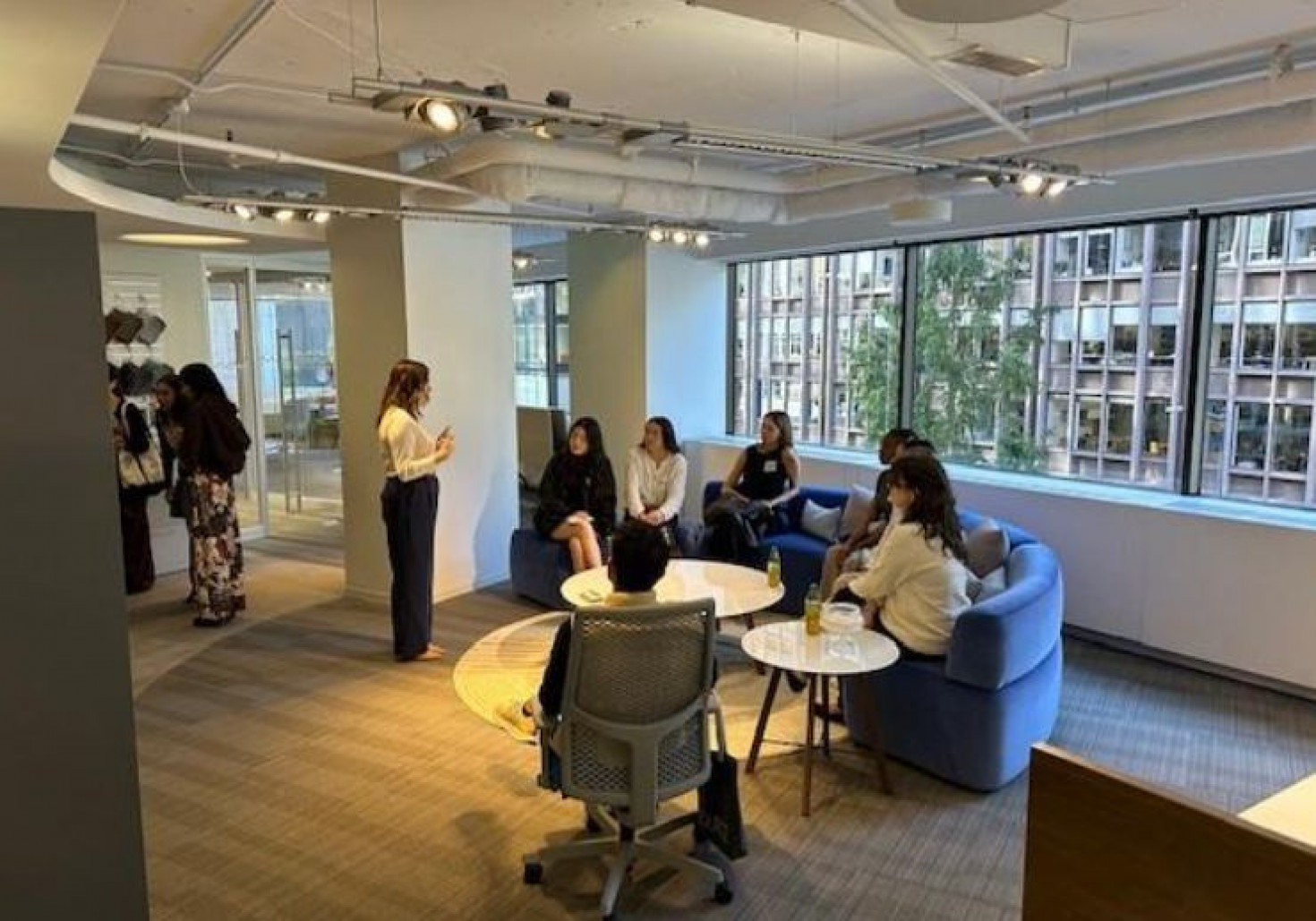
The Equity Council is hosting an interactive CEU session titled “What is Unconscious Bias?” led by Allyn Martin from Patcraft. The session will cover various types of unconscious biases that affect daily interactions, providing participants with strategies to recognize and reduce their own biases. Attendees will earn 1 IDCEC CEU for participation.
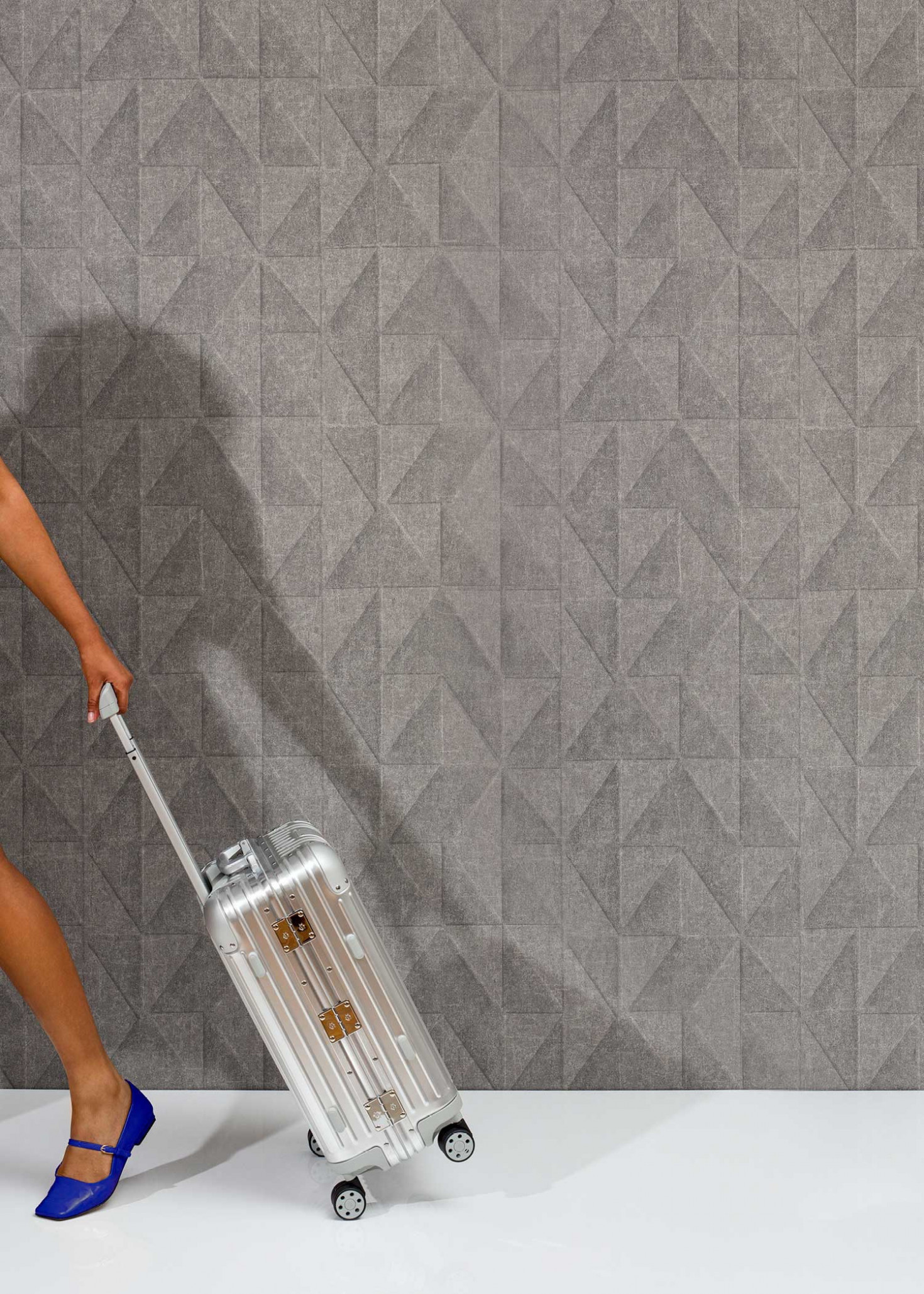

Find the best Contract Furniture Industry jobs and hire the best talent.





Byrne is seeking a Business Development Executive to join our Sales Team in the West Territory. We are a fast-paced and fun environment, with a collaborative mindset.

BioFit Engineered Products is seeking an experienced Sales Manager to oversee and lead the activities of the sales department by performing the duties outlined below. This individual will participate in corporate planning, budget setting, and strategic direction including product & services, markets and channels.

The Regional Sales Manager will be responsible for the sales and sales growth of The Senator Groups products in the region of the country outlined.

The Product Manager will be responsible for outlining the relevant product features and developing a sales strategy for the desking product sales effort.