
- An estimated 850 million people are affected by chronic kidney disease worldwide.
- 2 million people - including 55,000 Canadians - are on dialysis or living with a kidney transplant yet this represents only a fraction of those in need of lifesaving treatment.
- 1 in 4 new end-stage kidney disease patients in Canada are late-referrals - many don't know they have the disease and start dialysis within 3 months of first seeing a nephrologist.
- Only 1 in 6 patients is referred for transplant assessment within 1 year of starting dialysis and this number varies from province to province. Older adults, women, people with diabetes or other co-morbidities, and those living farther from a transplant centre, are less likely to be referred. African Canadians, Indigenous People, and Canadians of Hispanic, Middle Eastern and Pacific Islander backgrounds are less likely to complete a transplant evaluation within 2 years of referral.
- More than 3,000 Canadians are currently on the transplant waitlist for a deceased donor kidney but our deceased organ donor rate (19.31 pmp) remains low in comparison to the US (38.03 pmp).
- Living donation offers a faster pathway to better health and quality of life but Canadians of African, South Asian, East Asian and Indigenous and Other Ethnicity are significantly less likely to receive a living donor kidney transplant. The reasons are multifactorial but systemic barriers, mistrust and lack of representation in the healthcare system, low transplant knowledge and access to living kidney donation are factors we can address.







Centre News






Coming Up
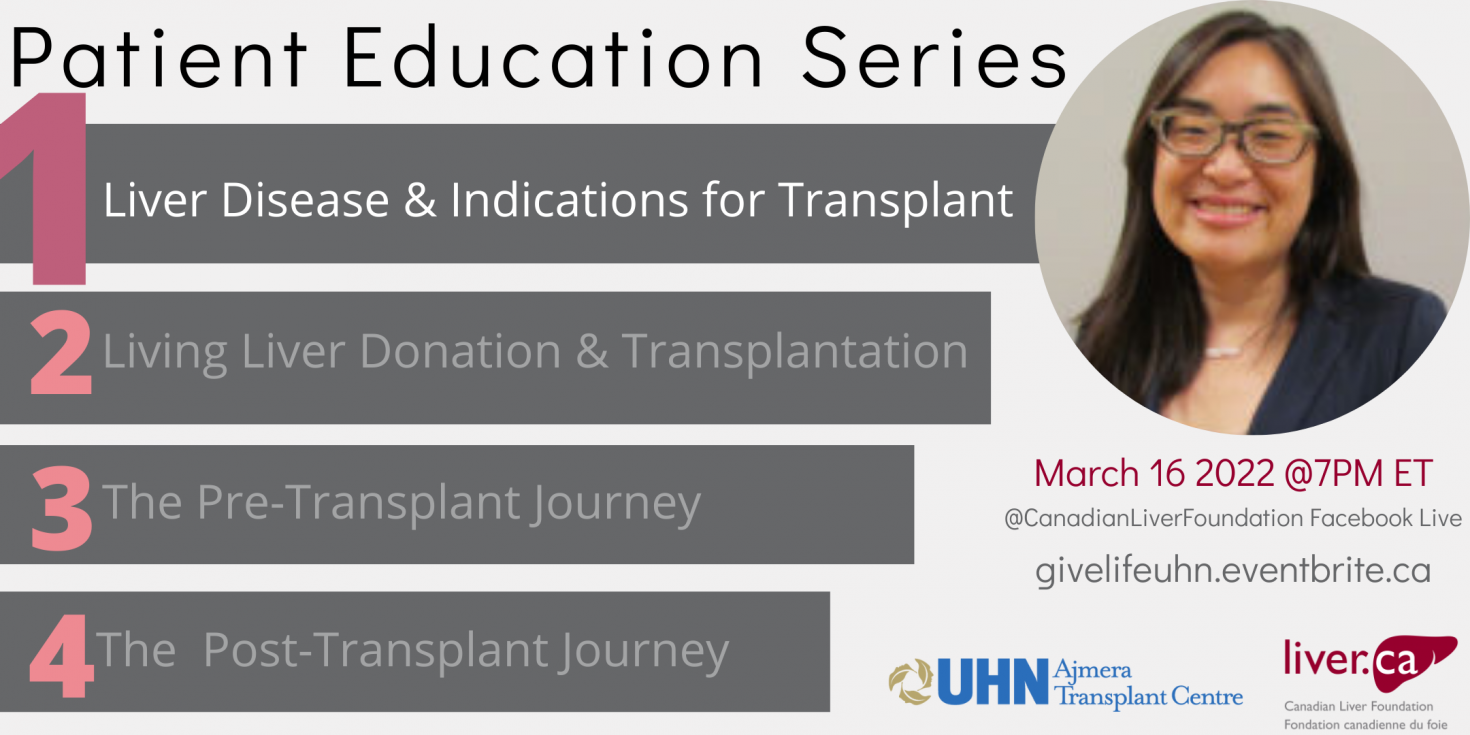
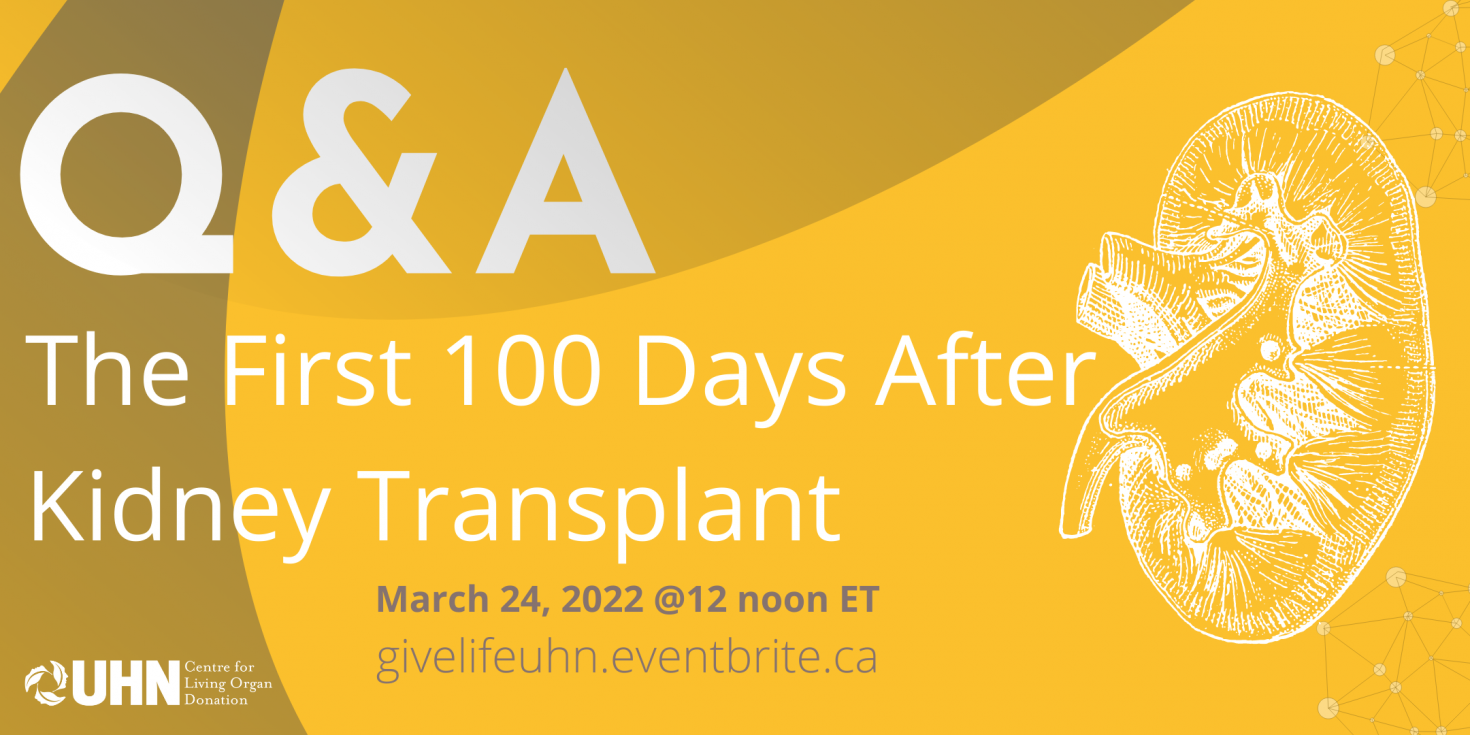
- 1st Tuesday of the Month: Information for Potential Living Kidney Donors
- 2nd Tuesday of the Month: Finding a Living Donor (registrants will be able to access additional resources including Having Your Donor Find You, a free self-paced video series)
- 3rd Tuesday of the Month: Financial Resources for Living Donors (PRELOD and other provincial reimbursement programs, employer support and more)
- 4thTuesday of the Month: Information for Potential Living Liver Donors
In Case You Missed It
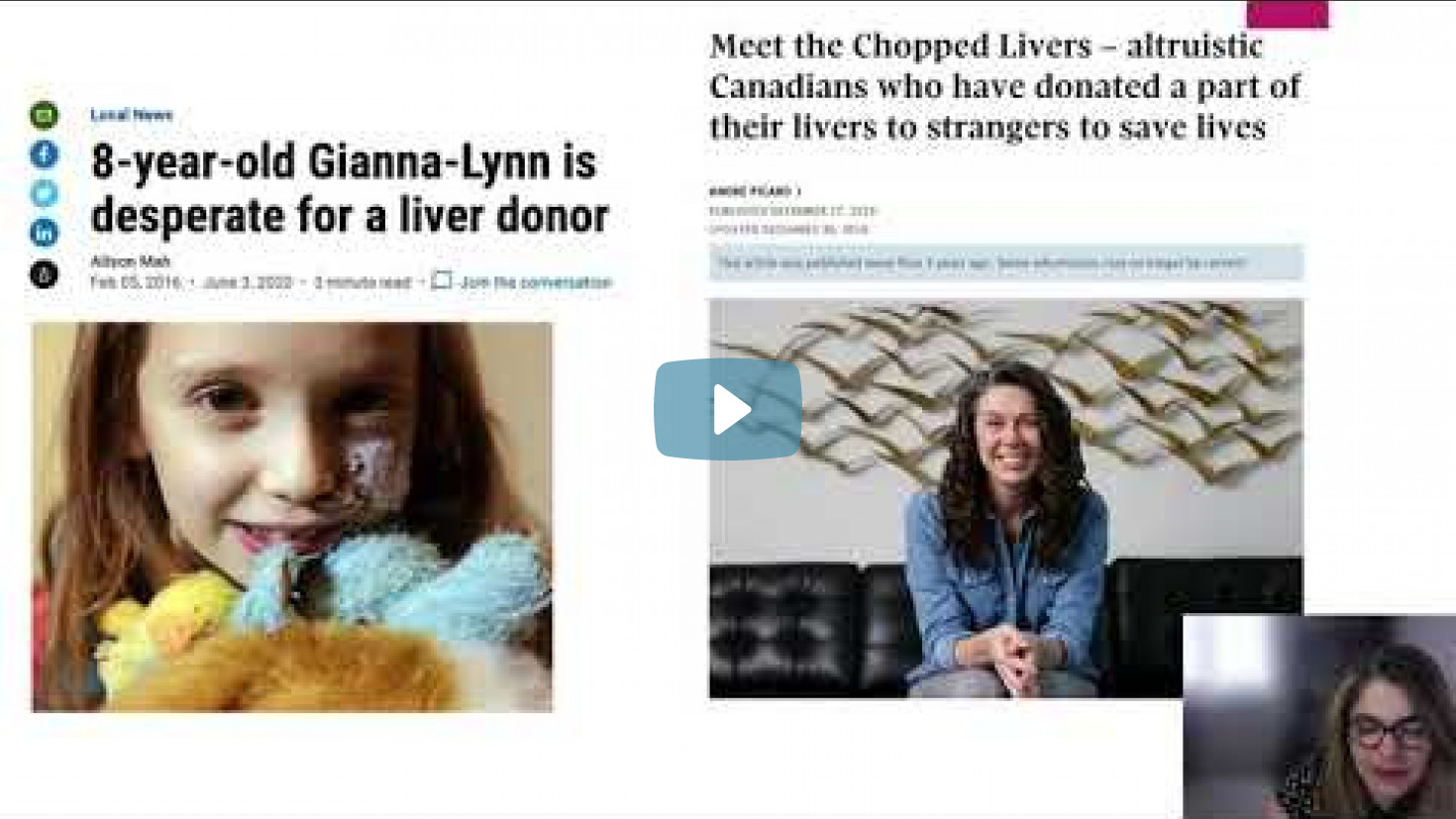







I never had a family doctor - I’m big and strong, I’m going to be a nurse for dad | Green Table Talk
- Howl Loves His New Liver
- Howl Learns about Kidneys and Dialysis
- My Mom is Having Surgery: a Kidney Story
- Food Safety for Patients with Weakened Immune Systems
- Getting a New Kidney: Information for Patients & Families
- My Surgery: An Information Guide & Personal Care Tool
- Non-Alcoholic Fatty Liver Disease
- Liver Resection
- Transplant Financial Help
- What You Need to Know about Living Donor Liver Transplant
- Writing to Your Anonymous Living Donor
RESEARCH ROUND UP
Below are links to selected articles on living organ donation and transplantation published within the last six months. If you have a suggestion email us.
Advancing a Paradigm Shift to Approaching Health Systems in the Field of Living-Donor Kidney Transplantation: An Opinion Piece Describes limitations of current system and proposes a multilevel approach to optimize system performance, address barriers and significantly increase living donor kidney transplants across Canada.
Anonymity: What Does it Mean and Why is it Important to Anonymous Living Liver Donors? Discusses 5 themes based on qualitative interviews with anonymous donors at Toronto General Hospital: (1) the moral importance of an unencumbered gift, (2) wanting internal satisfaction rather than seeking external accolades, (3) anonymity as a protection against potential negative outcomes in the recipient, (4) feelings of ambivalence towards meeting the recipient and (5) concerns about negative perceptions amongst their own friends and family.
Challenges Facing Indigenous Transplant Patients Living in Canada: Exploring Equity and Utility in Organ Transplantation Decision-making Describes Saskatchewan Think Tank model to reduce barriers in access to transplant and recommends use of culturally-safe data collection methods, development of cultural safety training for staff and additional funding to support Indigenous transplant donors and recipients.
Ethnicity, Disease Severity and Survival in Canadian patients with Primary Biliary Cholangitis Based on a sample of 1,538 patients from six sites, study concluded that “Indigenous Canadians with PBC present with advanced disease and have worse long-term outcomes compared to White patients.”
Optimal Surgical Workup to Ensure Safe Recovery of the Donor after Living Liver Donation -- A Systematic Review of the Literature and Expert Panel Recommendations Optimal selection of liver donors requires assessment of liver anatomy and volume, and exclusion of liver pathologies. Paper supports use of MRI and CT imaging, and donor liver biopsy if abnormalities found. Routine use of catheter angiography not supported.
Predicting Long-term Survival After Liver Transplantation in Patients With NASH Cirrhosis Nonalcoholic steatohepatitis (NASH) cirrhosis is a leading indication for liver transplant and the number of affected patients is growing. This study identifies key risk factors for poor outcomes at 5 years post-transplant including: diabetes, ventilator dependence, hemodialysis within a week of transplant, poor functional status, and age older than 70.

Toronto General Hospital | Ajmera Transplant Centre
585 University Ave, 9 MaRS-9115, Toronto, ON M5G 2N2 Canada
livingorgandonation@uhn.ca | 416-340-5400
www.livingorgandonation.ca
