







In Case You Missed It









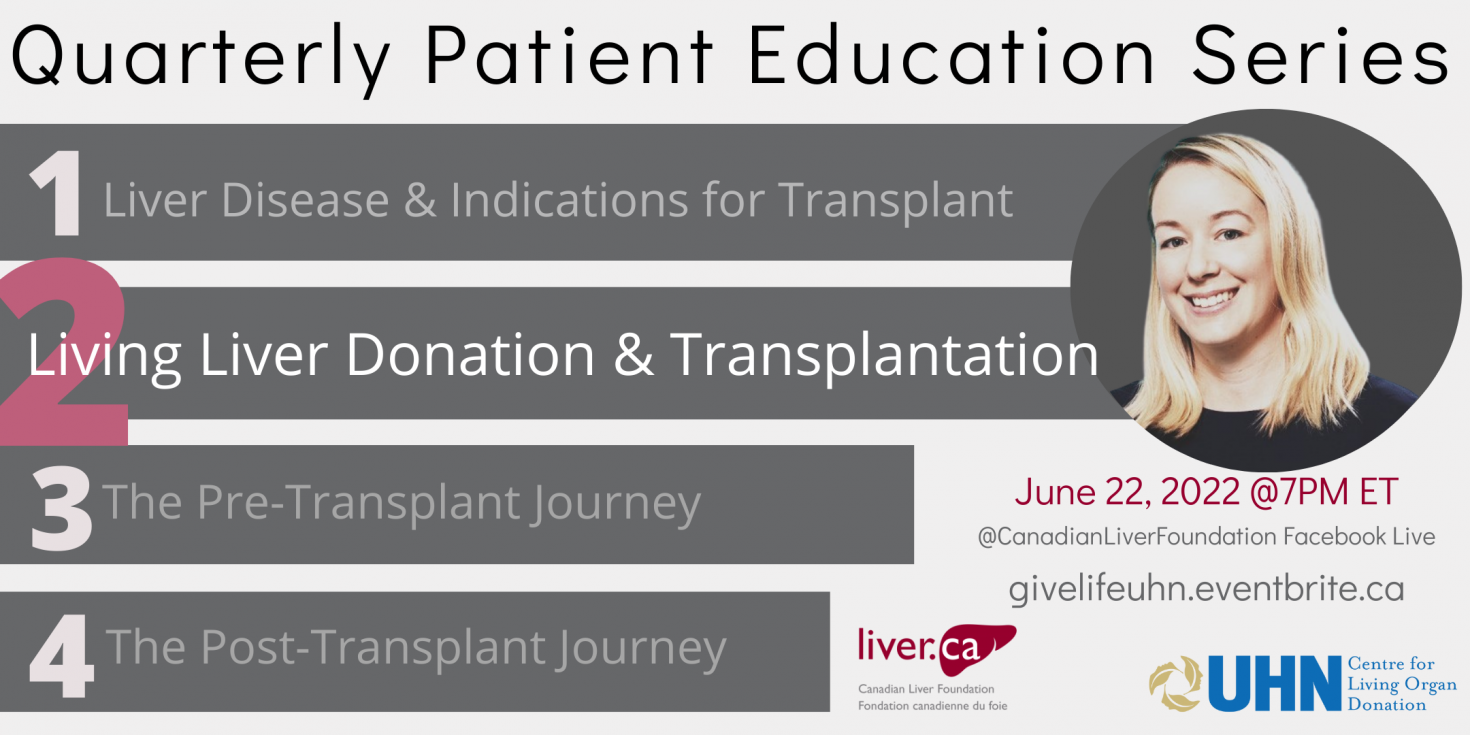
- 1st Tuesday of the Month: Information for Potential Living Kidney Donors
- 2nd Tuesday of the Month: Finding a Living Donor (registrants will be able to access additional resources including Having Your Donor Find You, a free self-paced video series)
- 3rd Tuesday of the Month: Financial Resources for Living Donors (PRELOD and other provincial reimbursement programs, employer support and more)
- 4thTuesday of the Month: Information for Potential Living Liver Donors


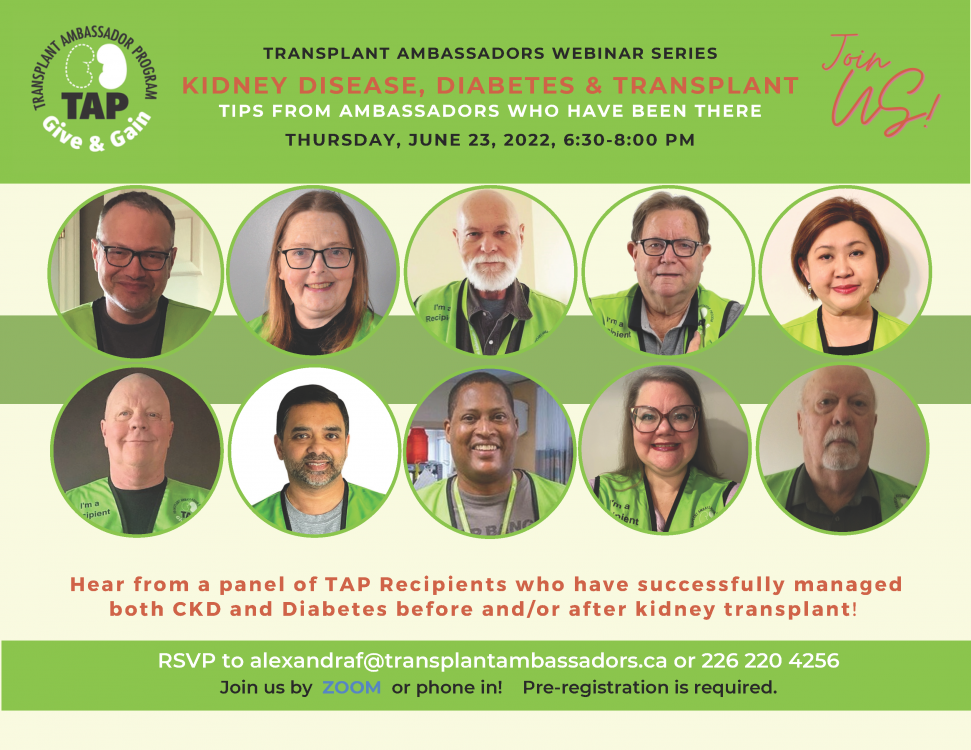
Partner Events & Resources




RESEARCH HIGHLIGHTS
Below are links to selected articles on living organ donation and transplantation published recently. If you have a suggestion email us.
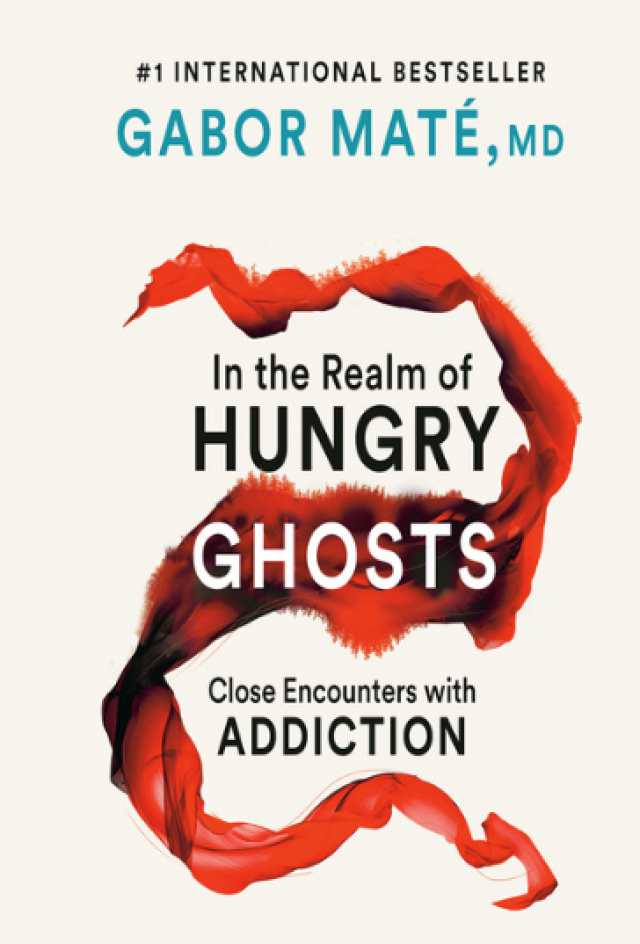
Are MELD and MELDNa Still Reliable Tools to Predict Mortality on the Liver Transplant Waiting List? Comprehensive review of the model for end-stage liver disease (MELD) and MELD sodium (MELDNa) which are used to prioritize liver patients for transplant, including advantages, limitations and promising alternatives.
Compatible Donor and Recipient Pairs’ Perspectives on Participation in Kidney Paired Donation Programs: A Mixed-Methods Study Most of the compatible donors and transplant candidates surveyed in this Canadian study were willing to participate in the Kidney Paired Donation (KPD) Program. Key concerns included wanting to maintain bond of directed donation, fear of KPD chain breaking or donor reneging, delays in transplantation, and travel requirements.
Outcomes of SARS-CoV-2 Infection in Unvaccinated Compared With Vaccinated Solid Organ Transplant Recipients: A Propensity Matched Cohort Study. Solid organ transplant recipients are at high risk for complications from COVID-19. Study concluded that transplant patients need 3 or more vaccine doses and alternate strategies to reduce likelihood of severe disease. Another study of Canadian solid organ transplant patients estimated that adjusted vaccine effectiveness against infection was 72% for 3rd dose vs 31% for one dose. For hospitalization or death, adjusted vaccine effectiveness was 67% for 3rd dose vs 38% for 1st dose.
Partnering with Patients to Enhance Access to Kidney Transplantation and Living Kidney Donation Describes the evolution and lessons learned from the Transplant Ambassador Program (TAP), a patient-led Ontario-wide program that connects patients with kidney failure with individuals who have successfully received a kidney transplant or donated a kidney.
Patient Selection for Downstaging of Hepatocellular Carcinoma Prior to Liver Transplantation—Adjusting the Odds? Reviews the current literature on patient selection for downstaging and liver transplant for hepatocellular carcinoma outside the Milan criteria.
Perioperative Management of Living Donor Liver Transplantation: Part 2 – Donors Provides a comprehensive overview of the perioperative management of adult live donors including donor selection, outcomes and complications, anesthetic management, Enhanced Recovery After Surgery protocols, recent surgical advances and more. Part 1 discusses management of liver transplant recipients.
The Role of Acute In-Patient Rehabilitation on Short-Term Outcomes After Liver Transplantation - A Systematic Review of the Literature and Expert Panel Recommendations Review suggests that in-patient rehabilitation for recipients of liver transplantation is safe, tolerable, and feasible, and may improve functional outcomes.
Waitlisted and Transplant Patient Perspectives on Expanding Access to Deceased-Donor Kidney Transplant: A Qualitative Study There is wide variation in transplant centre acceptance rates of kidneys retrieved from deceased donors ≥ 60 years, and/or donors aged 50-59 years with cerebrovascular cause of death, and/or history of hypertension and/or terminal serum creatinine > 132.6 μmol/L (1.5 mg/dL). Although these kidneys are more likely to be discarded they may be of particular benefit for older patients or those less likely to receive a kidney offer. Based on interviews with waitlisted patients in Manitoba and Saskatchewan, this small study found that patients were comfortable to accept a less than ideal kidney when their autonomy was respected, they were provided clear, standardized, and transparent information, and they trusted their physician.
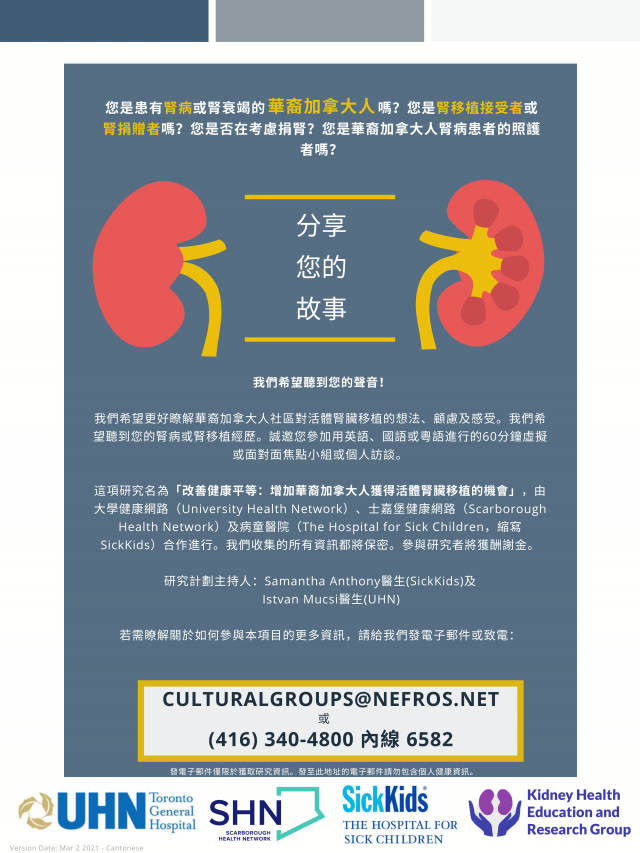
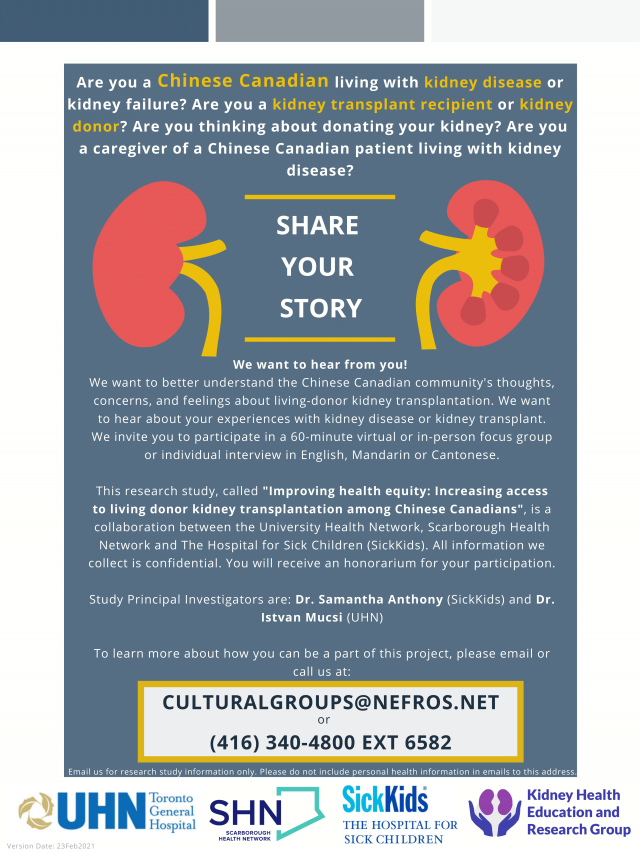
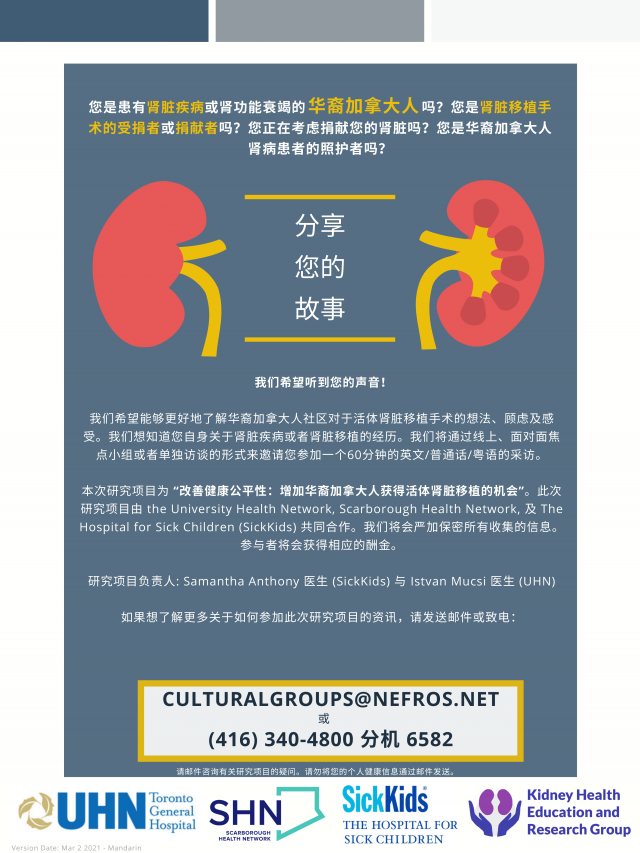
Call for Research Participants

Toronto General Hospital | Ajmera Transplant Centre
585 University Ave, 9 MaRS-9115, Toronto, ON M5G 2N2 Canada
livingorgandonation@uhn.ca | 416-340-5400
www.livingorgandonation.ca
