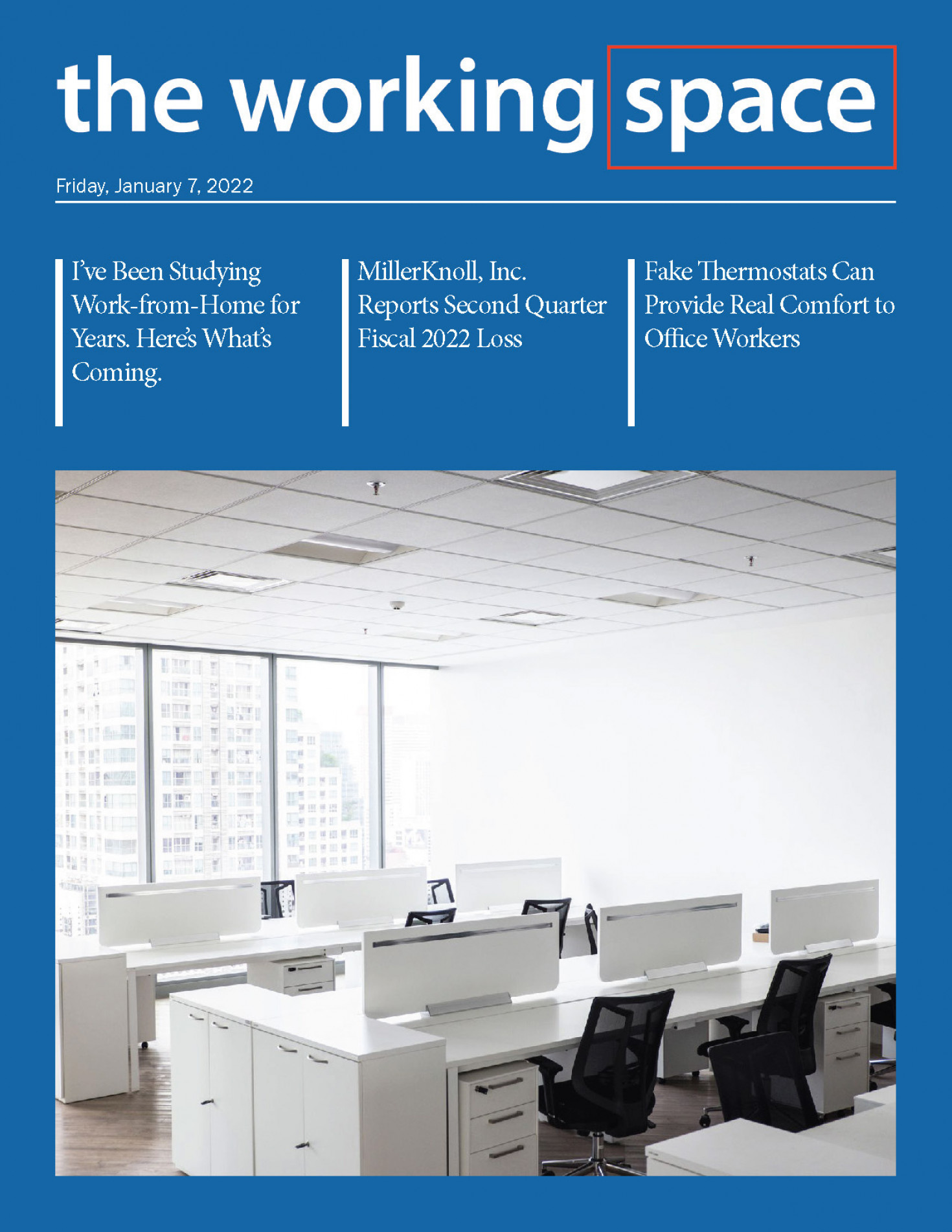
Friday, January 7, 2022


It's 2022, but it feels a lot like 2021

Once again the working space is imperiled by the continued extension of "the return to the office" due to COVID. This time its name is omicron. And, once again, nobody knows anything concerning who and when the working space moves forward, and what that "forward" will look like. The good news is that we're on top of it and will continue to bring you all the latest stories from around the globe, providing you with the latest thinking on the working space issues of today.

Welcome to 2022!

News

LumApps is releasing new workplace data claiming how employees and employers are dealing with the fallout of the Great Resignation. The survey was conducted in collaboration with CMSWire during the Fall of 2021.

Data was collected from 1,800 employers and employees across mid-sized and large organisations in the U.S., UK, and France, to analyse both retention and recruitment trends. The survey suggests that employees are reflecting on what they want out of their careers in what’s been dubbed “The Great Reflection” and that employers need to be doing more in order to retain top talent.

The data was compiled into two new reports: Employee Retention Strategies for the Digital Workplace and The New Era of Employee Recruiting, which each paint a picture of the current workplace landscape. The pandemic has upended the way people work, and employees have become empowered to take their careers into their own hands and re-evaluate what’s important to them. At the same time, employers are struggling to retain employees long-term and transform their workplace culture to meet today’s needs.

A union drive at a top New York City architecture firm hints at wider labor unrest within professional jobs.
 
Late last month, staffers at New York City-based architecture firm SHoP Architects announced that well over half of their eligible colleagues signed cards pledging their support for a union, which would make it the first such organizing effort at a private U.S. architecture firm in decades.
With the onset of the Omicron variant, many businesses are rethinking their return-to-work plans, and U.S. workers find themselves yet again in ‘The Great Wait.’ Even though many experts believe that Omicron could be a sign that COVID-19 is phasing into a manageable endemic, Omicron is aggressively contagious, more so than any of the previous variants. As this strain propelled a record daily in COVID-19 cases just two days after Christmas, many of the nation’s largest employers are postponing their return-to-office date… again.

The longer that office staff are working remotely, the trickier it will be to return to pre-pandemic norms of office life. Just as it seemed like COVID-19’s grip was beginning to wane, the ‘temporary’ circumstances of remote or hybrid work persisted, causing several big-name companies to abandon or offload portions of their latest leases. However, despite the continued return-to-work delays, some companies are actually expanding their real estate portfolio.

If all goes well, supply chains will slowly recover in 2022, and the worst economic impacts will be behind us.
Companies are testing whether the United States can regain some of the manufacturing output it ceded in recent decades to China and other countries.
In a perfect world, a seamless supply chain is like a perfectly choreographed baton handoff: A huge cargo ship sails into an uncongested port, crews and cranes quickly unload the containers, truck drivers receive the containers, and the containers are transported to specific destinations.

But the world is not perfect, and the supply chain is anything but seamless. Let just one of those links fumble the baton, and the race is lost.

Considering that more than 70 percent of all goods moved in the United States were transported by trucks last year, it’s easy to see the crucial role trucking plays in the supply chain. And when the trucking industry attempted to transport 10.23 billion tons of freight last year amid a host of pandemic-related speed bumps and roadblocks, it should come as no surprise that truckers found themselves pumping the brakes far more often than the accelerator.
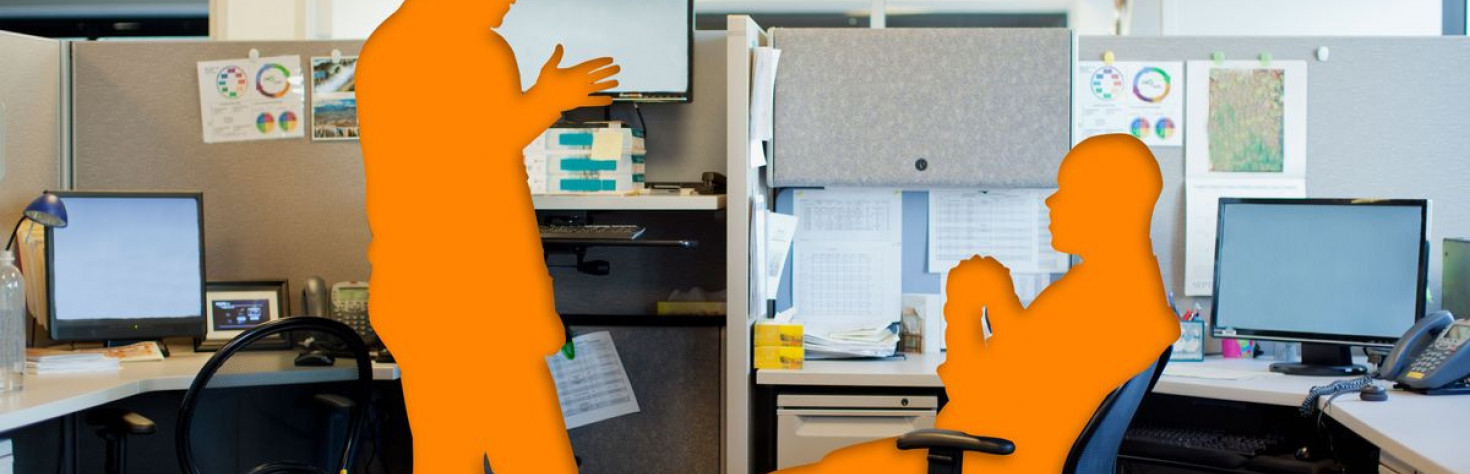
“As soon as I get an offer, I’m leaving.”
 
The return to in-office work was rocky for New York City’s municipal employees from the start: Mayor Bill de Blasio ordered them back to their desks full-time in September at the peak of Delta infections. City workers protested, and a wave of resignations followed. In spite of repeated calls for remote work, de Blasio hasn’t budged — even as Omicron began to sweep through New York in December. In several city departments, employees say they’ve been required to go into work amid ongoing office outbreaks. “The attitude is, Wait for Eric Adams and pray to God you don’t kill your family members in the meantime,” said one city employee who asked to remain anonymous. On Christmas Eve, New York spoke with four others — all agency attorneys for the city — about the past week and a half of chaos. (Their names have been changed so that they could speak openly.)

The Workplace

A recent Think Tank panel investigated how changes in the way we work will impact design.
 
Change, change, change, in the way we work and the way we live—that was the overriding theme of Metropolis’s Think Tank titled “The Far-Reaching Tentacles of Work.” The event was hosted by SmithGroup Los Angeles and moderated by Sam Lubell, executive editor of Metropolis.

“If you’re not working in a different way after the pandemic, you’re not doing something right,” said Regan Donoghue, workforce strategist, SimConsults, a global firm focused on leadership strategy and organizational fitness. “When a phoenix rises from the ashes but is still the same, something that needs to happen is not happening. Companies have never been more open to change than they are now.”
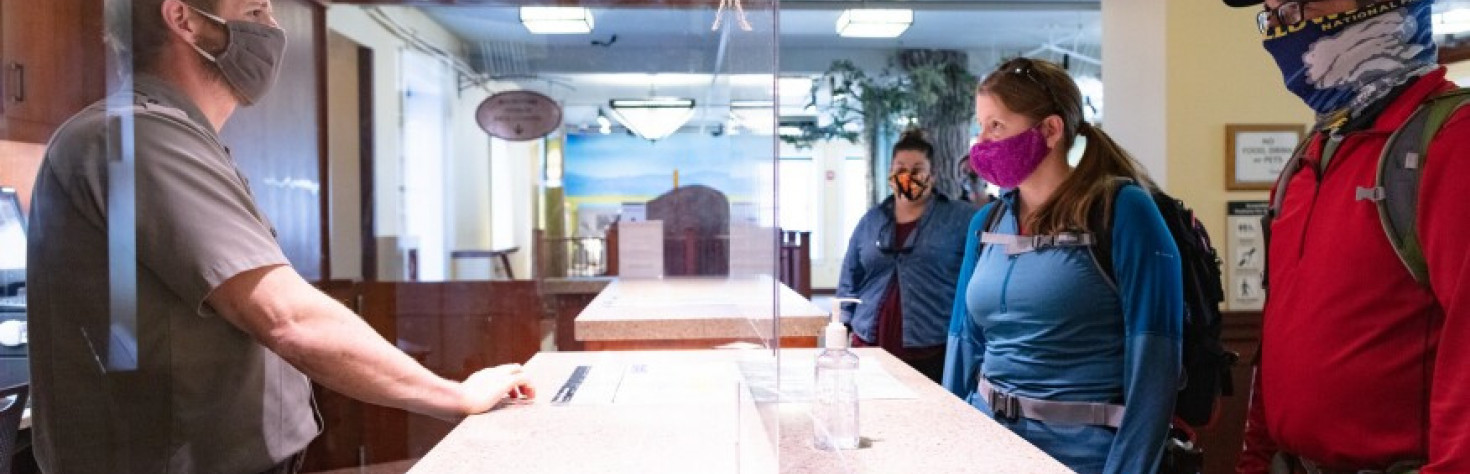
When crises occur, walls often appear. Whether the danger is an encroaching storm or a global pandemic, humans are remarkably good at erecting physical barriers for protection. In the case of COVID-19, this tendency is understandable. The knowledge that the virus is transmitted effectively through the air suggests that spaces be physically separated. However, as several scientific studies and news outlets have reported, the barriers may actually make matters worse. And now that many retail, dining, educational, and workplace environments are filled with plastic shields of dubious efficacy, we witness the compound problem of exacerbating the pandemic and intensifying our use of physical resources.

Physical barriers play an important role in the Centers for Disease Control and Prevention’s Hierarchy of Controls recommendations. Considered part of “engineering controls” that aim to isolate people from hazards, such approaches “are favored over administrative and personal protective equipment for controlling existing worker exposures in the workplace because they are designed to remove the hazard at the source, before it comes in contact with the worker.” The key is to fulfill what the CDC calls “well-designed engineering controls,” which include ventilation strategies as well as physical shielding devices.

Fintech startup Bolt is making a four-day workweek a permanent policy effectively immediately, says founder and CEO Ryan Breslow, making it the first tech unicorn—and one of just a handful of U.S. companies—to embrace a shortened work schedule.

The company, based in San Francisco, conducted a three-month trial in which employees had Fridays off. (Certain teams, such as customer service, reorganized shifts to ensure Friday coverage.) Response to the experiment was so positive—94% of employees surveyed said they wanted the program to continue and 86% said they were more efficient with their time—that the company formalized the four-day week, effective January 1, 2022.

We need fewer things to work on. Starting now.
 
In early December, the Congressional Progressive Caucus endorsed the Thirty-Two-Hour Workweek Act. This bill, introduced by a California Democrat, Mark Takano, amends the 1938 Fair Labor Standards Act to reduce the federally recognized standard workweek from forty hours to thirty-two. The direct beneficiaries of this change would be hourly wage workers, who could potentially earn more overtime pay. But salaried knowledge workers would also be affected by the cultural shift that Takano’s bill would initiate. If a four-day workweek were made the federal standard, working less would no longer be a disruptive experiment undertaken by a few startups.
Once again, American Express has delayed its return to the office in the U.S. due to rising cases of Covid-19.

Previously, the financial firm planned to bring workers back into the workspace beginning January 24.

However, now the company is being more vague with its return strategy, stating that it will provide employees with a two-week notice before ushering employees back.

The company has been dedicated to offering employees a hybrid arrangement when they do return.

I was on Zoom when it was two cans and a string, y’all. Rather than try to optimize your virtual office with dozens of software widgets that are overkill, my recommendation is to focus instead on knowing the basics like the back of your hand.
Business leaders are trained to “shoot, move and communicate.” But the pandemic has called on them to rewrite the leadership playbook.
 
In normal times, there are few words that C.E.O.s like more than “certainty.” Certainty allows executives to issue sales forecasts with oracle-like conviction. Certainty instills leaders with the confidence they need to invest $500 million in a new factory, or spend $20 billion buying a competitor. Certainty gives them the verve they need to preside over virtual town hall meetings with their employees and discuss race relations, furloughs, remote work and more.

But at companies large and small, new and old, public and private, 2021 was a year that played havoc with expectations. Through it all, C.E.O.s swapped some of their favorite tropes — timelines, confidence, strategic plans — for something new: saying “I don’t know.” Or even: “I changed my mind.”

Greater productivity, happier and healthier workers and lower emissions are just some of the benefits of the great work-from-home experiment. Another hoped-for upside is increased workplace fairness. With workers stuck at home, appearing in similar-sized, randomly arranged rectangles on video calls and unable to suck up to bosses in the office, diversity-and-inclusion types had hoped that the pandemic would be the “great leveller”. It would finally destigmatise remote work and give all employees a fair chance to flourish.

Whether that really will be covid-19’s legacy depends on what happens next. Fairness—essentially, lack of favouritism—is easier to track when everyone is working in similar circumstances. But the vast majority of knowledge workers, and most employers, now prefer a hybrid approach. Before the pandemic 5% of work in America was done remotely and 27% of employers offered flexible hours; today the numbers are 40% and 88% respectively. The hybrid workplace will be a messy concoction. Left to develop organically, it is more likely to exacerbate existing inequalities than reduce them.
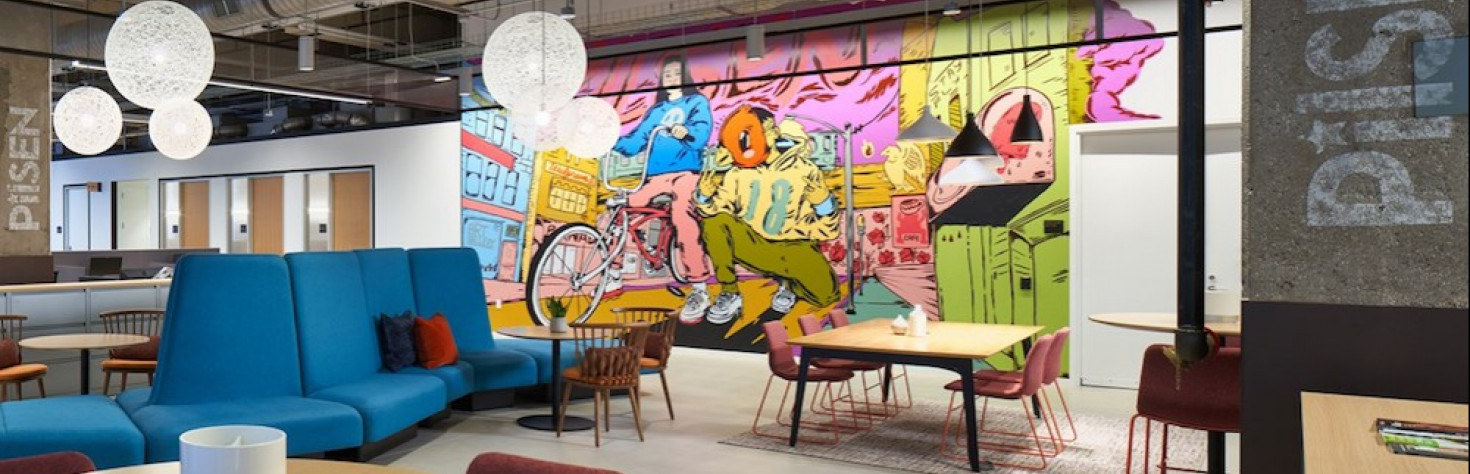
Stantec’s Robert Manna asks: Can smart buildings really benefit us? And what does “the single pane of glass” have to do it?
Who goes into the office and when largely depends on where employees fall on the org chart.

Trends

Darian Lu explores how the future workplace will be shaped by resilient office designs, decentralization office locations, and employee-oriented work arrangement.
 
First there were cubicles, then there was the open office. The kind of “open office” we know was born as an opposite reaction to cubicles. It mainly features no walls and uniform workstations. Proponents claim it to improve face-to face collaborations and eliminate hierarchies which is a main criticism for cubicle offices. Now we’re somewhere in the middle. A mix of open and closed spaces are integrated to accommodate various personalities, work styles, and tasks. Workplace design today is transitioning from being designed for efficiency to being designed for resilience. Building flexibility into workplaces also allows companies to respond to disruptions quickly.

What employees need from a workplace is changing constantly. Global workplace design leaders at WoodsBagot believe the future office maintains open plan layouts, but large groups will be reduced to smaller team communities. Creating studio-size “neighborhoods” using mobile partition systems is an effective way to reduce scale in a massive office. Companies like Google are also thinking of ways to set up team pods and maintain design fluidity through inflatable walls and portable HVAC systems, which are historically among the most rigid elements in an office design. Google developed balloon walls to be shipped flat to offices around the world. The translucent balloon walls automatically blow up for situations where privacy is required. A fabric-based overhead air duct system that attaches with zippers were prototyped to achieve maximum flexibility. The system can be easily altered based on seating arrangements and allows every seat to have its own air diffuser to control the direction or amount of air blowing on it.
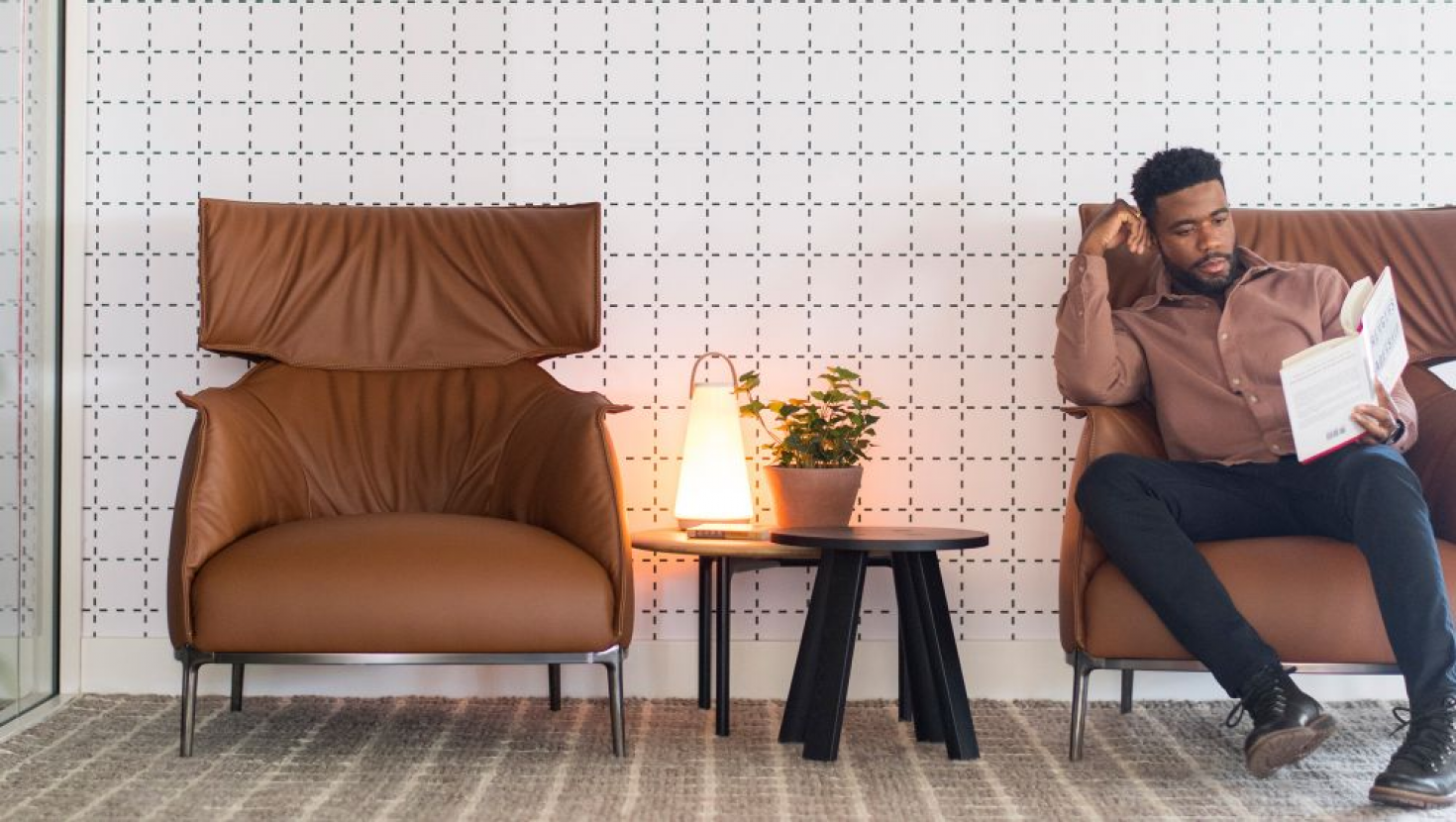
As a result of the COVID-19 pandemic, work, personal life, social life, hobbies, and everything else began to occur simultaneously.
 
The journey through the COVID-19 pandemic has been the sort of experience where we entered an almost fantastical world—finding ourselves climbing through a tunnel of self-reflection and cruising down a rabbit hole of repeated rituals day after day.

Having stopped or limited our interactions with the outside world on a regular basis, our vision of reality is becoming skewed. The lack of face-to-face human interaction has many of us feeling a sense of collective anxiety.

WFH - Work From Home
Conversations with hundreds of managers and two national surveys have unearthed clear trends about the future of working from home. Working from home is here to stay, with hybrid arrangements fast becoming the dominant strain. By 2022, the typical firm will have everyone in the office three days a week, typically Tuesday to Thursday, and working from home Monday and Friday.

I have been researching working from home for almost 20 years. Both my parents worked from home when I was growing up, and I sensed this was a huge opportunity for society. But before the pandemic few people took this seriously. It was common to hear comments like “working from home, shirking from home” and “working remotely, remotely working.” March 2020 changed all that. The pandemic hit like an asteroid for teleworking. In one instant everything changed. The workplace of 2019 isn’t coming back.
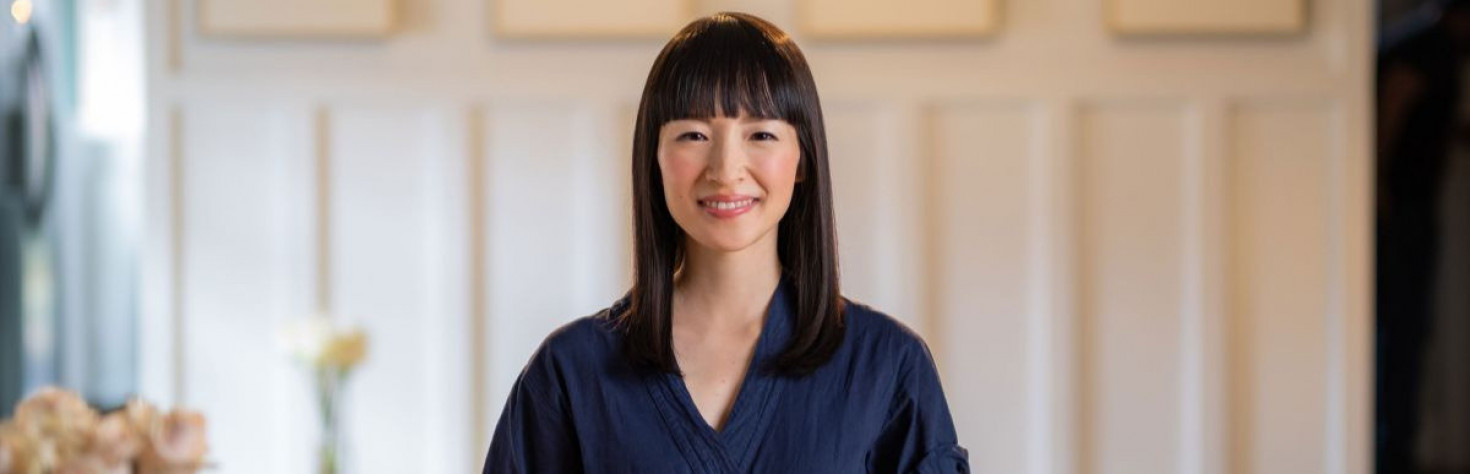
Whether you love it or loathe it, working from home is back. And with the New Year rolling around, we really need some satisfying desk organization in our lives.

Marie Kondo has revealed the one item that will keep your desk looking oh-so neat, plus, it'll stop you from constantly looking for your charger. There are endless home office organization ideas out there that will make you look forward to sitting down and ticking off your to-do list.

As far as organization sensation Marie Kondo is concerned, you need a compact container for storing all of your tech.

Remote Work

This standard ritual can turn into a powerhouse of culture and ideation. It can help build morale, increase retention, and ultimately lead to successful outcomes for the end customer.

Flex Office

As office real estate faces daunting questions about long-term demand and growth, one sector has remained optimistic: flex spaces.
 
Flexible office operators WeWork and Launch Workplaces said they experienced strong growth last year as the hybrid work shift led office tenants to seek more flexible options. Experts believe that demand will continue to surge in 2022, and they see traditional office landlords adopting some of the amenities and other offerings that have made coworking spaces popular. 

Mike Kriel, CEO of Maryland-based Launch Workplaces, said he's seeing interest from plenty of first-time tenants, in addition to building owners looking to emulate the amenities and flexibility of coworking space.

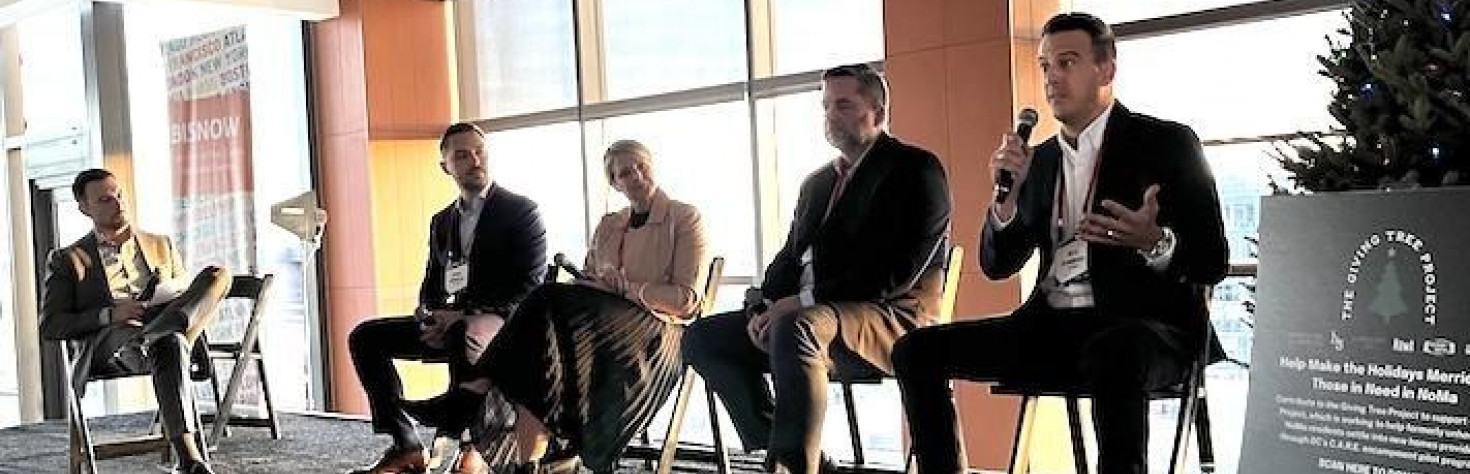
"We’ve sold an office a day for the last six months, since June," Kriel said at Bisnow's Redefining the Office of the Future event in December. "We’ve had outrageous demand ... three-quarters of this are folks who have never been in a flex environment before."

The pandemic has cast coworking spaces in a new light. While overall demand for office space has been sporadic, some industry analysts believe flexible office space will see rising demand nationwide over the next few years, in part due to the uncertain nature of business in a pandemic.

CBRE, in its 2022 U.S. Real Estate Market Outlook, predicted that the shift to hybrid work will lead tenants to consider more flexible office options. 
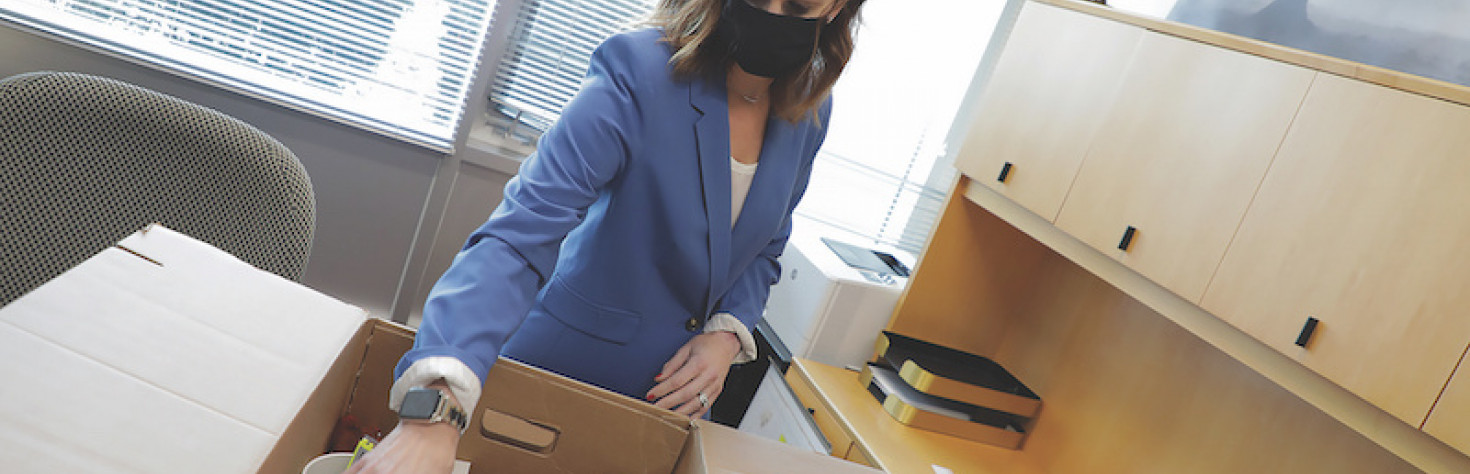
As companies explore how to safely return office staff in a post-pandemic world, Uponor offers employees flexibility to work their own way.
Flex space will play an increasingly important role in the future of the office sector as occupiers demand more agility from physical office space, according to a new analysis from Yardi Matrix—and big changes are expected in how flex space operators earn revenue.

“Going forward, it is less likely that flex space operators will use the revenue model common before COVID-19, where operators signed leases for high-quality space in city centers and then rented the space out to their members,” the Yardi report notes, adding that the firm’s researchers expect franchising and management agreements with revenue sharing to become more common.
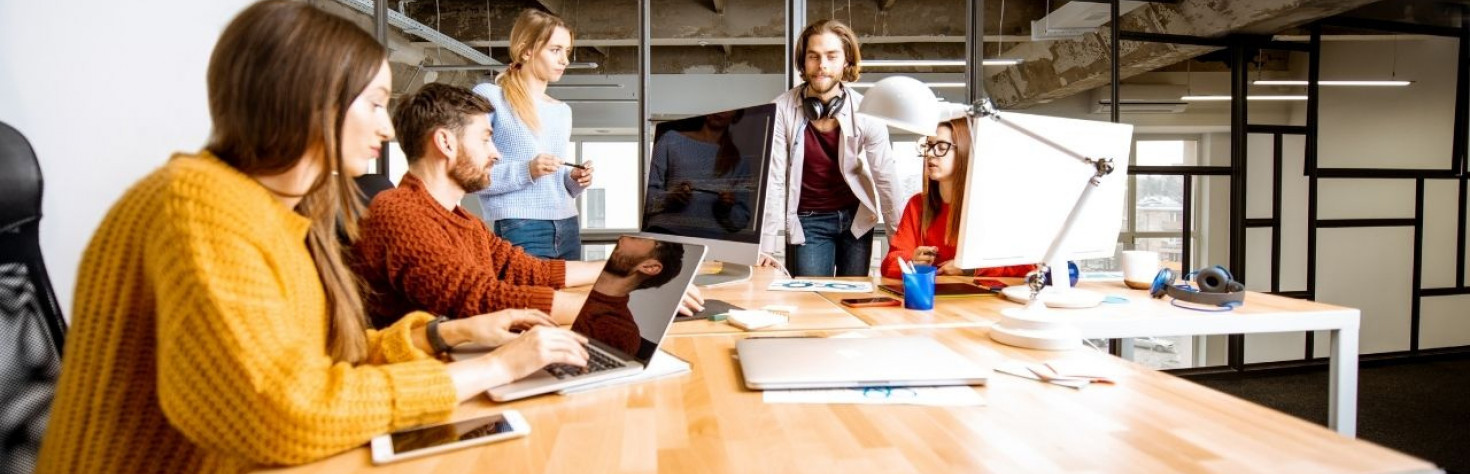
New analysis from Yardi Matrix shows that flexible offices will make big waves in the office sector moving forward.

According to the findings, occupiers are expected to demand more flexibility and mobility from their physical offices.

“Going forward, it is less likely that flex space operators will use the revenue model common before COVID-19, where operators signed leases for high-quality space in city centers and then rented the space out to their members,” the Yardi report states.

Design
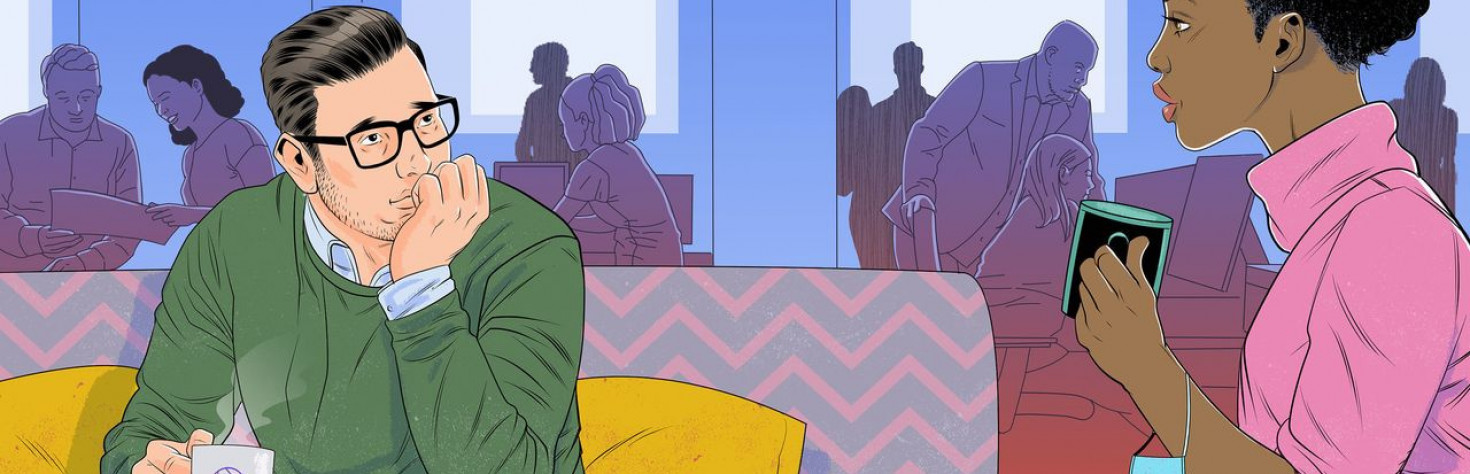
If the primary purpose of an office today is no longer to get actual work done, then perhaps it’s better conceived as a place for connection and community. Do we still need desks and cubicles?
 
When I talk with senior executives about the ongoing pandemic, I often hear them wistfully yearn for a “return to work.” This choice of words is significant because it highlights how much we associate work with a workplace.

But the pandemic has taught us that many forms of work, especially high-end knowledge work, can be done effectively (or even more effectively) away from the workplace. When confronted with this fact, most executives say that coming to an office at least a few days a week is essential for fostering personal relationships, developing and integrating new employees, generating ideas and building company culture.

What this leaves out is revealing. Since the industrial age, economic efficiency and productivity have required the centralization of the tools of work in a shared location. With the advent of the internet, the cloud, smartphones and affordable laptops, these tools can now be readily decentralized. If the primary purpose of an office today is no longer to get actual work done, then perhaps it’s better conceived, as these executives suggest, as a place for connection and community—as a clubhouse rather than a workplace.

To be sure, our economy relies on many workers—nurses, technicians, child-care providers, retail and restaurant staff, and millions of others—whose jobs cannot easily be done remotely. Not everyone has comfortable space at home for work, and converting the workplace to a clubhouse for some elite workers may exacerbate the inequities that the pandemic has so sharply revealed.

“In an office functioning as a clubhouse, people will be mingling in informal conversations that might resemble ‘happy hour.’”

Still, it’s clear that the office-as-a-workplace model no longer matches the needs of many white-collar and knowledge workers. If you walk amid cubicles at an office and find many people at their desks wearing noise-canceling headphones and staring silently into a computer, it’s a sign that a company needs to rethink its expectations. It’s still too attached to the idea of the office as a workplace when most of the work itself could be better done remotely.
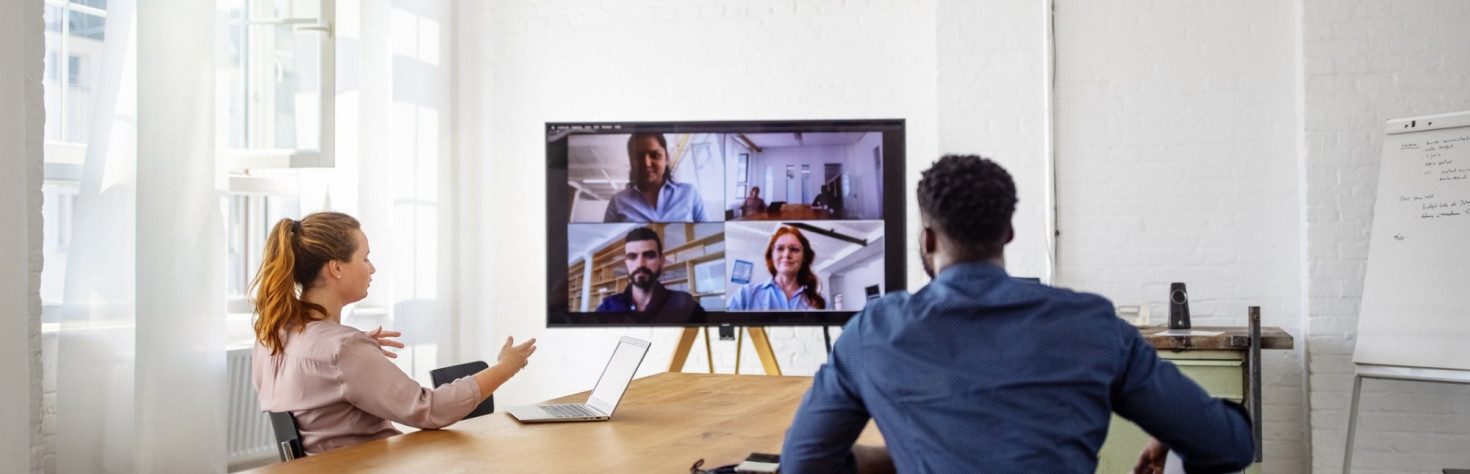
The concept has been around since the 1990s when companies like AT&T and IBM started exploring options with open office floor plans.
 
If most employees are working from home, it makes little sense to assign them their own seat and desk in an office just to stay empty the majority of the time. Fewer desks to keep in the office lets you pare down unnecessary real estate, saving money on overhead. With fewer employees coming to the office, and less often, office resources are freed up — paper, equipment and other office tools.

Real Estate

The burgeoning office-to-industrial redevelopment trend is expected to pick up traction in 2022, as industrial tenants scramble for space amidst an unprecedented shortage of suitable options.

The industrial market grappled with historic vacancies in the third quarter, with the metric hitting 4.6%. Meanwhile, the office market continued to slump, and older, less amenity-rich product suffered most.
Though the omicron variant added yet another wrinkle, the office market in many major cities has seen a recovery in demand based on the tenant requirements that are tracked by brokers.

But that metric may be misleading at a time when long-term planning for office occupancy remains near an all-time low. And what that number means is up for interpretation.
Although data indicates that the office market across major cities is seeing swift recovery despite rising cases of Covid-19, there is more than meets the eye.

Long-term planning for office occupancy is still at record lows, and brokerage firms collecting data have used different calculations to come to their optimistic conclusions, especially in terms of tenant requirements.

Prior to the pandemic, office tenants were already moving to take up smaller offices than the ones they had left. The last two years only accelerated this trend.

In fact, some of this decrease in office footprint ranged anywhere from 15% to 40% on average.

The remote and hybrid work boom hasn’t helped much either. More and more employees are preferring to continue working from home, causing tenants to reconcile with their current office footprint.
Although it may take until 2024 for the office market to rebound to pre-pandemic levels, the record number of new startup ventures could open a world of possibilities for the sector.

“With office space, the question is what will the hybrid work environment look like,” said Hessam Nadji, CEO and president of Marcus and Millichap. “Will there be less demand for office space per worker? We believe there will be and that will shrink demand—but at the same time when you have record number of new business startups and economic growth you’ll see new demand.”

The amount of demand for office space that will come from new startups is still uncertain, but it will likely include smaller offices or flexible workspaces.

Makers

Strong demand drove quarterly orders of $1.2 billion; an increase of 83.9% over the prior year, up 26.4%* organically.
 
Second quarter consolidated net sales were $1.0 billion, reflecting an increase of 63.9% on a reported basis and 11.1% organically compared to prior year. Orders in the quarter of $1.2 billion were 83.9% higher than the prior year. Notably, order levels were up over prior year across all four reporting segments. On an organic basis, orders of $795.7 million reflected sequential improvement of 6.4% compared to the first quarter, and were up 26.4% over the prior year.

"While order demand was strong, our ability to produce and ship orders was impacted in the near-term by continued global supply chain and labor supply disruptions. We estimate these disruptions adversely impacted net sales by approximately $50 million during the quarter. We continue to implement a range of countermeasures to combat these pressures, but expect to continue to feel their effects in the second half of this fiscal year."

Gross margin for the quarter was 480 basis points lower than the prior year, due largely to the impact of rising commodity prices, particularly steel, and other inflationary pressures including labor and transportation. The price increase we implemented in the first quarter helped mitigate some of these inflationary pressures. Additional price increases implemented in the second and third quarters are expected to help further offset these pressures.

Consolidated operating expenses for the quarter were $346.8 million, compared to $173.2 million in the prior year. Consolidated adjusted operating expenses of $294.4 million, were up $123.6 million from last year, primarily due to the inclusion of Knoll adjusted operating expenses of $99.1 million and additional variable selling expenses as a result of increased sales in the current year. 

MillerKnoll reported a net loss of $1.1 million, or $0.05 per share for the quarter. Adjusted earnings per share were $0.51 in the quarter, compared to $0.89 in the prior year.
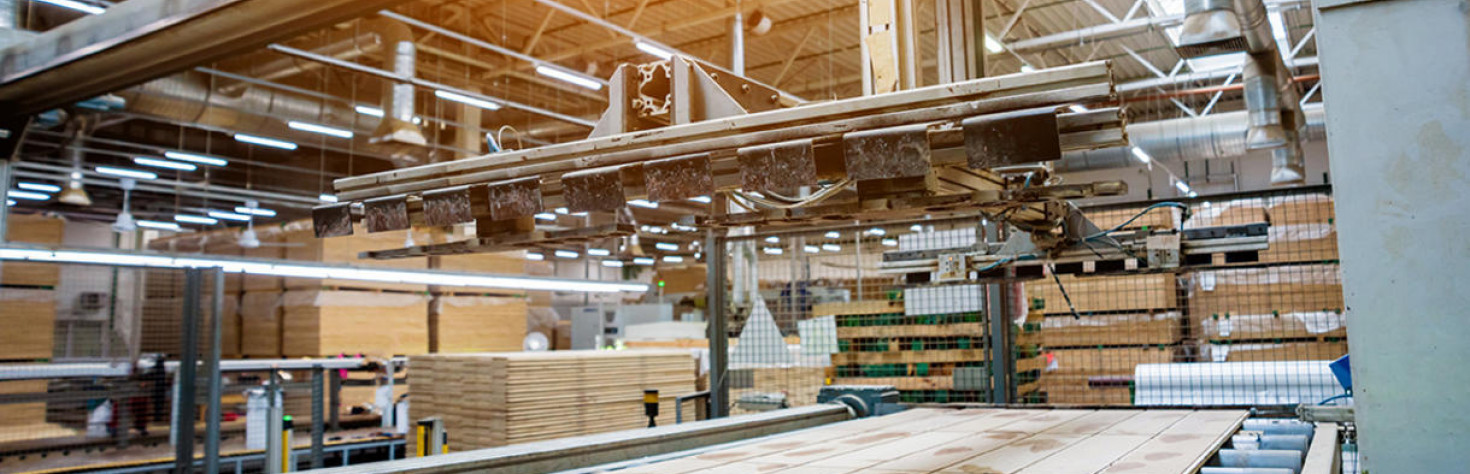
A few years ago, the idea of a company moving its manufacturing operations to North America to save money would have been unthinkable. But as we enter the third year of the pandemic, it’s happening. Across the home category, brands as diverse as Amazon staple mDesign to direct-to-consumer furniture brand Whom Home and luxury to-the-trade company Atelier Purcell are all doubling down on North American manufacturing in a bid to circumvent the global supply chain crisis.

“The time that shipping containers are sitting at American ports is insane, and once the goods make it off the ship, the cost of freight is through the roof,” says Alexander Purcell, the founder of Atelier Purcell, which has traditionally split its production between the U.S., Vietnam and Europe. “We did an overhaul and looked at where we could produce specific frames and finishes in the U.S. at a six-week lead time.” Previously, Atelier Purcell had shipped much of its often customized merchandise directly from overseas manufacturers, while a few simpler pieces like dining chairs had components flat-packed and sent to the U.S. for assembly before shipping to the customer. Now, more of the brand’s bespoke upholstery will be done in the Bay Area, and many of its case goods will be produced in Minnesota.

Dealers

Two of Iowa’s largest office furniture companies, Pigott Inc. and Saxton Inc., have joined forces, the two Des Moines-based companies announced Wednesday.
 
In a transaction completed on Dec. 30, Pigott acquired the assets of Saxton, and the newly combined team will represent both the Herman Miller and Kroll legacy brands under the Pigott name across the state.
 
“Joining forces with Saxton affords us a unique opportunity to leverage the very best from both organizations – talent, experience, products and services,” said John Stenberg, president and owner of Pigott. “Our intention is to bring more innovative solutions to our customers and the architectural and design community."
 
Kim Augsperger, former owner of Saxton, will serve in a consulting capacity with the organization. In April 2021, Herman Miller announced its $1.8 billion acquisition of Knoll Inc., one of its leading competitors in the design, manufacturing and retailing of office and home furniture. “It’s that monumental event that inspired Saxton and Pigott to join forces and bring that same excitement and capability to our local markets,” Augspurger said.
 
Stenberg said it will likely take a few months to fully integrate the companies’ two teams. In a Q&A sent to clients, the company said that it may fully integrate the combined operations into existing Pigott facilities, but that the decision remains to be determined. Pigott and Saxton currently each have 40 employees.

Officeworks Announces Partnership with IMA Corporate Interiors and Expansion to Atlanta

Officeworks announces its partnership with IMA Corporate Interiors, a boutique furniture dealer with over 20 years of experience serving the Atlanta region.

“We are excited to join forces with Officeworks,” says IMA CEO Bill Palmer. “Our vision and strategies are aligned, and most importantly, we both place an enormous value on our employees. Great employees equate to an amazing client experience. This partnership combines our resources, experience, and best-in-class service that will give us a competitive advantage in the ever-changing landscape of the workplace.”

The partnership with IMA provides a key opportunity for Officeworks to tap into southern markets by delivering stronger services, with a continued dedication to the customer experience. “IMA has an excellent reputation in the Atlanta market, this is a great brand to bring under the Officeworks banner. This partnership will bring together two companies with similar cultures, putting focus on employees first and delivering the personalized attention our clients expect and deserve,” says Officeworks CEO, Mark Loughlin.

This partnership marks the first stage of Officeworks’ expansion into three new southern markets. “We will be further defining our overall footprint in the South with planned expansions into the Charlotte and Nashville markets. The recent market disruption has opened a path of opportunity, it is a very exciting time for both Officeworks and Teknion,” explains Loughlin.

Officeworks has grown to be Teknion’s largest dealer in the U.S., with existing offices in Boston, New York, New Jersey, Philadelphia, Pittsburgh, and Washington, D.C.

“We remain committed to providing a best-in-class service level to our existing client base in Atlanta. This partnership with Officeworks will give our team additional resources and support that will only strengthen our output to the community,” says Yvonne Noack, Principal/Director of Sales at IMA.
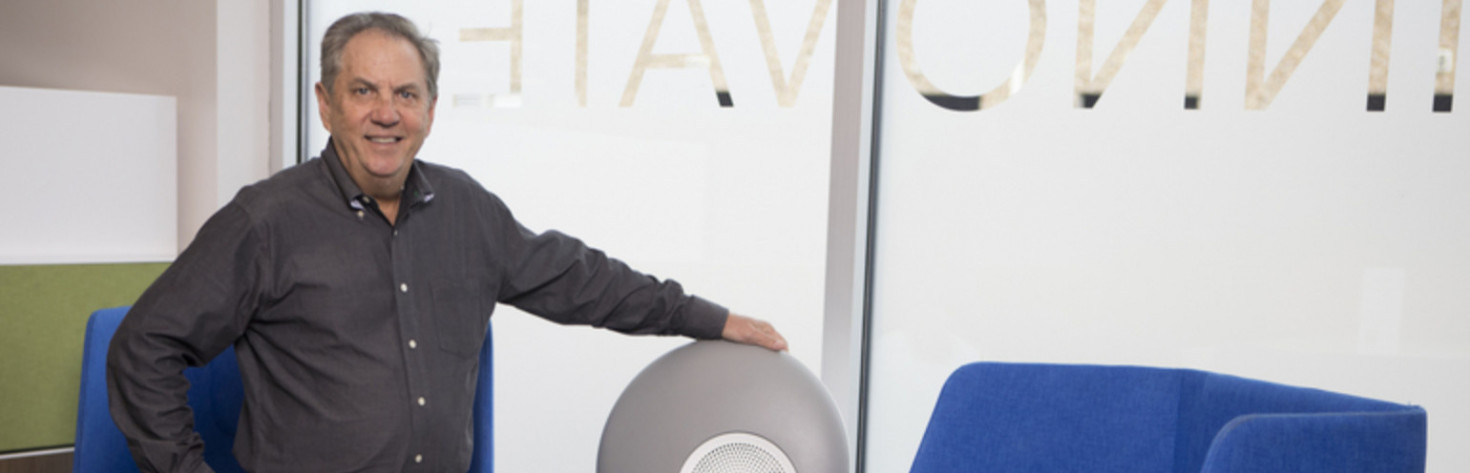
The a-ha moment a Tampa office furniture company sought for an air purification system it’s selling was elusive in 2021. It’s determined to get there in 2022.
 
If 2020 was the year the world turned upside down, then 2021 was the year we attempted to recover and re-evaluate.
 
It was the year many office-workers wondered first when and then if they would ever return to the physical building. Creating a safe place to work with clean and purified air was a big part of that equation — and that’s why Tampa-based Reimagine Office Furnishings banked on 2020 and 2021 as the time to get in on the air purification market.

When ROF became an authorized reseller of Synexis, a Lenexa, Kansas-based biotechnology firm that sells microbial reduction systems for commercial spaces and residential homes, president Bill Adams was anticipating an “a-ha moment.” Although the company has seen continued sales in the months since, he is still waiting for the telltale shift and acceptance of Synexis as the best product in the air purification space.

“We’re still in the education phase. We’re looking for early adopters into our technology,” he says. “Every time we go someplace, we have to pull out our peer-reviewed published studies just to prove our efficacy and get our foot in the door. As more and more people see the data and they want to make a difference in the indoor air quality of their facilities, it’s going to be important.”

The past year also forced Reimagine Office Furnishings to revisit their business model once again. In 2020, revenue grew from $18 million in 2019 to more than $20 million. But at the end of 2021, Adams puts the company’s estimated revenue at $17 million. He attributes that decrease to a COVID-19 revenue stream that faltered — selling screens and brackets to divide workspaces, which accounted for about 40% of 2020’s sales. This year, the screen business has “virtually gone away,” Adams says.

ROF’s central mission — selling remanufactured office furniture — has rebounded, meanwhile, accounting for about 80% of overall business, up from 50% in 2020. And Synexis’ growth remains to be seen, only making up about 20% of the company’s total 2021 revenue.

Green
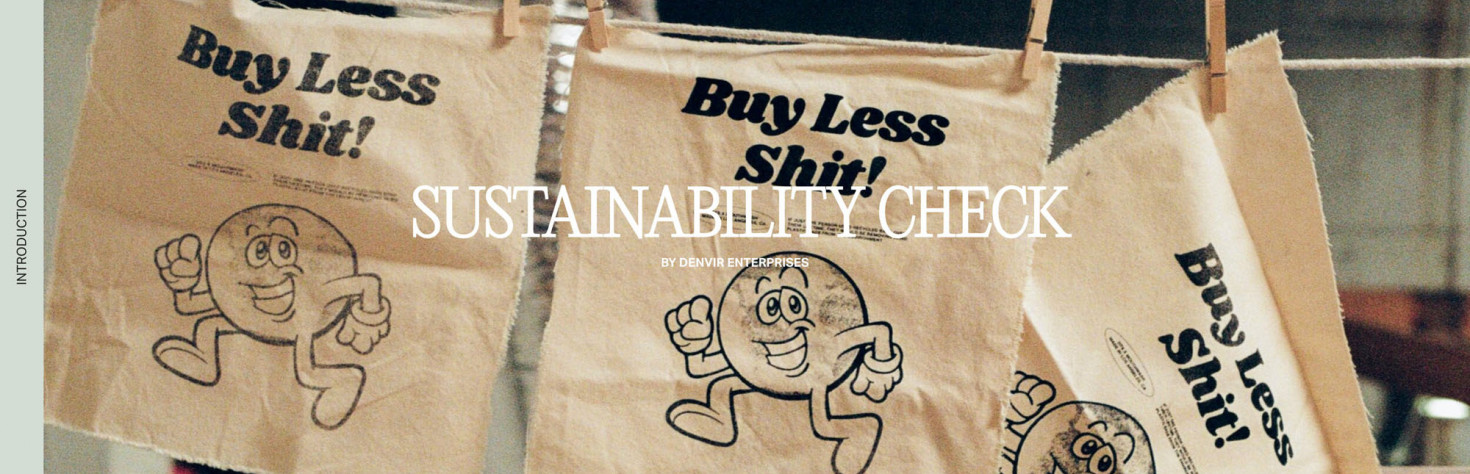
Small design companies are devising a range of methods to communicate sustainability—without paying for certifications.
What’s the single most important thing the workspace design sector should be doing right now to improve our chances of creating an environmentally sustainable future?

May Fawzy is the founder of MF Design Studio, an award-winning boutique interior architecture consultancy based in Surrey and London, UK.

When Neil Usher, Chief Workplace and Change Strategist at GoSpace AI, posed this question to a panel at the Workspace Design Show in November, “reducing waste” was the first thing that sprang to Fawzy’s mind.

“62% of UK waste is generated by the construction industry. When you look closely at the fit out industry, waste is created because of design change, and design change starts at the very early stages of any project,” Fawzy explained.

Federal, local, and state tax credits and incentives are often overlooked in the race to make commercial buildings greener and more energy-efficient. There are hundreds of green building tax benefits available today and, while property owners may be aware of them, they might not understand the full landscape. These green tax incentives can make energy upgrades much more affordable, but not everyone in the building industry thinks they go far enough. Just ask the U.S. Green Building Council (USGBC). In a recent article on its website, USGBC tells it like it is, saying, “It’s no secret in the building community that federal tax incentives for energy-efficient homes and buildings have been weak, inconsistent and outdated for quite some time. So much, so that many had given up on them.” While this has been the case for a while, a push by Congress and the Biden administration could mean green building tax breaks could get much better soon.
It’s clear that humanity needs to start doing whatever it can to slow down the effects of climate change. There are many practices and daily habits that can be implemented, big or small, that can greatly reduce our carbon footprint.

This behavior can start at home, with simple things such as recycling and composting, using less water, and installing solar to the home, but what about in the corporate world?

Products
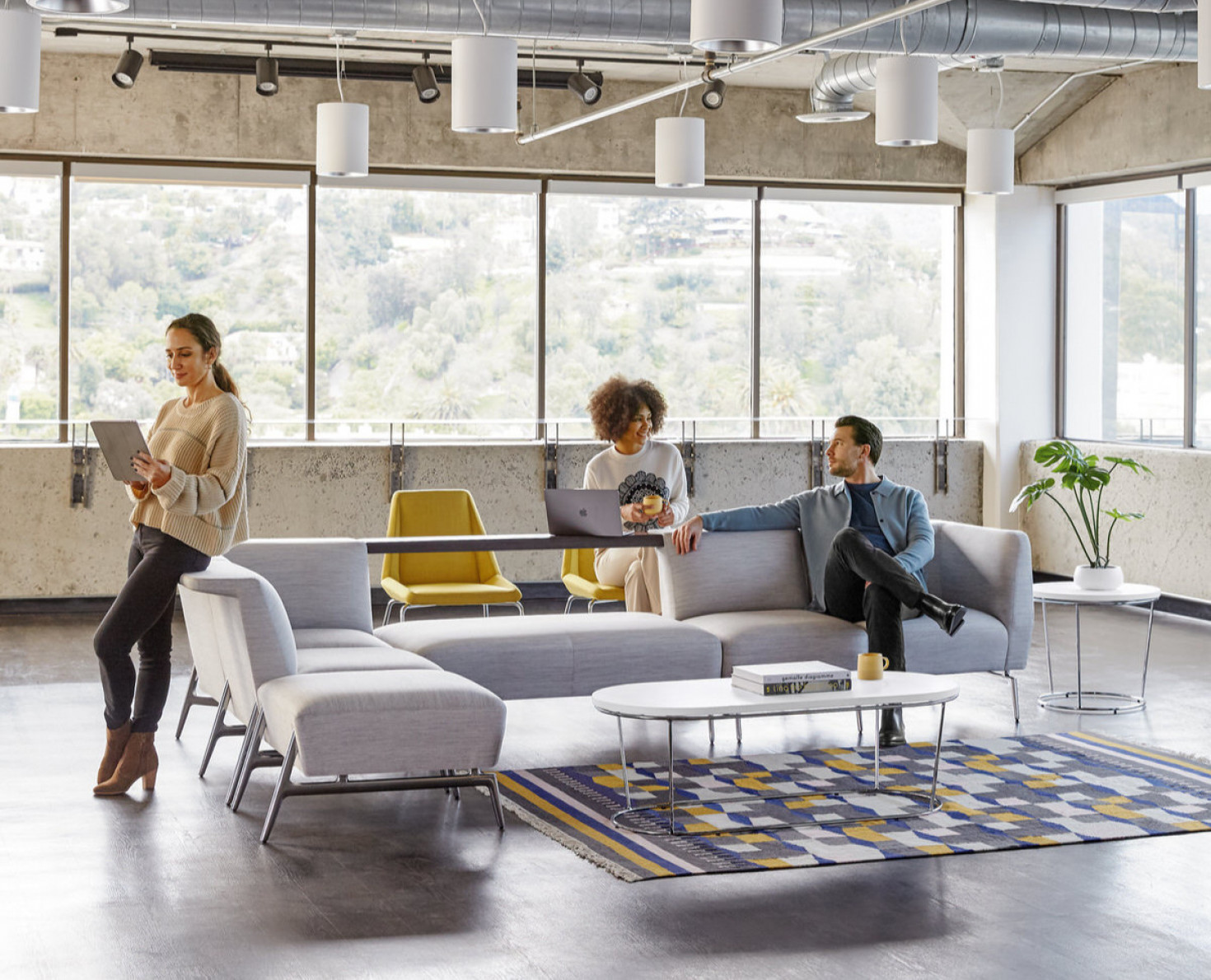
Arcadia's Scenery Modular Collection Wins 2021 GOOD Design Award
Arcadia's Scenery Modular Collection is a 2021 GOOD DESIGN® award winner.
 
Presented by The Chicago Athenaeum, together with The European Centre for Architecture Art Design and Urban Studies, Good Design remains the oldest and world’s most recognized program for design excellence worldwide. The museum received a record number of submissions this year, amounting to over 1,100 entrants from the world’s leading manufacturers, industrial designers and graphic design firms from over 55 countries. 
 
“We are honored to be among this esteemed group of companies and congratulate Mark and David on this prestigious achievement,” says Casey Journigan, Arcadia President. “The recognition is a further testament to their talents and continues their legacy of creating award-winning designs.”
 
Scenery Modular itself is a collection designed to allow multiple and varied interactions at once. The interior seating area offers spacious comfort for collaboration and casual conversation while a ledge around the exterior perimeter serves as a work surface or perching rest. Whether specified with the upholstered ledge feature, a wood bridge, or as traditional modular seating, Scenery creates the ultimate focal point where communication, socialization and productivity thrive. Introduced in 2019, Scenery Modular has already earned a top-spot as one of Arcadia’s most recognized products and now joins the 71st annual GOOD DESIGN® award roster.
Brighten your home office with the latest member of the Varier family, a contemporary update on a design classic. With the average person spending around 12 hours a day sitting, according to a study from the Columbia University Medical Centre, we’re finding ourselves developing all kinds of aches and pains. Stretching at the desk and taking regular walks can help, but it’s also time we thought about what we’re sitting on.

Enter Varier, the Norwegian furniture company that has made its name by creating ergonomic chairs that encourage us to move while we sit. For more than 40 years, the brand has focused on textures, colours, materials and shapes, as part of an ethos that’s aimed at making our lives healthier, more sustainable and comfortable. Today, that ethos of relaxation and productivity is made clear in the form of the new Variable Plus.

Projects
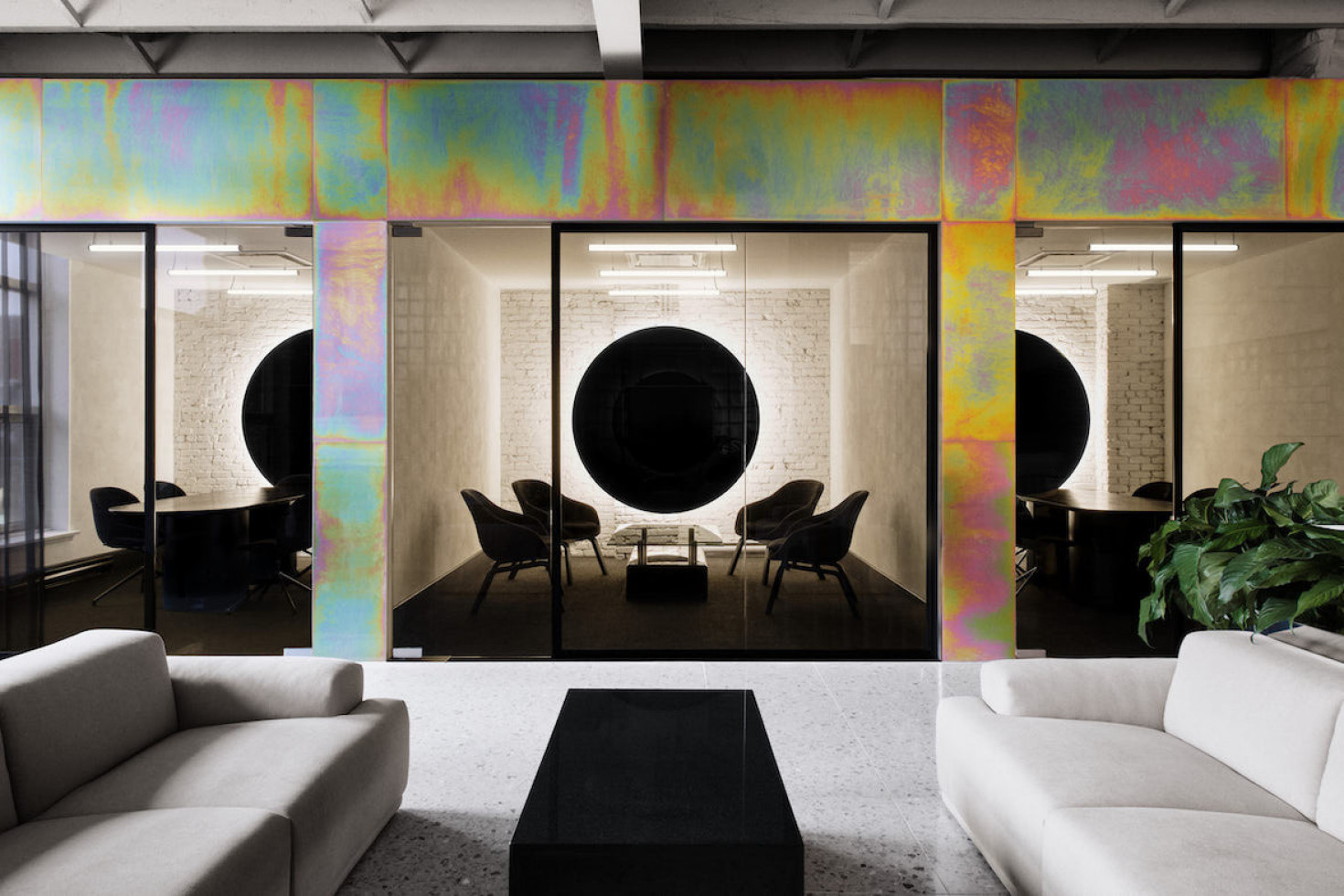
Montreal-based Ivy Studio Inc. designed Spacial’s first coworking office space to resemble the ambiance of working in an exterior courtyard.
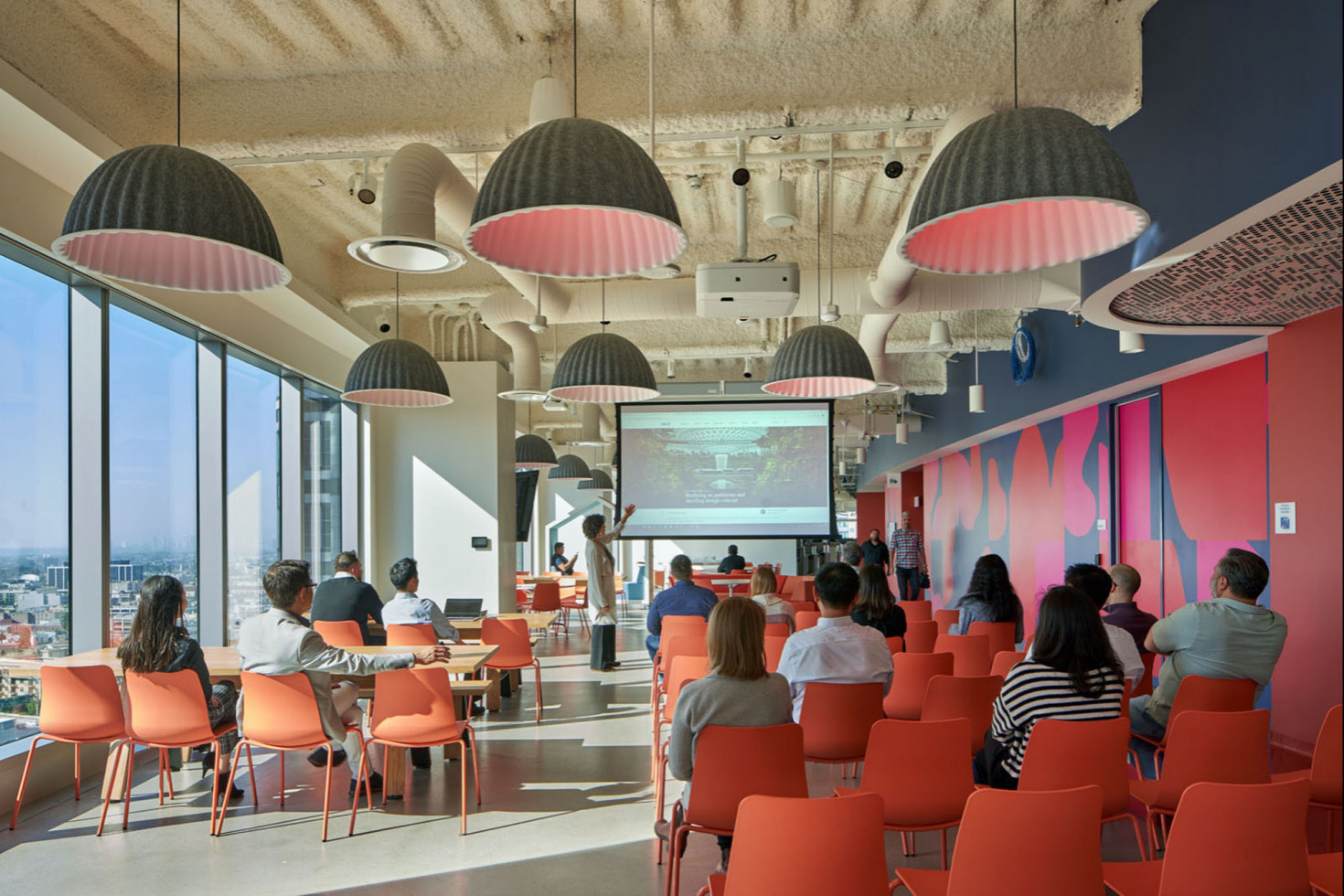
The new HED LA office was designed to foster creativity, promote collaboration, and support the well-being of the company’s community.

Events

Is it time for the Office Furniture Trade Show to be moved out of Chicago?

Neocon has been the flagship trade show for the furniture industry for 50 years. But it may be time to move it.
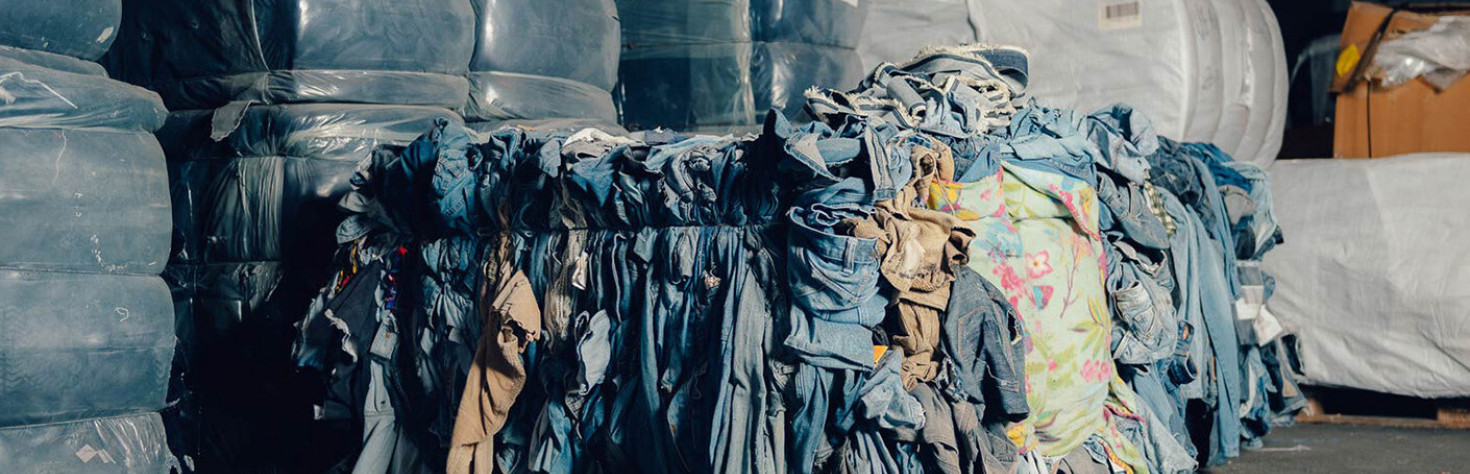
Until 20 February 2022, the London Design Museum presents the show “Waste Age: What can design do?”.
 
With representative examples from the various disciplines of design, the current exhibition "Waste Age: What can design do?" at the London Design Museum is divided into three sections: Waste Age 1-3" vividly conveys the fatal consequences mass consumption has had on the environment so far, how supposed waste can be given a new lease of life and which experimental approaches could help to make products from sustainable resources. Many of the works come from renowned creatives, such as Formafantasma, Snøhetta or Stella McCartney. "Design has helped create our wasteful society, and it will be crucial in building a cleaner future. That means rethinking the lifestyles and materials that do so much damage. This optimistic exhibition demonstrates the energy and ingenuity being applied to the challenge – and we want it to mark a turning point. There is so much we can do, but it begins with understanding our waste," says Chief Curator and Co-Curator Justin McGuirk.

Noted

The unspoken battle over the office thermostat setting is so fraught with drama that it became its own trope. Just like how Oscar and Angela famously squabbled over an acceptable temperature in The Office, the temp tug-of-war seems to be the ubiquitous bane of the office experience. While one person can thrive in an environment with a crisp 66 degrees, the same temp might send shivers down another employee’s spine. Though there are viable physiological reasons as to how people perceive temperature, office and building managers have to contend with keeping people happy while optimizing their energy costs. That’s why I am about to expose one of the biggest secrets in office management: most office thermostats aren’t really thermostats at all, they’re decoys that give the illusion of control.


Find the best Contract Furniture Industry jobs and hire the best talent.
created in Publicate