The Working Space
Monday, February 10, 2025
Industry News
U.S. Court Dismisses Final DIRTT Lawsuit Against Falkbuilt
A long-running legal dispute between two rivals in the modular interior construction industry has officially come to an end. The United States District Court for the District of Utah has dismissed the final lawsuit filed by DIRTT Inc. against Calgary-based Falkbuilt Ltd., as well as several of its business partners. The dismissal, like two previous cases, was made without any finding of wrongdoing or liability on Falkbuilt’s part.
The lawsuits stemmed from DIRTT’s claims that Falkbuilt, founded by former DIRTT executives, had engaged in unfair business practices. The legal battle, which played out in both U.S. and Canadian courts, was part of a broader competitive struggle between the two companies, which both specialize in modular component construction for commercial interiors.
With the latest ruling, Falkbuilt is now free of all pending litigation in the U.S. The company has described the outcome as a vindication of its business practices and a relief for its employees and partners. “We are happy to put this behind us and move forward,” a spokesperson for Falkbuilt said in a statement.
The dispute between Falkbuilt and DIRTT has been closely watched in the interior construction sector, where both companies have sought to differentiate themselves through technology-driven solutions. While Falkbuilt has been expanding its market presence, DIRTT has undergone leadership changes and strategic shifts in an effort to maintain its position in the industry.
Despite the legal fight, Falkbuilt extended an olive branch to its competitor, saying it wished “all the best” to its former colleagues who remain at DIRTT. However, the rivalry between the two companies is expected to continue as they compete for market share in the fast-growing modular interiors space.
With litigation no longer an obstacle, Falkbuilt has indicated that it plans to focus on expanding its operations and continuing to develop its digital construction technology. Industry analysts suggest the company’s legal victory could provide momentum as it seeks to solidify its position in a competitive market.
For now, the courtroom battles are over, but the competition between Falkbuilt and DIRTT is likely far from settled.
GSA Lease Cancellations Could Upend Federal Office Furniture Market
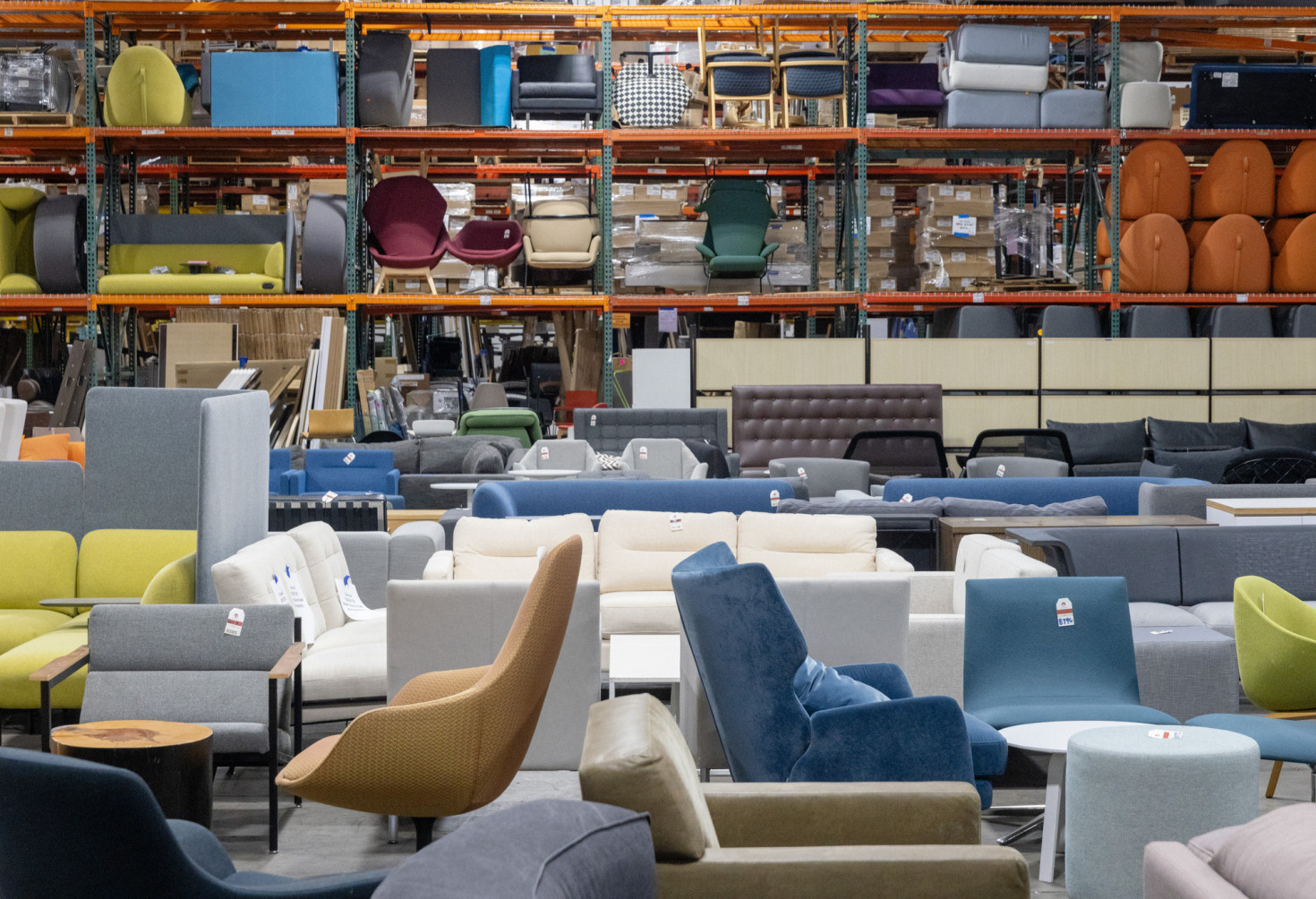
The federal government’s office furniture suppliers could face major disruptions as Donald Trump and Elon Musk push for the rapid termination of General Services Administration (GSA) office leases. The GSA has instructed regional managers to cancel leases for approximately 7,500 federal offices, potentially impacting major office furniture manufacturers like Steelcase, MillerKnoll, Haworth, KI, and HNI, which rely on government contracts for some of their business.
This move contradicts recent return-to-office mandates, creating uncertainty for suppliers who had adapted to evolving workplace needs. The sudden downsizing may also flood the secondary market with used office furniture, depressing prices and reducing demand for new products.
With the GSA accelerating lease terminations, contract furniture companies must reassess their strategies, potentially shifting focus to private sector clients or alternative markets like healthcare and education. However, replacing lost federal business won’t be easy, leaving the industry in a state of uncertainty as it awaits further policy direction.
Feature Stories
Workplace News

Dealers
Design

Green / Sustainability
Latest Product News




Industrial Design


Trends in Commercial Projects from Around the Globe


Latest In Real Life WFH

Design Firms

Upcoming Industry Events


NeoCon / DesignDays

Industry Briefing