Friday, January 21, 2022
News
End-of-year conditions vary by region and specialty
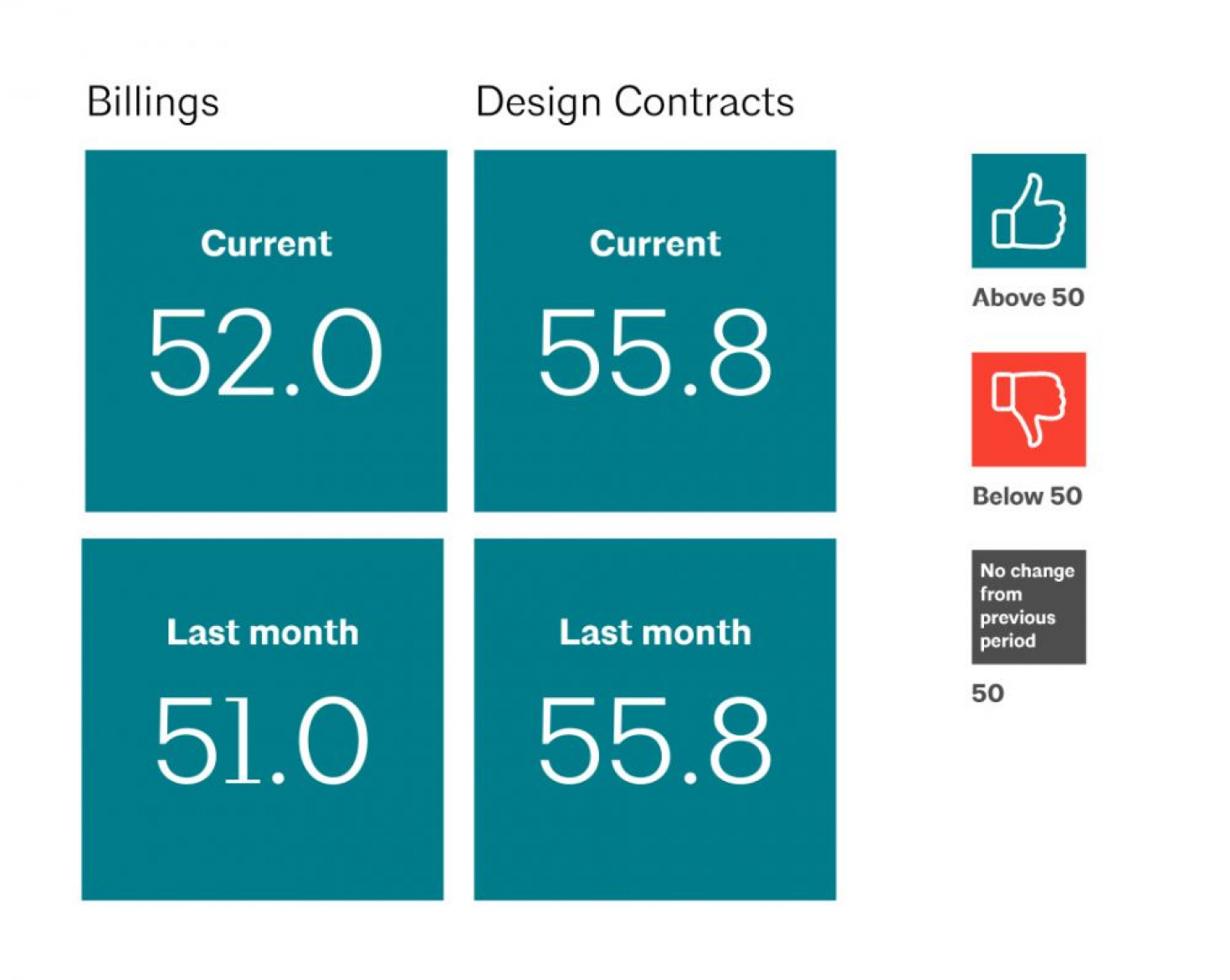
However, conditions were more variable by both region of the country and firm specialization in December. Firms located in the Northeast experienced their fourth consecutive month of declining billings, while firms located in the West saw billings decrease for the second month in a row. Firms located in the Midwest and South continued to report an increase in billings, but the pace of growth has slowed substantially at firms in the Midwest in recent months. Only firms located in the South have continued to report a consistently high level of billings recently. However, firms of all specialization reported a decline in firm billings in December, with only those with a mixed specialization (defined as those firms not having at least 50% of their billings in one of the other three categories: multifamily residential, commercial/industrial, or institutional) experiencing growth. Even firms with a multifamily residential specialization experienced a decline in billings for the first time in nearly a year, while firms with an institutional specialization reported their second straight month of softness. There is always some softness in firm billings at the end of the year, due to the holiday season and colder weather, but seasonal adjustment of the data typically smooths much of that out. But because of that, it is too early to say whether this is just a seasonal blip, or the start of a more concerning trend.
Staff recruitment continues to be key concern for firms
Staffing has been an issue of increasing concern for many firms in recent months, with one in five firms reporting staffing issues as a key concern for 2022 in last month’s survey. This month we asked firms more specifically about the seriousness of the issue, and the actions that they have taken to recruit and retain staff. Overall, firms are more concerned about recruiting architectural staff at their firm than retaining architectural staff, with 42% of responding firms indicating that recruiting architectural staff is a very serious problem at their firm, in contrast to just 14% who said the same about retaining architectural staff at their firm. In addition, 40% of firms said that recruiting staff is somewhat of a serious problem, while 18% said that it is not a problem. On the other hand, 42% of firms said that retaining staff was not a problem, and 44% said that it was somewhat of a problem. Firms located in the South, where business conditions have been strongest recently, were most likely to report having a serious problem with recruiting staff (48%), versus just 36% of firms located in the Northeast. Large firms were also more likely to report having a problem recruiting staff, as were firms with an institutional specialization.
Given anticipated project workloads over the coming months, more than eight in 10 responding firms indicated that they are at least somewhat concerned about being able to recruit and retain staff, with 27% indicating that they are quite concerned, and 10% indicating that they are very concerned. Once again, firms located in the South, as well as large firms, and those with an institutional specialization, were most likely to report a higher degree of concern about being able to recruit and retain enough staff to meet upcoming workloads.
When asked about what actions they have already taken in relation to current architectural staffing conditions, 90% of responding firms indicated that they have taken at least one action, with nearly half (49%) reporting that they have Increased salaries above typical levels to retain current staff. An additional 45% reported that they have offered additional employee perks (e.g., 4-day work week; ability to work remotely), while 39% have increased salary offerings above typical levels to attract qualified candidates. Firms have also made some project-related changes, with 31% indicating that they are not bidding on projects that their firm is otherwise qualified to handle due to staffing shortages, and 30% are extending/delaying project schedules on existing projects. Just under one quarter of firms (24%) have hired contract workers, but few have outsourced work either domestically or offshore.
However, of the steps that firms have not yet taken, one in five (21%) would consider hiring contract workers if the staffing situation becomes more serious in the coming months, and 18% would consider outsourcing work to other domestic firms. In addition, 20% would choose to not bid on projects that their firm is otherwise qualified to handle, 19% would extend/delay project schedules on existing projects, and 16% would increase firm revenue to help cover additional staff compensation costs. Fewer firms would make changes to current staff salaries/benefits, but that is because most of the firms that would make that change have already done so.
Finally, when asked about the effectiveness of making these changes to address staffing issues at their firm, most firms rated issues related to increasing staff and potential staff salaries, and offering additional employee perks and benefits, among the top three most effective changes that they have/could make, followed by making changes to projects/project schedules and hiring new employees/outsourcing work.





However, there is skepticism on whether companies have the capabilities to pull it off. Two in five (43 percent) respondents believe their employers do not, or probably do not have the knowledge or expertise to enable them to work in the metaverse of the future.
Ken Wong, President, Lenovo Solutions and Services Group: “The pandemic challenged us all to adapt to new ways of work – forcing organisations of all sizes to evolve at an exponential pace. The metaverse presents businesses with new opportunities but also more complex technological challenges, such as the need for more computing power, better integrated hardware, and simpler and more flexible IT solutions.”

The specter of employees quitting because of these loose ties to a remote-only workplace is precisely what CEOs and senior executives dread and is one of the reasons that many think that permanent remote work isn’t feasible. Some companies are chomping at the bit to get back into the office, and a primary reason is the difficulty of maintaining corporate culture in a Zoom-only world. As the Omicron variant has spoiled return to office plans yet again, corporate retreats have sometimes become the only way employees have met in person. Companies have also used team-building retreats in the past, but over the past two years of the pandemic, the meetings in exotic locales have become more important.
The Workplace
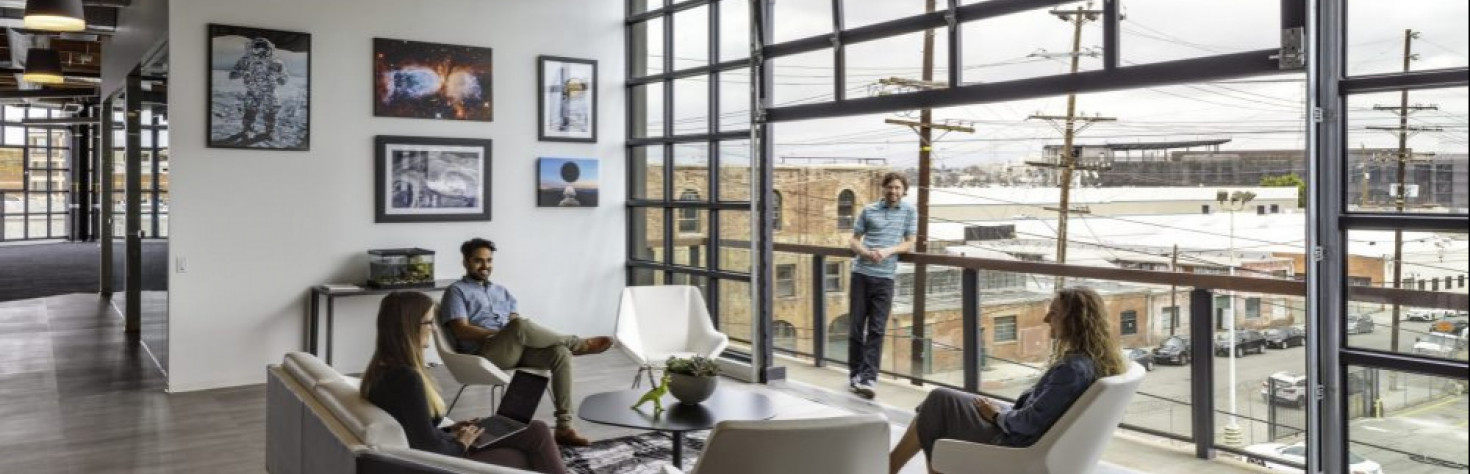
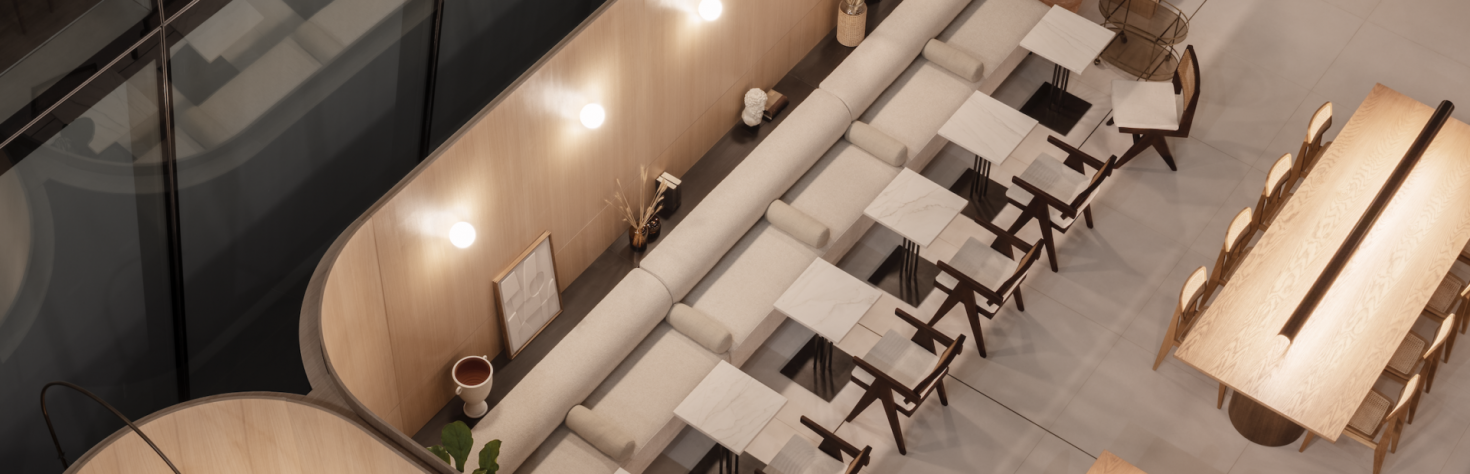
Looking ahead to 2022, Yaara Gooner shares her top five design movements to watch out for in 2022.

This younger generation is being heavily relied upon thanks to their digital nature and related skill sets that are needed for today’s technologically-driven work culture.
However, as a result of this focus on digitization, many Gen Zers lack the perks of in-person interactions. Still, these workers are aware of their surroundings, particularly in terms of the workplace and economic insecurities.
Moving forward, companies will need to adjust their operations, policies, and office design to address the evolving needs of this younger workforce.
Gen Zers have been at the forefront of conversation in terms of salary transparency, social responsibility, and technology-driven workspaces.
Trends


WFH - Work From Home


Remote work also has its allure for various demographics. Employees with chronic health conditions could monitor their well-being from the comfort of their own homes. Parents with young children who needed them throughout the day found remote work favorable, especially after it was reported that the cost of center-based child care leapt 47 percent higher during the pandemic. Neurodivergent workers were no longer forced to endure sensory overloads of a conventional office. It’s no surprise that a FlexJobs survey revealed that 58 percent of workers who responded said that they would “absolutely” search for a new job if they weren’t able to continue working remotely in their current role.
Remote Work
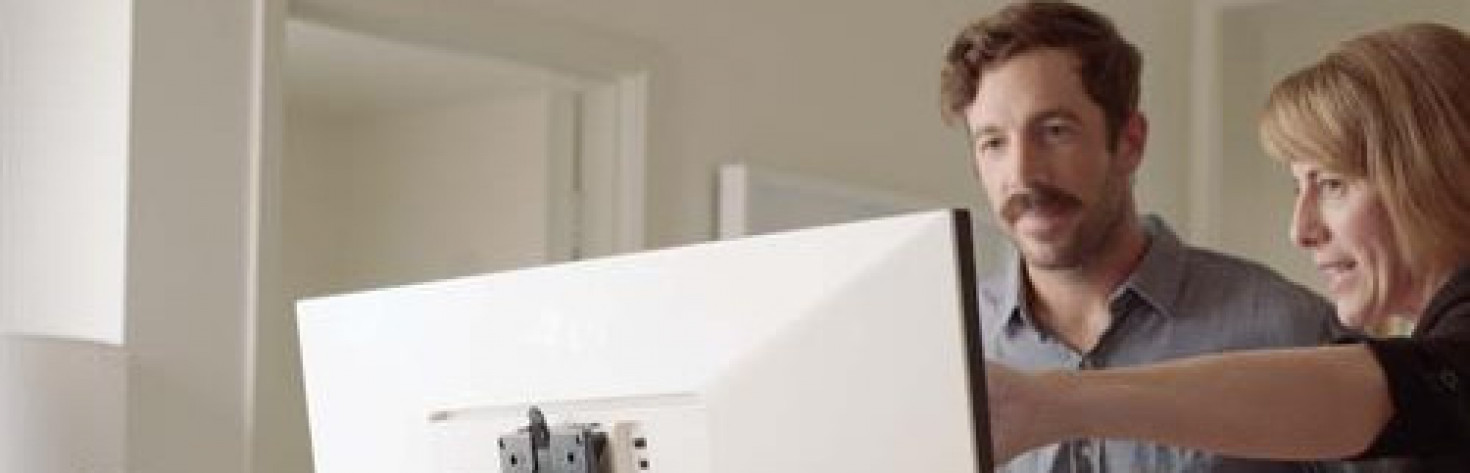
But as excitement over this flexible way of working subsides, reality has kicked in – in the form of medical issues, mental health issues and workers’ increasing demands for more support from employers. There are significant well being implications for workers in terms of how they are being provided for by employers. In-office employer responsibilities that exist to provide for workers don’t extend to working from home and elsewhere. Lack of best practice guidelines to provide ideal remote workspaces puts workers’ health needs and long-term sustainability of this working model at risk.
Design
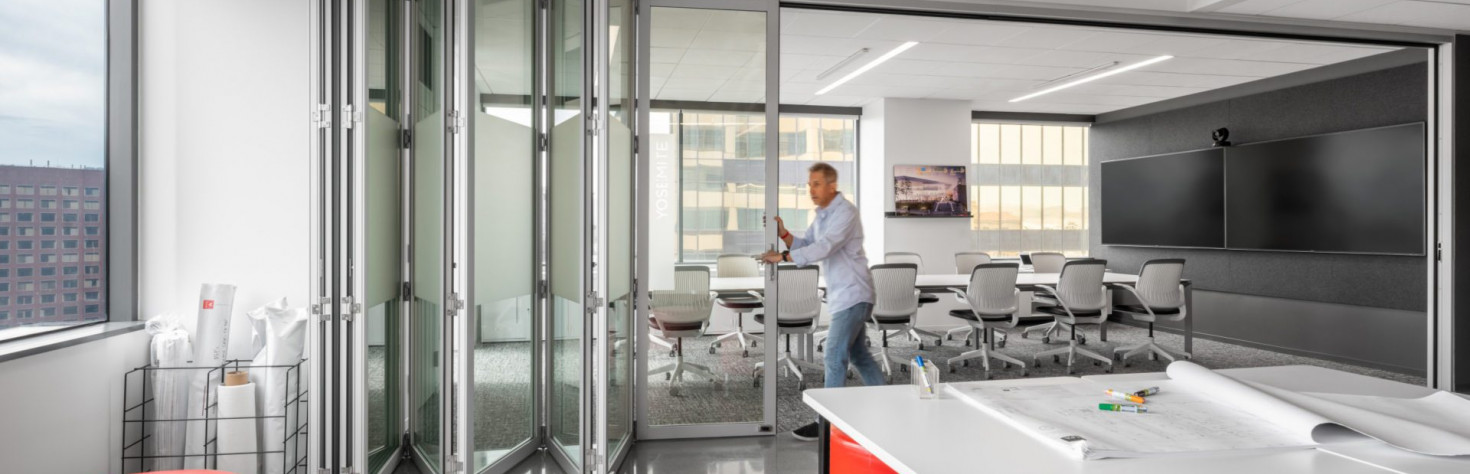
Virtual Reality Is Changing the Interior Design Industry
Meg Moussamih is lead designer for Falkbuilt with the Tangram Construction Trades Division. Falkbuilt is combining proven construction methods with next-gen technology to build beautiful, cleanable, high-performing, and cost-effective environments. Their newest software, Echo Dome, allows everyone to meet inside the Revit model to experience the space and make real time design changes. Tangram Construction Trades makes subcontracting simple by consolidating multiple construction trades under one roof and delivering on time and within budget.
How have things changed in the past two years, for companies that design and build interior office spaces?
It’s been an interesting time. About six months before the pandemic, Tangram Construction Trades (TCT) partnered with Falkbuilt, a leader in digital component construction. As soon as the pandemic hit, a large volume of projects came to a halt, as clients assessed their situations, both logistically and financially. Within a few months*,* however, clients noticed a silver lining – the opportunity to perform work they had been putting off for years. They began to ask “how can we take advantage of this quiet time to launch renovations that would require evacuation of the office?” Today, for companies choosing “return to work,” there is increased commitment to complete those renovations because employees are on their way.
What are you seeing from companies making hybrid workplace decisions?
Right now, I see two very separate sides of the spectrum. Many companies have closed their offices completely and gone virtual. In fact, I was on the phone with a carpet manufacturer the other day, with plans to come downtown to pick up some samples. They told me they’ve closed their storefront and now do everything digitally. Within 12 hours, I had samples sitting on my home doorstep. This is the new reality.
On the other side of the spectrum, I know many companies in the midst of significant renovations, with the goal of inspiring employees to return to work. Many employees have realized that that working from home is their ideal, so they now need a good reason to come into the office. Employers are making every effort to create spaces that draw them back.
Frankly, I see no one in the middle -- companies are forced to take a stance, lest they linger and lose money. Especially for those companies paying rent – they cannot continue if there is no one to fill the space. Everyone has to decide: either we’re either committed to being in the office or we’re not.
What is the biggest challenge to the design process and what are the solutions?
In the design and construction industries, there have always been multiple trades working together to bring projects to life. It’s agreeing on the precise means of accomplishing a goal that’s the challenge, and the risk of miscommunication, inefficiencies, and waste always exists. Live discussion is best for preventing this, but it means many trades must be in the room at the same time. And this can’t always happen.
What I’m seeing today is virtual reality (VR) technology intercede to push us to a level of sophisticated collaboration we’ve never experienced before. I believe it’s going to revolutionize this industry. Today, through VR software like Falkbuilt’s Echo Dome, we can gather everyone associated with a project in a virtual room, walk through the space without masks on, never be within six feet of each other, and make changes on the fly. A general contractor can come into the 3D VR to ask questions while an architect makes design changes, and we all have the same information. We’re reviewing project details simultaneously with clear, open communication, and it’s incredibly efficient and refreshing. In addition, it’s saving clients money since fewer change orders are needed during construction because confusion and risk have been addressed before construction has begun.
What other trends do you see in the design industry?
Today we’re being asked a lot about flexible workspaces and private work environments. If you’ll recall, a few years ago, open offices were the hottest thing – we wanted shoulder-to-shoulder collaboration with coworkers to capitalize on inspiration and create instant availability. But, now, we’re realizing that productivity is often better fostered in some kind of isolation. People need a quiet space to work and reflect on their thoughts.
Another trend is in the commercial leasing space. In the past, companies signed 10-year leases. Today, they are looking at 2-5 year leases, since no one knows what the future holds and everyone wants the flexibility to leave, if necessary. This means companies want to own as much of their mobile property as possible. It’s especially good news for pre-fabricated wall companies, like Falkbuilt. In the past, when a client had conventional drywall, those walls obviously remained with the building when a client vacated. Today, modern, tech-savvy demising walls can be taken down and carried to the new leased space, just like furniture, so the new space can be customized to a company’s liking. And there’s a sustainability component to that, too. One of aspect of being a conscientious human right now is considering how we can be more sustainable with everything we do.
What is your long-term expectations for the interior design industry?
I’d like to see a technologic revolution in this industry, as well as a switch in which parties are responsible for the heavy lifting of a project. Specifically, I foresee a future in which construction pieces are digitally created on the front end and then delivered to the field for installation.
Right now, almost everyone in the industry is still bringing raw materials to site where everything is cut to size. This is an antiquated process with plenty of inefficiencies. But it’s currently necessary because a building is never made never perfectly level or plumb. In today’s process, when things are not level, a general contractor can ensure the picture hanging on the wall is a bit unlevel to match the wall that is a bit unlevel. But, ideally, everything would be level in the first place.
I’m part of a unique process at Falkbuilt in which everything is verified on site before being produced in a factory. We insist on doing most of the work at the beginning so the second half of the project – construction and installation -- is lighter in computation. I think this way of thinking will catch on.
I’d like to see other advances in technology, too. Why is it that we can X-ray a human body to see inside but not a wall? I do see small tech advancements happening today, but it’s going to take big movement to completely change the industry. And I’m here for it. In fact, I feel my current job is my way to support the momentum, spread the word, and inspire others to make a bigger change.
What are your thoughts on innovation?
Many people find change unsettling, but innovation doesn’t come without some frustration and pain. Personally, I find comfort in discomfort. In fact, if I do one thing for too long, I’m bored. If I’m uncomfortable, I know I’m growing.
When we change our processes, which Falkbuilt does as often as once a month, it’s always better in the end. So I’ve learned look forward to it. Part of my job is to comfort people through growth and change. Even if they are uncertain about it, they can join forces with people who are certain. I think being open-minded and trusting is all I can ask from my team, from the companies that I work for, and from my clients.
Real Estate

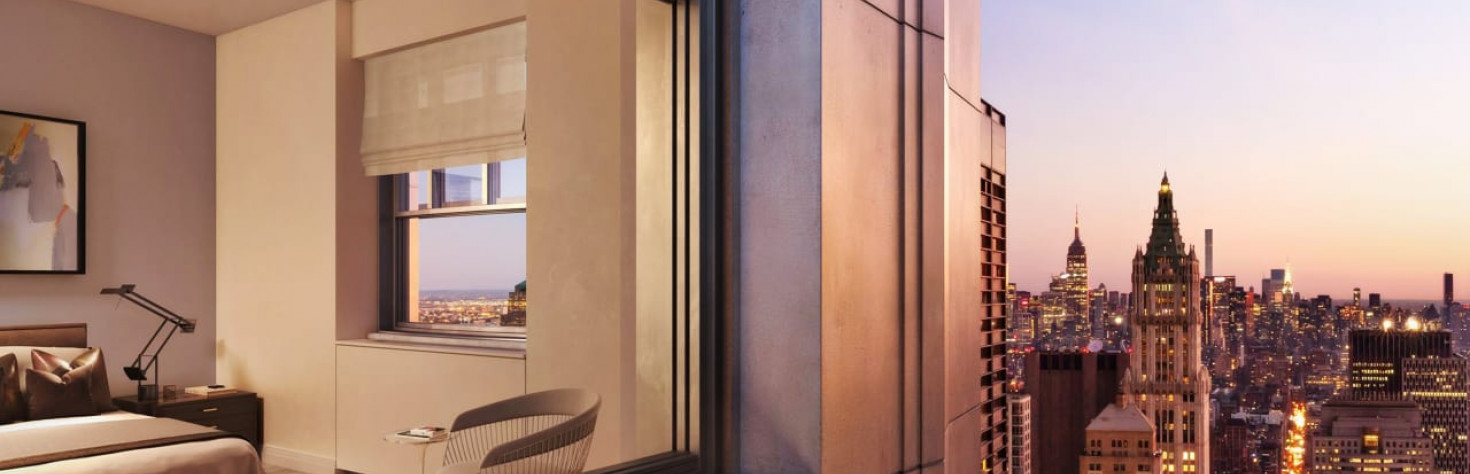


While investors initially doubted the value of certifications like LEED and BREEAM, green certifications result in a rent premium of 6% and a sales premium of 8%, JLL says in a new report on sustainability and the growing value of green.
Makers
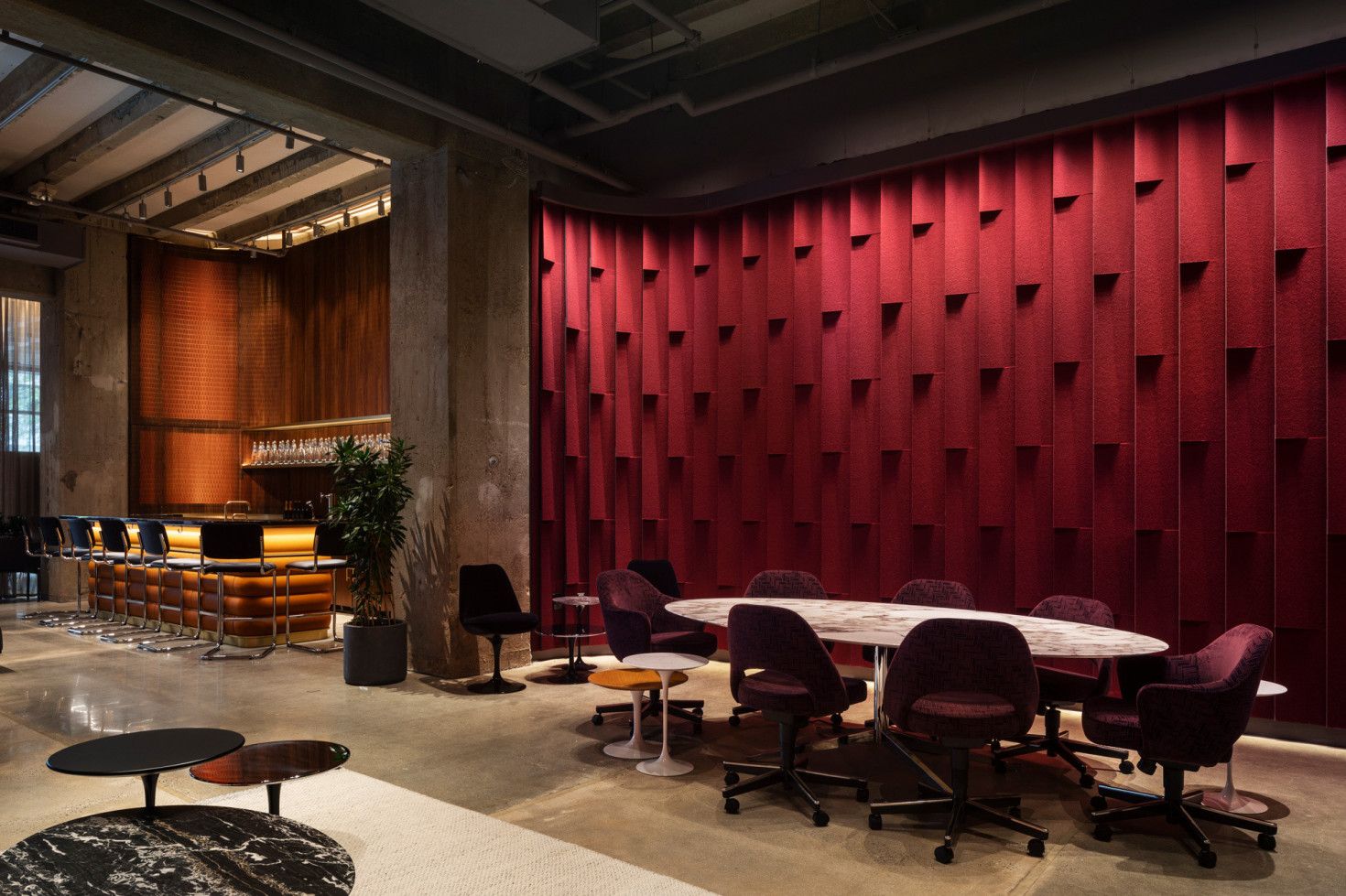
The desire to incorporate the comforts of home into commercial spaces has become a central tenet of the heritage company’s ongoing rebranding. ARO recently built on this model by revisiting the Knoll New York and Washington D.C. flagships it originally designed a decade ago, transforming them into spaces that better reflect the resimercial trend. “Knoll has always challenged us to create spatial coherence within an environment that ultimately shows very diverse furniture and finishes,” says ARO principal Stephen Cassell. “That robust design framework has stayed consistent even as Knoll’s showrooms and offices have evolved in response to the changes in client preference.”
“We see the distinctions between asset classes blurring all the time, and I think we’ll see this trend accelerate, especially as momentum builds for the ‘work-from-anywhere’ trend,” he said.
Chen, an outdoorsy guy who loves to travel and who always dreamed of launching and leading his own firm, said it is easy to romanticize leaders and leadership. But the pandemic taught him to take a more practical view of the job and helped him distill some simple guidelines for management — be honest and be yourself.

The Board has retained an executive search firm to help it identify a permanent leader for the Company. Mr. Lillibridge does not intend to be a candidate for the permanent role.
Mr. Lillibridge has served on the DIRTT Board since 2017. He has over thirty years of executive experience in the healthcare real estate industry, having founded and built a multi-billion-dollar medical office building business. He is guided by passion, persistence, and humility, and has extensive experience in leadership roles, strategic planning, property investments, debt and equity financing, facility development and property operations.
Dealers
Leading Contract Furniture Dealers Unite
Two of Las Vegas’ leading contract furniture dealerships, Henriksen Butler (HB), and Western Office (Western), have joined together to collaboratively serve Southern Nevada.
Since 2004, Henriksen Butler has served as Nevada’s Herman Miller Certified Dealer with locations in Las Vegas, Reno, Salt Lake City, St. George, and Boise. Western Office, with locations in Los Angeles and Seattle, has represented Knoll as a Workplace Dealer in Las Vegas since 2006. The combination was precipitated by the recently completed acquisition of Knoll Inc. by Herman Miller, Inc. in July 2021, forming the combined MillerKnoll, Inc., which represents a portfolio of 19 affiliated design brands.
Together as Henriksen Butler, the local team now represents the storied design brands of Herman Miller, Knoll, and the combined MillerKnoll. “In terms of design history, you simply can’t beat the legacies built by these two design icons,” says Dave Colling, CEO of Henriksen Butler. “To see them come together to continue building upon such a strong foundation in the form of MillerKnoll is incredibly exciting.”
With local representation of both Herman Miller and Knoll consolidated under Henriksen Butler, the Las Vegas team from Western Office will join the HB team of over 250 employees throughout the Intermountain West.
SupplySource Inc Announces Partnership with Haworth
SupplySource Inc is proud to announce its new partnership with Holland, MI-based Haworth. As a Certified Minority-Owned Business headquartered in Williamsport, Pennsylvania with offices in State College, Mechanicsburg, Reading and York, SupplySource is a premier office furniture dealership and has been an industry leader in the region for more than 38 years.
SupplySource found a kinship in Haworth as the core values of both companies were nearly identical. Beyond similar corporate values, SupplySource saw promise in Haworth’s diverse line of products and Haworth saw value and growth opportunity inside the Pennsylvania market. To the partnership, Haworth brings decades of experience, global expertise, technology, and design: all of which will enhance the experience for customers of SupplySource. This strategic partnership comes at a time when the industry, and the world around us, is constantly changing. Haworth’s flexibility and shared values will ensure an enhanced customer experience.
“I could not be more pleased with the decision to partner with Haworth and offer the State of Pennsylvania a host of products and services that we just couldn’t previously offer,” COO and Principal of SupplySource Larry Basile said. “This partnership brings new life and meaning to SupplySource, and we are prepared to service our existing and new clients with offerings that will meet their design goals while maintaining a reasonable budget for their workspaces."
Products



Projects
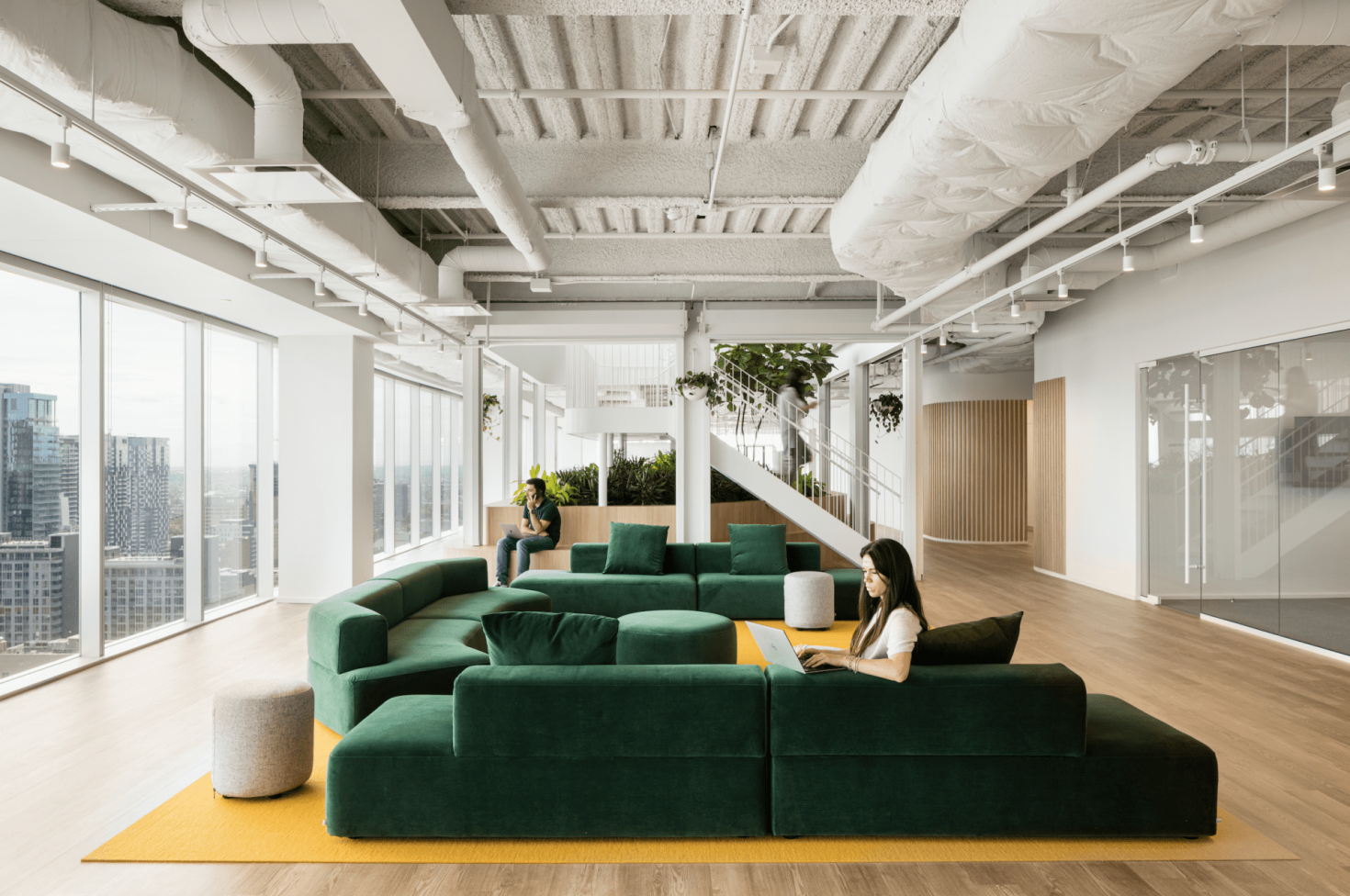
Designed and built during the pandemic, the project aims to offer employees with a vibrant and inspiring place to work, with principles of community and collaboration being at the heart of the design concept.
Ask Stephen
I'm an avid reader of your column and BoF. I read in “Ask Stephen” months ago when Haworth flipped the 110 year old NYC Herman Miller dealer WB Wood to Haworth that you predicted Franco Bianchi would be on a tear to “flip” more major line dealers to Haworth. Frankly, I thought you were crazy at the time. It did not seem realistic to me that any other major line dealer would switch to Haworth. I have seen HNI try to flip dealers to Allsteel with limited success, but come on; concerning Allsteel, as the cliché goes, “you can put lipstick on a pig but”…... Well, hey, there are some pretty rich pig farmers in Iowa so who am I to judge?
So, Systems Source, the largest Knoll dealer on the West Coast, is now a Haworth dealer? Offices in LA, San Diego, OC, Seattle, Portland. Are you kidding me?
What gives?
When the Herman Miller dealer, WB Wood in NYC became a Haworth dealer that was long before Herman Miller bought Knoll. Now the Herman Miller and Knoll dealers are all scrambling just like you predicted. Looks like one rich bastard talking to another worrying about if they should sell or merge with one another, to me.
They are making it easy for MillerKnoll to consolidate all the dealers without having to cut any of them. I think they're slitting their own wrists by merging, selling and staying in the same MillerKnoll family that screwed them to begin with. Nothing is bigger than a dealer owner’s ego - until they get an offer they can’t refuse. Now, the smart MillerKnoll dealers are saying NO to that formula - changing teams all together and becoming Haworth dealers, saying “fooled me once” to MillerKnoll. No merging or selling, they are flipping!
Anyway, back to my point, the Haworth/SSI deal is not a sale but a giant switch. Bianchi is the dealer bandit! And you called it. I have noticed that Steelcase lets one dealer do it’s dirty work for them by letting a big dealer buy another… but Haworth gets down in the weeds and makes it happen, by switching a major dealer to their dealer network.
Stephen, what do you make of all this?
Signed,
Amazed By It All
Dear Amazed,
Yes, you said it right and you heard it here first! Here’s my quote from BoF 11/3/21: “we expect the dealers will experience major changes, merging or even being flipped to a different major brand." You remember correctly. I explained to all my readers that Franco Bianchi, Haworth CEO, was focused on his distribution network and recruiting and flipping new dealers while his competitors were busy recruiting new salespeople. MillerKnoll was busy with the accolades, patting themselves on the back, and over-using the phrase “iconic brand." Nobody was minding the store – meaning the dealers. The contract dealers, both Knoll and Herman Miller, felt neglected and it was clear to them that the retail business was going to take a stronger role.
Steelcase seems mistakenly to be above the fray, growing sales by letting the already immense dealers acquire (eat) the smaller dealers. There’s possible danger ahead for Steelcase because when you don’t want to get your hands dirty, someone else will do it, and you may find that eventually the tail will be wagging the dog. Hey Steelcase! This is not just some Star Wars Episode V, sooner or later: The Empire Strikes Back!
Haworth jumped on the opening created by the Herman Miller and Knoll merger and started wining and dining dealer principles, and continues to to this day. If you do it enough, and if you have a good “value proposition” story to tell, you’ll eventually win them over. Franco Bianchi is a charismatic leader, subtle, smart, understated, but below the surface wielding the immense power of a $3B company. You know the history: Haworth is a privately owned family dynasty that outgrew most of its competitors. It began in G.W. Haworth’s garage, he was a shop teacher in Holland, MI and they’re still in Holland today. It's no secret to regular readers of this column that I went to work for Haworth as a sales Rep in New York City right after college. Then, when I left Haworth to form The Viscusi Group, they were my first major client and we recruited hundreds of salespeople and managers for Haworth, many of whom are still there today. This is way before Haworth became rich enough to buy some of the most beautiful global brands – Poltrona Frau, Cassina, Cappellini, Janus et Cie - to burnish it’s image.
Franco is the public face of Haworth but the real secret weapon is the Haworth family themselves. Dick Haworth was the boss when I worked there and remains one of the nicest and smartest people in our industry. Never mind he is also one of the richest – don’t hold that against him. He hires smart people and listens to them and that's what has allowed the company to grow. Dick’s father, G.W., started something very special by calling everybody that worked there “members” rather than employees. That word resonates with me today because when you work for any of the other major furniture manufacturers you're not a member of the company you're an employee of the company.
Once a dealer principal meets Franco Bianchi or Matt Haworth or any of the major executives that run that organization they see 'nice' - and dealer principals aren’t used to 'nice,' they’re used to the manufacturer executives sitting across from them making demands and nagging about quotas. As far as the actual Haworth product goes, all I can say is “it is what it is." It's practical, it sells, but it's not the iconic brands that you see at Herman Miller or Knoll. Haworth has attempted to buy its way into the A&D community through acquisition and that experiment remains to be seen. Haworth has high turnover in some parts of the country. Haworth has not been able to grab the residential retail market yet like MillerKnoll has with DWR – that formula escapes them. Yet, if you own a contract dealership and Haworth approaches you, you’ll listen. The combination of “nice” and maybe a big check is compelling.
I say, respect the contract dealers that built your business. Bianchi understands this and the Haworth philosophy is rewarding them in spades by giving them the avenue to continue to flip dealers. I see six more flips coming Haworth’s way in the next six months as the MillerKnoll dealers trip all over themselves to merge, sell, acquire, etc. Or maybe the owners just hide away in vacation homes while their employees toil away through the pandemic?
Sincerely yours,
Stephen
Events

Noted

The series is "inspired by actual events," according to Apple TV+, namely the arc of WeWork as it grew from a single coworking space to a far-reaching real estate company with a theoretical valuation of $47B — and its ensuing fallout after a botched IPO in 2019.