Friday, February 11, 2022


News

The one certainty surrounding the future of COVID-19 is nothing is certain. Between surges, new variants, a dearth of testing and a myriad of other challenges, when and how businesses welcome back employees en masse remains different for every organization. However, it’s not too early to work on creating a safer work environment.

After all, the workplace never had to mitigate the spread of disease pre-pandemic.

Employees who must stay home for extended periods of time with Covid-19 or influenza equate to a big loss for businesses; to the tune of more than $7 billion a year. We recently brought together scientists, business leaders, designers and other experts to develop a systemic approach to safety to ultimately improve employee wellness and productivity, and reduce employee absences due to illness.
There’s some good news for the office market, according to Transwestern. In the company’s 2001 Q4 review, there was quarterly office absorption of 644,000 square feet, which the company described as “turning a corner,” as “33 out of 51 tracked markets registered positive net absorption as market correction is underway.”

The five areas with the biggest increases in net absorption were in Boston, San Jose-Silicon Valley, Dallas-Fort Worth, Seattle, and Charlotte. When looking at trailing four-quarter net absorption, the top five were Austin, Raleigh-Durham, San Jose-Silicon Valley, Oklahoma City, and Nashville. About 30% of the markets that Transwestern tracks showed positive net absorption over the previous 12 months.

From a business perspective, most architecture firms had a better-than expected 2021, with the momentum continuing into 2022. However, there will be several challenges over the next three to five years that will dramatically reshape the construction industry and design professions, including an extremely tight labor market for architects and contractors; navigating remote work and rebuilding firm culture; and responding to emerging priorities of both staff and clients.

After entering last year in the midst of a steep downturn, almost six in 10 firms nationally ended 2021 with revenue gains of at least 5%. On average, revenue increased almost 6%. This year, even more growth in revenue is expected, almost 7% on average, with very few firms anticipating a revenue decline.

Even in the face of this generally positive outlook for the architecture profession, there are likely to be significant challenges. Supply disruptions, although showing signs of moderating, will continue to plague the construction sector. These disruptions, coupled with a strong economy, will continue to stoke inflation and put upward pressure on interest rates. Finally, labor shortages that have dogged construction contractors and architecture firms over the past year look to become more serious this year.

What started as production challenges as the pandemic hit has morphed into a surge in consumer demand that has outstripped the production capacity of many manufacturers. Construction has been particularly hard hit by supply chain issues. Construction costs overall rose about 20% last year, with those for some products (e.g., steel and oil-based products) rising more than 50%. While overall price increases for construction materials are beginning to moderate, most products will see elevated costs over the next several quarters.
Bringing employees back to the office can seem fraught with uncertainty. New Covid-19 variants have been sweeping the U.S. for months, and landlords are looking for any advantage to convince tenants it's safe to come back. But many property managers have decided simply making promises that buildings are safe won’t be enough to get office employees to leave the comforts of home and return.

“We thought there was going to be the need for third-party certification,” Hiffman National Senior Vice President Carrie Szarzynski said.
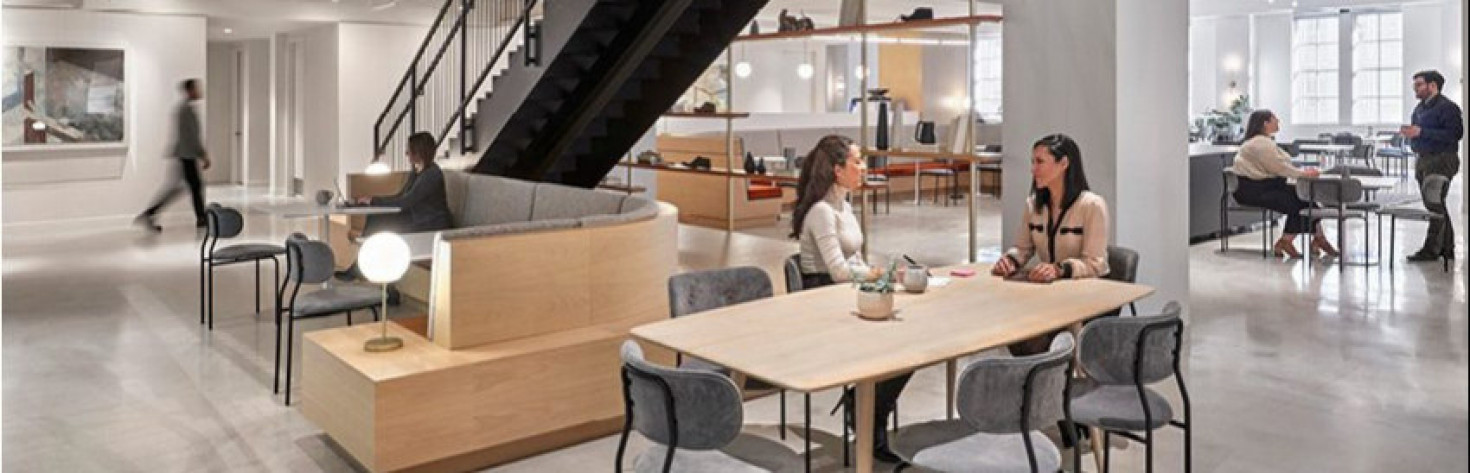
2022 brings a new beginning. It’s a time to step back, reflect, look forward, and set new goals. The past two years have been strange, and we have had to completely reorient all aspects of our lives including work.

We work differently now. Not as much time is spent in the office, we work in various places, we depend more on technology. There are new priorities in our lives, our work and our environments and it’s important to recognize and respect them.

The data indicates that most of us would like to get back to the office as we value interaction with our peers and the collective tools and resources that we can share. We have an opportunity to reassess the tools and spaces that better support our work to perform more effectively and efficiently.

In order to maximize the value of the office, there are a few simple concepts that must be accounted for. Most are not expensive and simply require some careful thought.

The Workplace
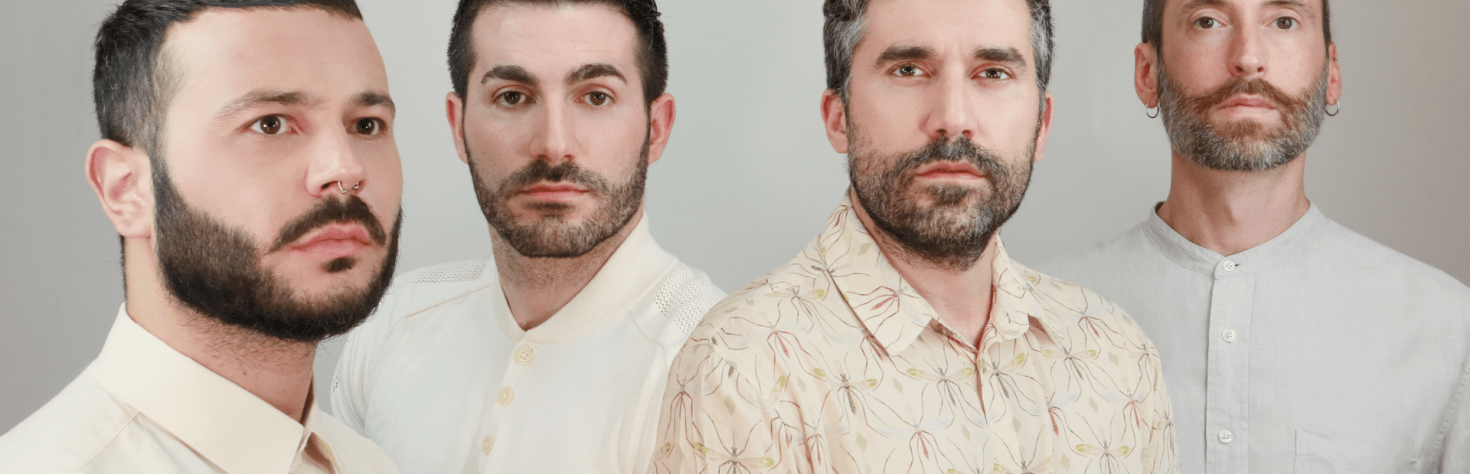
Founded in 2014, Milanese firm Foro Studio works within architecture and takes a multidisciplinary approach to design. et up by Fabio Romenici, Salvatore Ponzo, Alessandro Pennesi and Giuseppe Ponzo, Foro Studio takes a multidisciplinary approach to their work.

Over the years, Foro Studio has been awarded with various international prices and awards, including Big SEE interior design award 2021, IF Design Award 2019 and the German Design Award 2019. OnOffice sits down with the Milan-based studio to talk all things design and the future of work.
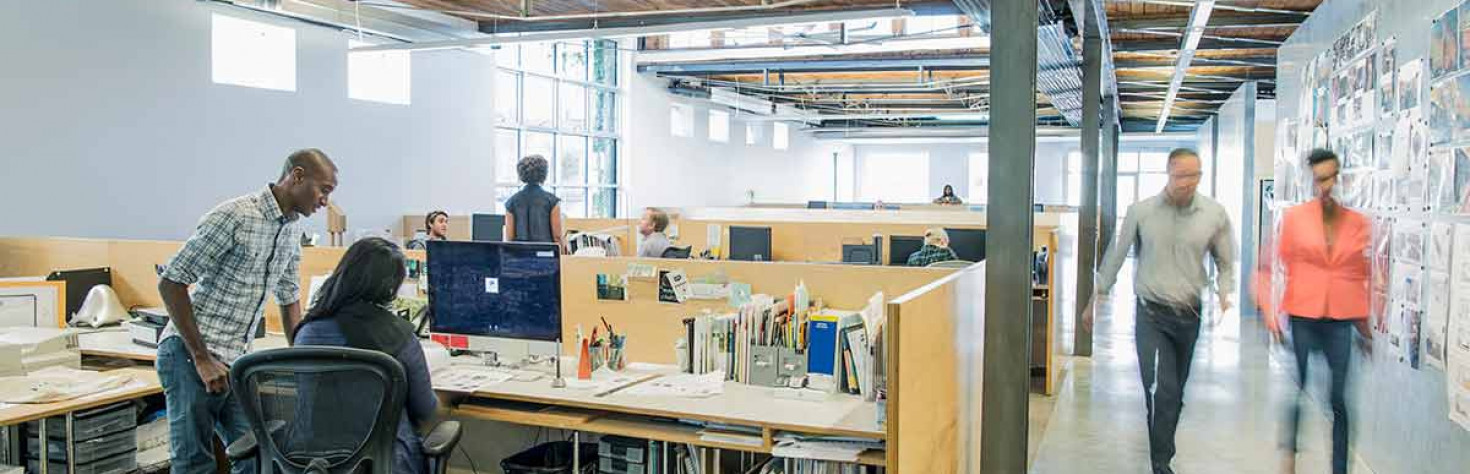
t’s now up to companies to find new ways to re-energise the office to make the commute feel worthwhile and support employees who may be battling feelings of isolation and disconnection.

“The pandemic and remote working have impacted employees’ morale and energy, and how much they feel part of the company vision,” says Flore Pradère, Research Director, Global Work Dynamics at JLL.

JLL’s Regenerative Workplace research found that 36 percent of employees feel they lack energy while working, while a quarter feel too exhausted by work and family life to take care of their health and wellbeing. A third even say their company is no longer a good place to work.

Yet good energy levels are intrinsic to employee engagement and motivation, driving creativity and innovation. “Companies that support employee wellbeing see a definite payback, because people have the energy to go the extra mile,” Pradère adds.
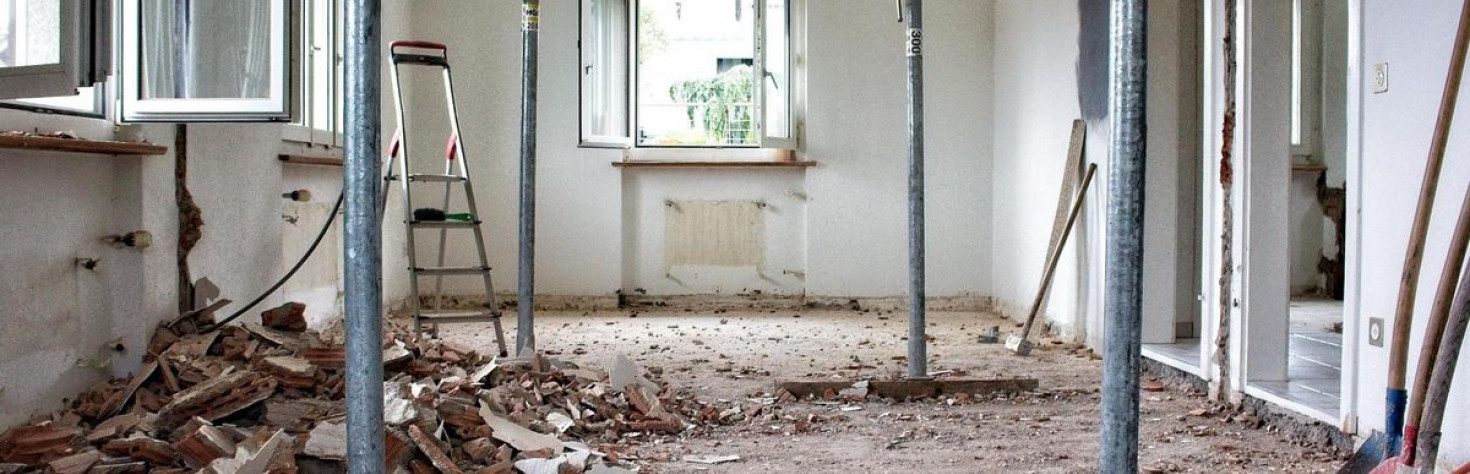
Is it a sudden urge to develop sustainably? A wave of green conscience? Or just that, if you want to catch the economic tide before it turns, you have to grab the quickest wins?

Whatever the reason, the UK is in the grip of a refurbishment surge, as developers react to the rapid recovery of the post-Covid economy.
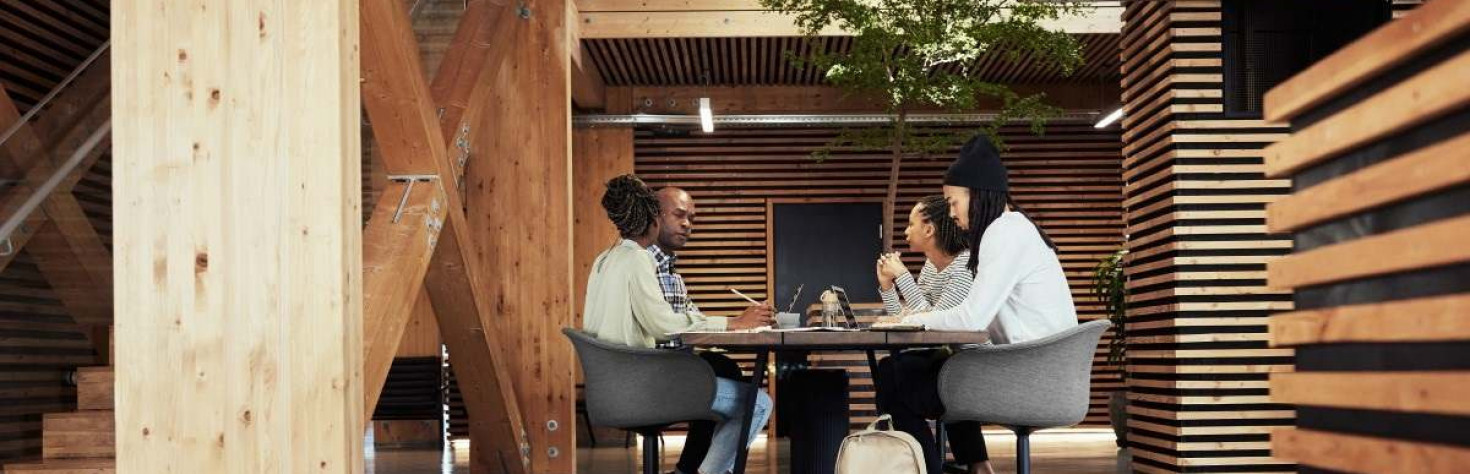
These workplace strategies can help prepare your return to office plans & accommodate your office needs for now and later - at a global or national scale.
As companies scramble to retain top talent and boost productivity in 2022, many will seek to double down on employee engagement.

They may be wasting their money.

Despite billions of dollars spent trying to increase employee engagement, a recent Gallup study shows that engagement has risen, on average, less than 0.5% a year for nearly two decades. In addition, we found that between 2020 and 2021, employee engagement actually plummeted 18%. Shouldn’t organizations have more to show for their efforts?

Recent research from the O.C. Tanner Institute indicates that engagement can be a flawed and misleading gauge of effectiveness, as it’s not a measure of the quality and impact of the work product itself. And with remote and hybrid work changing the employer-employee equation, and mass resignations shifting the power balance, it’s clear that even the best traditional measures of workplace activity may no longer be relevant. That’s why we believe that companies would do well to hone in on a different metric in 2022 and beyond. Let’s measure “great work” instead.
Your people want change, and are expecting improvements
For many companies, one of the biggest surprises from the great work-from-home experiment is that…it actually works. Employees can be productive and effective when they're not in the office. Our group at NV5 was ahead of this curve in some respects, as the bulk of our team has been remote for years. At the same time, there are obvious benefits to seeing coworkers and collaborating in person. So, what is the right balancebetween office and home office? What steps will help keepemployees happy and productive? While we can't solve all your internal policy debates, we can help address the acoustic and AV challenges your office is likely facing. As workers split their time between home and office, several issues have become starkly apparent.

Trends

Post-COVID work shifts are enabling parents to get comfortable calling on employers for childcare support.
 
Orders to work from home over the pandemic have had colleagues regularly Zooming into each other’s family lives, getting acquainted with previously unseen partners, kids and pets. Few working parents will say that homeschooling – or the unique horror of having a toddler interrupt a board meeting – isn’t stressful. But the experience has meant many parents felt seen in more than one dimension by their employers. Among UK and US working parents, 78 per cent say they feel they have more flexibility and understanding around childcare needs than they had prior to the pandemic. Facing a skills gap and war for talent, companies are having to respond with parent-friendly perks from monthly allowances to on-site daycare. How should workplaces be designed if space for children goes from a nice-to-have, to a must-have?

Coworking

Metro Denver’s inventory of coworking space has decreased by 8.7%, or 244K SF, since before the pandemic, bringing the total to 2.6M SF across the region, according to a new analysis by CBRE Group Inc.

The decrease mirrors the rest of the country, with coworking providers shedding 9% of their space nationwide following the onset of the pandemic in early 2020, with total inventory now reaching just over 80M SF.
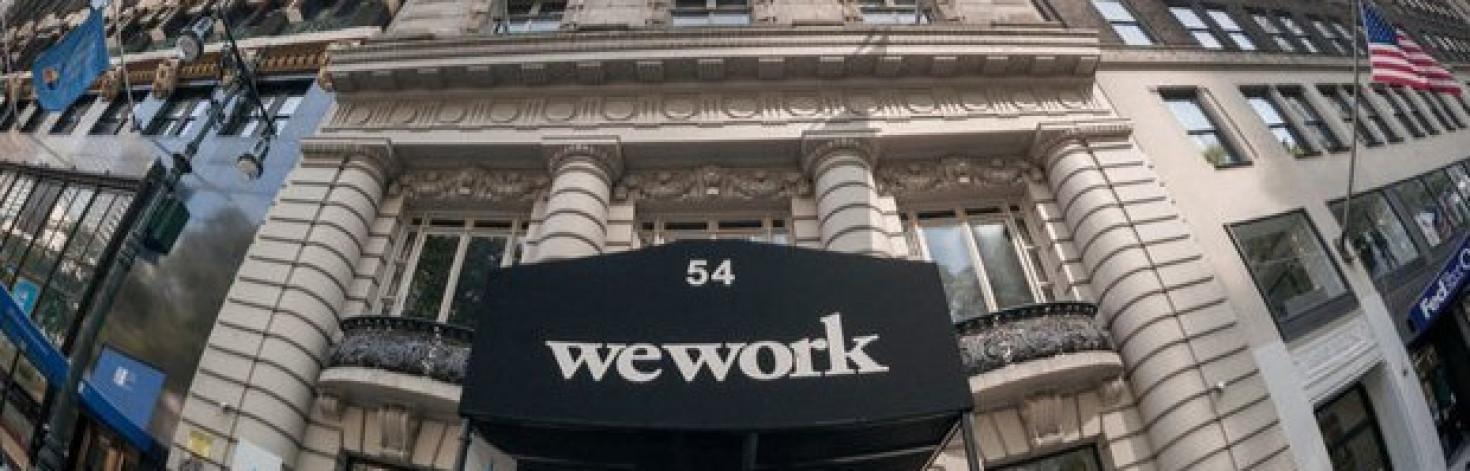
WeWork and Upflex, a coworking aggregator and global flexible workplace startup, have announced a partnership that will establish a combined global network of over 5,500 locations. WeWork will also participate in Upflex’s Series A funding alongside additional investors.

Through the partnership, both WeWork and its members will gain access to Upflex’s fast-growing, aggregated portfolio of over 4,800 third-party spaces, provided by over 700 flexspace operators across 80 countries.

WeWork can’t seem to get out from under Adam Neumann’s shadow. The former CEO with unkempt hair and “messianic” charisma may have stepped down in 2019,

Remote Work

According to a new report from Instant Offices (registration), four in five employers whose staff are offered hybrid or remote work are already using employee monitoring tools to track work performance and activity. According to the study: 78 percent of companies report using employee monitoring software to track worker performance and online activity; 73 percent say stored recordings of calls, emails, and messages have affected team members’ performance reviews; over 50 percent say they are implementing non-traditional monitoring techniques; and 94 percent of employers track emails.

The report claims that demand for surveillance tools skyrocketed in 2020 as remote work was embraced at the start of the pandemic, increasing by almost 60 percent on the previous year. It also cites a Google Trends search to suggest that worldwide searches for ’employee monitoring software’ increased by 35 percent in 2020 compared to the year before, coinciding with the lockdown and the surge in people working from home.

A remote work experts thinks that hybrid work will lead to two very different types of workdays, and some of our work-from-home habits won’t be going anywhere.

Design

More obituaries have been written for the office in the past two years than at any time in history. It has often seemed like even the best office in the world couldn’t preserve the idea of the office. And it’s not like the obituaries were all that rare even before the pandemic forced us to reappraise our relationship with work and the times and places we do it. While all these death notices were being served, one particularly well-informed organisation was making some more interesting observations about it all. In particular, it constantly raised the most fundamental question of all.

Why were so many people describing better experiences of working from home than they were when working from an office? How was it that a location not designed for work, was consistently outperforming a location specifically designed for it? The organisation posing this riddle throughout the pandemic was Leesman which has mapped people’s experiences of work since 2010 and last year published a trends report based on information from a quarter of million people working from home.

Perhaps the most interesting point that emerged from the data was that only 25 percent of people said they had an excellent or outstanding experience of working in an office. This is not an indictment of the office per se, according to Leesman, but it is damning about the manifestation of the office for many people coupled with the necessity to travel to it at the same time every day, when that is not always necessary.
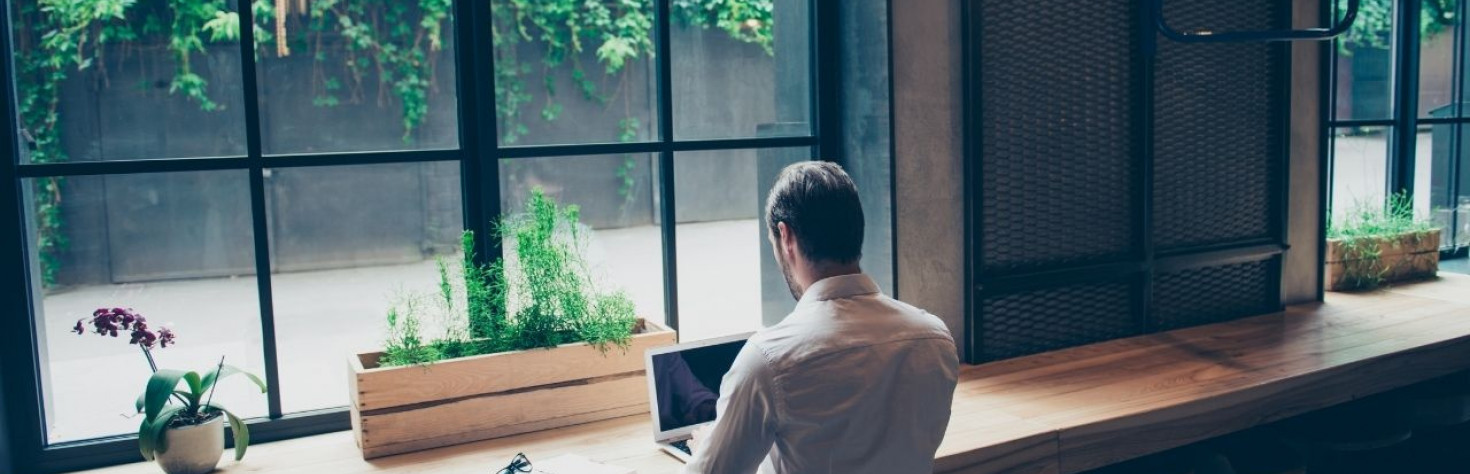
Companies have ramped up their office design in recent years in an effort to create a hospitable environment that employees actually want to be in.

However, one aspect of the office that is often overlooked can have the biggest impact on workers returning to the office: natural light.

Years ago, a survey from Future Workplace showed that access to natural light and outdoor views was the most desired feature of the workplace, outweighing other amenities such as on-site gyms and childcare services.

The survey also found that a lack of natural lighting was also associated with a poor employee experience, with 47% stating feeling tired or very tired due to not having access to proper lighting.

“In addition to the many biological benefits of natural light like boosting vitamin D — which strengthens the immune system — and the fact that it triggers the release of serotonin, access to natural light throughout the day actually helps us sleep better,” said Anne Gibson, national practice leader with NELSON Worldwide.
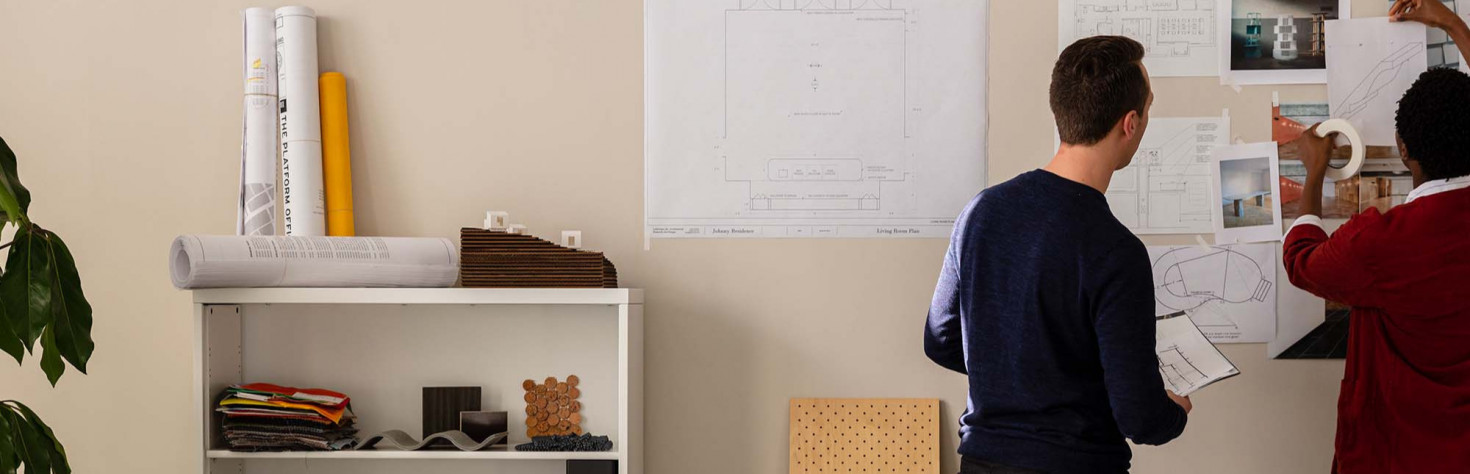
What does workplace design look like in a future that refuses to be predictable? Cheryl Durst, Executive Vice President and CEO of the International Interior Design Association (IIDA), explains what this means for productivity, culture, and the crucial role of designers.

Metaverse

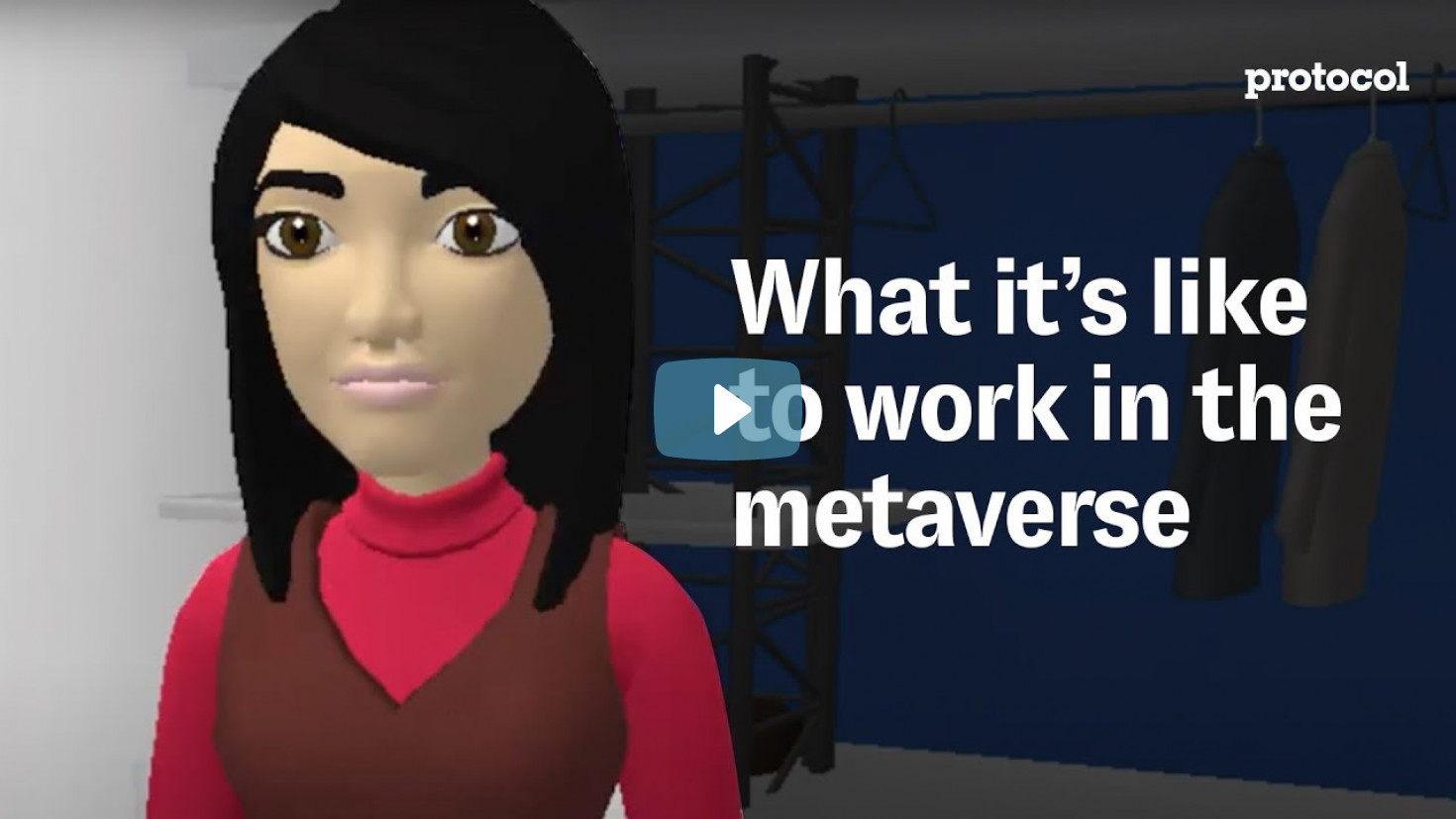
It’s easy to get too in-the-weeds when it comes to the metaverse: an embodied, interconnected network that doesn’t exist yet. Right now, a “work metaverse” is best defined as a virtual office headquarters that you can navigate as a digital avatar. You might call it a multiplayer video game … except it’s where you’re supposed to get stuff done.

Plenty of people are skeptical about this way of working. It’s cool that you can turn your desk into a pirate ship and everything, but the idea of spending all your time as an avatar in a digital office is jarring. Still, some companies swear by these spaces, spending hours upon hours in their virtual HQs. In December, Protocol wrote about three of the big “work metaverse” companies and explored the feeling of these platforms.

But since the experience is so visual, we wanted to show you the “work metaverse” in video form, in all its usefulness and absurdity. Reporter Sarah Roach gets a taste of what it’s like to work in Gather's, Teamflow's and Virbela’s metaverses. In addition to wandering around and talking with co-worker Lizzy Lawrence, she races go-karts, draws on whiteboards and performs complicated dance routines.
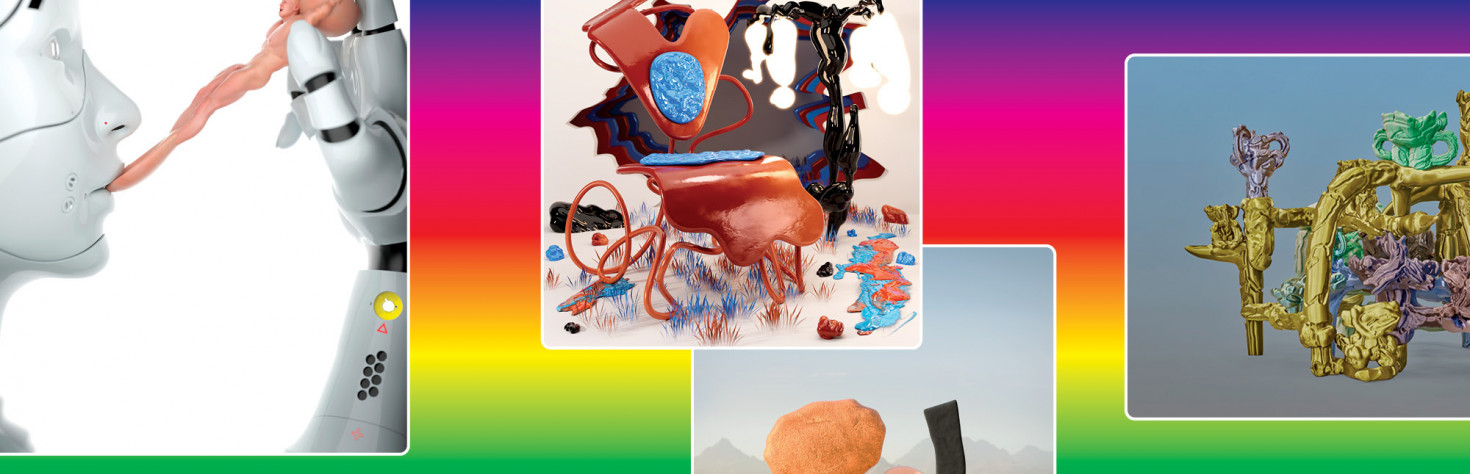
In the metaverse, design is limitless, giving anyone the power to step into the role of designer and craft spaces and objects that best express who they are.
 
If there is one narrative that has been consistently marketed to designers and consumers alike, it’s that “a home is a reflection of the self.” It’s a statement that encourages us to buy products and express ourselves via the things we collect and display in our houses, on our bodies, and through our online profiles. There’s some truth to it—the stuff we surround ourselves with holds histories, tells stories, and even serves as a metaphor for our identities, lives, and dreams.
The metaverse is one of the latest technologies sweeping across the business world.
 
In the midst of the pandemic, many companies thought the physical office might be a place of the past, but the hybrid workplace is being solidified as the workstyle of the future. While the future is not certain, one thing is: there will be an office for many businesses, especially given the advent of the metaverse.

The metaverse is one of the latest technologies sweeping across the business world. In its most simple definition, the metaverse refers to a shared virtual world of locations and environments that people can access via the internet.

With the ability to share the physical office with remote workers, the metaverse is becoming a valuable tool for businesses to connect all employees and increase access and accommodation.

Hybrid Office
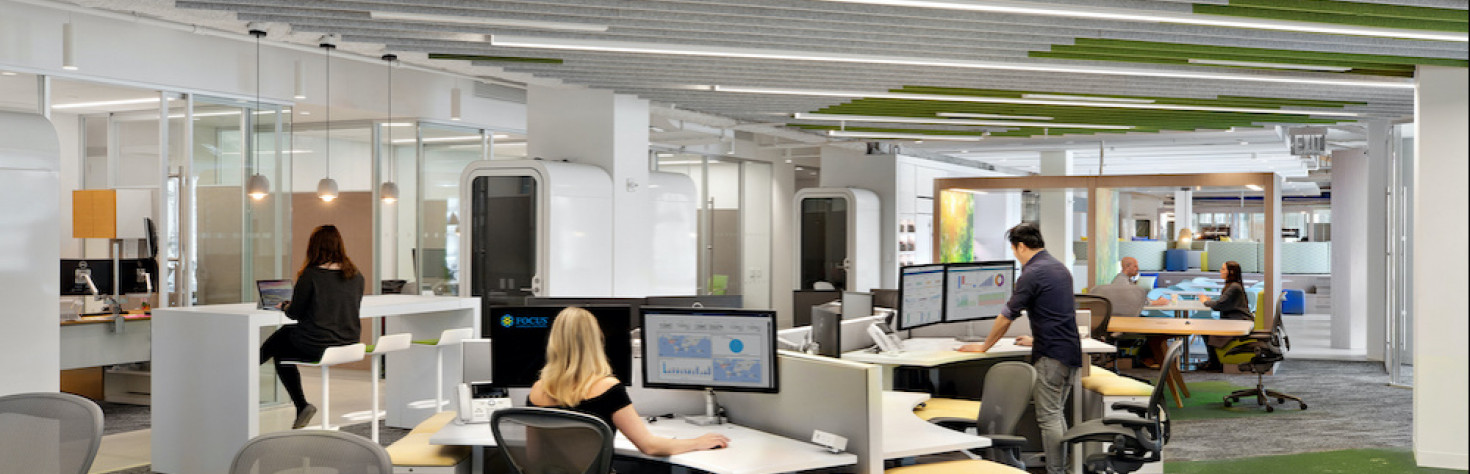
Jamie Feuerborn & Michelle Beganskas of Ted Moudis share how to use the hybrid workplace for connection, empathy, and creativity.
 
From Parks and Recreation to Mad Men and of course, The Office, it’s no coincidence that some of the most iconic pieces of pop culture are presented in workplaces. Offices are central to not just our jobs but also to our relationships and aspirations. However, there’s no doubt the pandemic has transformed companies’ and their employees’ relationship to offices for the years and decades to come.

Nevertheless change isn’t the same as obsoletion. So even though offices may look different and serve new purposes, they still play a vital role in creating and maintaining positive and productive work cultures, training new employees, and supporting equity within organizations.

With 72% of companies reporting that they intend to offer a blend of in-person and remote work after the pandemic, firms are still uncertain about how to optimize and update the layout, design, and amenities within their offices. Workplace designers are starting to encourage their clients to think of their offices as more than a place to complete individual day-to-day assignments, but also as a space dedicated to hold training and alternate types of programming that boost morale and make new and long-term employees feel welcome and motivated.
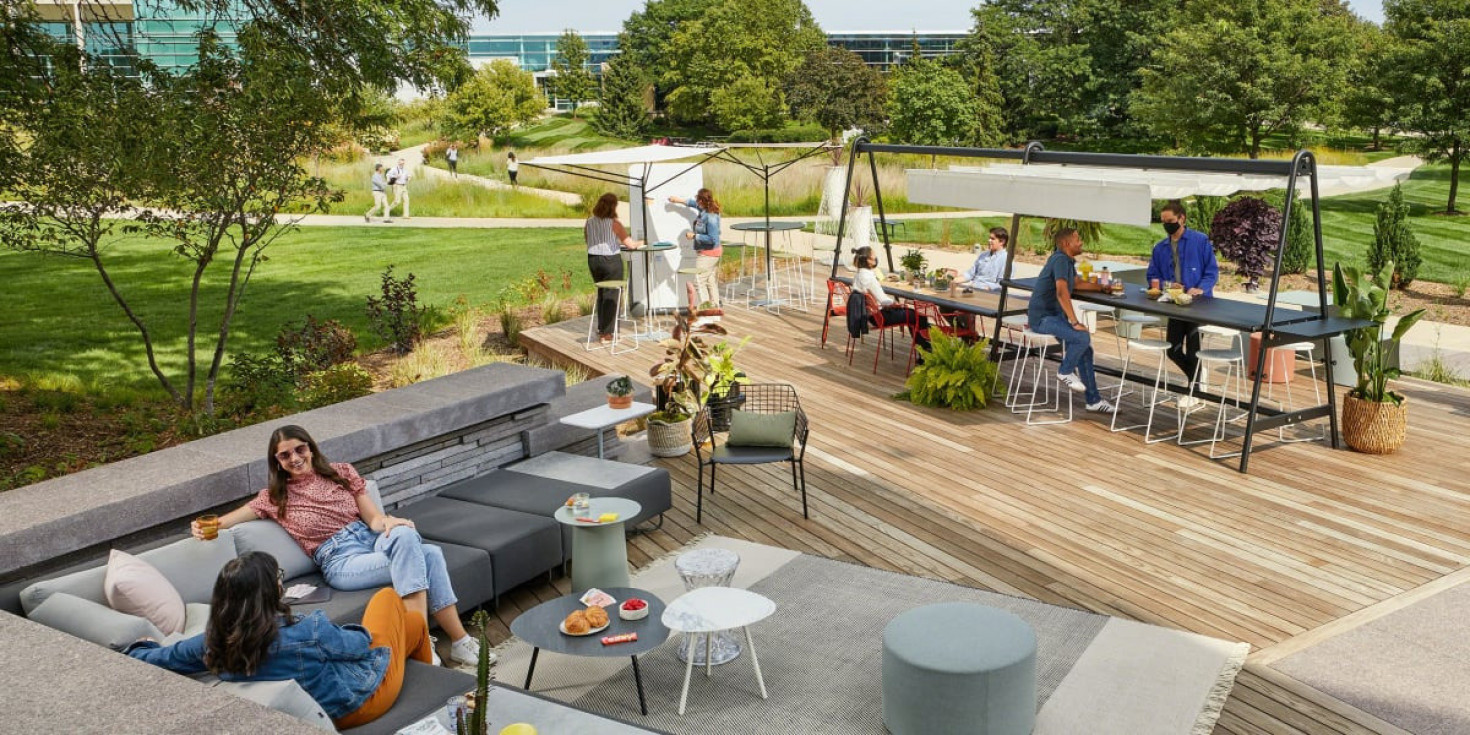
Companies of all sizes have adopted a new way of working during the pandemic - and, with it, an all new workplace culture.
 
Throughout the pandemic people have changed how they shop, where they live, how they learn, and, for many, how they work. Hybrid work is familiar territory for some, but a seismic shift in how work happens for many organizations. Regardless of how your company defines its policies, this blend of on and offline interactions means we have to think about the needs of people as they adopt a new way of working, and how the workplace and technology need to change to help them be successful.

Flex Office

Office tenants are increasingly looking to flex space as a crucial piece of their real estate strategy in the wake of COVID-19, with nearly a quarter of respondents recently surveyed by CBRE reporting having more than 10% of their portfolio in the asset class.

“The need for agility has never been greater as workforce behaviors have been transformed during the pandemic and likely will never return to pre-pandemic norms,” a new report from CBRE notes. “As occupiers plan real estate portfolios amid such uncertainty, flexible office space is becoming a useful solution for some requirements.”

Real Estate
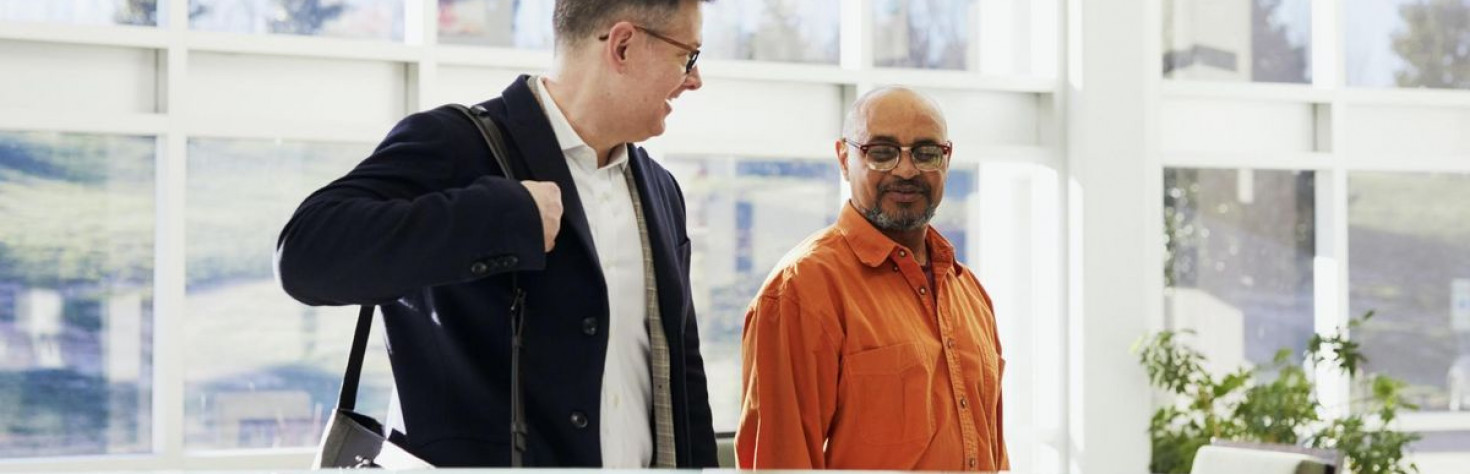
Omicron didn’t prevent many companies from launching their return-to-office plans, as net absorption went positive and looks to stay that way in the short term.
 
For the first time since the pandemic began, the office real estate market in the U.S. had some unreserved good news in the fourth quarter.
 
Nationwide office net absorption turned positive in Q4 for the first time since 2019, according to quarterly reports from brokerage houses CBRE, JLL and Lee & Associates. Though Cushman & Wakefield data showed U.S. offices still posting negative net absorption in Q4, it was easily the smallest increase in vacancy the company’s data showed since the beginning of the pandemic. Bolstering the sector’s outlook further is that the positive trends happened despite Q4 seeing the tail end of the delta variant and the emergence of the omicron variant.
San Francisco’s office market is starting to recover—but the pandemic plummeted the sector into a deep hole. According to the fourth quarter report from Avison Young, the office vacancy rate has surpassed the former peak in the financial crisis, reaching 19.1% at the end of the year, compared to 15.5% in 2009. The historical average is only 10.1%.

The vacancy rate is a reflection of meek office leasing activity. While there was some recovery of leasing demand last year, which increased more than 40% over the stalled market in 2020, leasing remains 41% below the pre-COVID era. The report notes that there is “no modern precedent” for this type of slowdown in leasing activity. Overall, office absorption in 2021 was -4.8 million square feet, representing 5.5% of the current inventory—which also surpasses the absorption during the Financial Crisis, when absorption represented -2.3%. It is important to note that absorption has recovered 14.3% from 2020.

Makers

MillerKnoll, Inc. has hired John Stratford in a newly created role to lead the company’s international and multi-brand eCommerce teams as they build and scale the company’s growing global eCommerce business. John will be responsible for online performance across all geographies, business segments, and brand websites, including HermanMiller.com, Knoll.com, and DWR.com.

“Continued eCommerce expansion is central to MillerKnoll’s growth strategy. John brings extensive online retail experience and will play a pivotal role developing strategies that will deliver our planned growth across the digital channels,” said Ben Groom, MillerKnoll’s Chief Digital Officer. “We are thrilled to have him join the team as we solidify our place as a premiere online destination for both Retail and Contract customers around the world.”

With more than 20 years of experience leading eCommerce businesses that deliver innovative online experiences, John has brought multiple brands to customers around the globe. While at Gap Inc., he led the European online market entry strategies for both Gap and Banana Republic and launched Gap Factory Online. As the Senior Vice President of the global Gap Online business, which included the brand’s US, Canada, UK, EU, Japan, and Factory websites, John delivered consistent year-over-year growth in online sales while collaborating with regional store leadership to deliver seamless online/store customer experiences. Most recently, John was General Manager of Stitch Fix Men, where he delivered double digit year-over-year growth and margin improvement in the company’s Men’s business.
DIRTT Environmental Solutions Ltd. has joined the American Institute of Architects (AIA) as a Cornerstone Partner.

Through collaboration and partnerships like these, spaces are being intentionally designed and purposefully constructed for the modern human experience. Focusing on personalization, flexibility, and adaptability, the design community is being called on to create and adapt space at an unprecedented rate. Designers, architects, and contractors must help rethink how space is built to make it a more inclusive experience.

Commenting on the initiative, Luke Dawson, vice president, Brand & Strategic Marketing stated “DIRTT and the AIA have a shared commitment to drive positive change through the power of design. The goal of this partnership is to grow awareness about how architects can harness the infinite design freedom provided by industrialized construction, creating experiences that stand the test of time and easily change with it.”

Central to that resilience is how we use technology to enable those environments.

As an AIA Cornerstone Partner, DIRTT will advocate for the integration and adoption of industrialized construction as part of design conversations to create workplaces focused on flexibility and adaptive functionality.

Kimball International Announces Second Season of the Alternative Design Podcast
 
Kimball International announced the second season of its Alternative Design podcast this week on Monday, February 7. Continuing with the mission that season one established, the Alternative Design podcast is dedicated to empowering creatives and designers to improve the human experience through the spaces they design. New episodes will be released monthly featuring deep conversations that explore unapologetic, design-forward, and boundary-breaking design examples and approaches.
 
Each episode is created to engage designers, architects, creatives, and design enthusiasts. With deep industry knowledge and expertise, Kimball International employees and guests offer unique guidance, inspiration, innovation, and motivation to listeners.
 
Episode 9 entitled “Actions That Open the Heart” explores The Burning Man Project, an architectural experiment in the remote Nevada Desert. The episode analyzes what Burning Man has to offer the design community concerning innovation, radical participation, and risk taking. Burning Man's Associate Director of Community Events, Steven Raspa, and City Planning and Placement Manager, Bryant Tan, give unique viewpoints on how the event tests the limits of participants and embraces a spirit of giving. Every summer, Burning Man is hosted in a temporary city, called Black Rock City, that draws thousands of people to celebrate the ceremonial burning of a human effigy known as “the Man”. Many designers and urban planners see Black Rock City as a potential blueprint for local communities as it boasts an iterative design process that could address some of the greatest challenges of our time.

Allsteel announces Expansion and Initiatives for 2022 - Strengthens continued investment in solutions for the contract market

Gaining momentum from a successful 2021, a year filled with new design partnerships, a redesigned and rebranded showroom in NYC and the introduction of innovative product solutions and enhanced designer tools, Allsteel kicks off 2022 with the exciting announcement of four new strategic dealer alignments, expansion in market service areas and the creation of a new destination experience-based showroom in Chicago’s Fulton Market.

“It’s an exciting time to be part of the Allsteel team,” declares Jason Hagedorn, President of Allsteel. “Our vision for the coming months and years is one of expansion, evolution and investment in our customers, our dealer partners and our members. As we continue to gain insights into the changing needs of the workplace, we become increasingly excited about the opportunities to share our knowledge and position ourselves as the go-to resource for the growing contract industry.”

With the recent addition of prominent furniture dealers including Environments (Portland, OR), RJE (Cincinnati, OH & Indianapolis, IN), Spaces, Inc. (Kansas City, MO), Workspace Elements (Salt Lake City, UT) and the expanded partnership of Dupler Office (Columbus, OH), Allsteel elevates its presence and accessibility to the contract market.

“Our new dealer relationships provide a great opportunity for us to enhance our capabilities and coverage in the Midwest, Northwest and Mountain West markets and to create even more business value for customers,” explains Dave Nelson, Vice President of Dealer Development at Allsteel. “With an increased investment in the growth of our strategic alignments, Allsteel is eager to embark on the next generation of serving current and future clients with the highest level of experience and knowledge of the challenges and solutions that are needed in the contract market.”

In Q1, 2023, Allsteel will be relocating from their showroom space in the Merchandise Mart and moving into a new 24,000 sq. ft. showroom in Chicago’s Fulton Market district - one of the largest growing markets for Allsteel and the HNI family of brands. “This is a great opportunity to create a future-forward branded environment, focusing on designing an active floorspace and creating amenities that support a truly memorable client experience,” explains Adam Ames, Vice President of Product and Marketing. “With this move, we will transition from a display space to an interactive destination focused on community and inspiring creativity. We look forward to welcoming influencers in the design community, CRE industry, our customers, and our local Chicago ‘neighbors’ when the space is ready.”

In addition to these initiatives, Allsteel will be introducing “The Evolving Workplace,” a renewed strategic approach to solving challenges for workplace design and beyond. The brainchild of more than 15 Allsteel subject matter experts who collaborated to create the brand’s most comprehensive body of content, learnings and tools to date. “We are inspired by many of the topics that are on people’s minds these days: giving workers more autonomy and choice over when, where and how they work, and generally paying way more attention to workers as a whole,” explains Jan Johnson, Vice President of Workplace Strategy. “Our collective challenge, and Allsteel’s particular mission, is to do more than talk about them—we’re committed to sharing how we make them real so workers and organizations are able to grow and thrive.”

In March 2022, Allsteel will release a new framework to help clients navigate the complexity and growing dimensions of the workplace.

For the 16th consecutive year, Steelcase has been named among the world’s leading brands on Fortune’s 2022 World’s Most Admired Companies list in the Home Equipment and Furnishings category. Other leading brands in the same category are Stanley Black & Decker, Whirlpool, Haier Smart Home and others.

“We’re honored to again be recognized by Fortune magazine as a World’s Most Admired company. This award reflects our collective commitment to creating better work experiences for people around the world,” said Steelcase President and CEO, Sara Armbruster. “We’re proud of what we’ve accomplished together and look forward to continuing to help our customers be at their best, no matter where they work.”

Landscape Forms Celebrates Most Annual Product Design Awards in 2021

Landscape Forms announces its most-awarded year with fifty-five design awards received in 2021.

The awards span the company’s portfolio, honoring its latest offerings in outdoor site furnishings, lighting collections, and adaptable structure solutions. Throughout the range of outdoor solutions awarded, Landscape Forms' dedication to product innovation and culture of creativity, design integrity, and inventive problem-solving proved to be a central driver of the company’s success. Metropolis Magazine, Architectural Record, Fast Company, The Chicago Athenaeum, the International Design Excellence Awards, and the International Design Awards are just a few of the organizations who awarded Landscape Forms last year, all of whom assembled industry-leading juries and conducted rigorous selection processes to determine their winners.

"It’s an exciting notion that the products and companies currently being celebrated are the ones that take outdoor space seriously, bring innovative solutions, and are wholeheartedly based in the real insights that can enhance and improve people’s lives. It’s a notion we pioneered and a philosophy we’re proud to uphold,” says Landscape Forms Chief Creative Officer, Kirt Martin. 

“These awards are achievements celebrated across all aspects of our company—from our external design partners and internal design teams, to our product engineering and manufacturing teams, to our Marketing group that provides such creative and strategic support, to our People Department and others working behind the scenes to support our vibrant and cooperative workplace culture. Each and every member of our operation has a direct hand in making this happen.”

Dealers

Henricksen Announces Acquisition of Synergy Business Environments

Henricksen, a full-service contract furniture dealership specializing in office, healthcare, education, government, senior living, and hospitality spaces, announces the acquisition of Synergy Business Environments. The acquisition will combine the companies’ strengths, product and industry knowledge, and commitment to client service to expand Henricksen’s presence. As of February 8, 2022, Synergy Business Environments will officially change its name to Synergy, A Henricksen Company.

“At a time when clients and manufacturers across industries are adjusting to new trends and expectations, we are very excited to bring Synergy Business Environments into the Henricksen community,” said Russell Frees, Henricksen’s President and CEO. “Our new partnership will deliver a heightened value and enhanced experience to our collective clients while creating a dynamic culture in which our employees can grow and thrive."

Synergy Business Environments is a full-service contract furniture and architectural solutions company with offices in Nashville, Knoxville, and Chattanooga. The company has a long track record of providing high-quality products and services tailored to every client’s unique needs, culture, and goals. As work styles and environments have changed since COVID-19, the acquisition will offer clients the latest research and expertise as consumers navigate the ongoing pandemic.

“Henricksen has a great reputation within the architecture and design industry, and I have always admired the company’s plans for long-term strategic growth and expansion,” said Michael Moore, CEO of Synergy Business Environments. “We’re excited to build on Henricksen’s heritage while advancing our legacy in support of our clients.” Moore added, “I’m energized by the new opportunities this partnership gives our Synergy employees.”

Synergy Business Environments and Henricksen share key manufacturer partnerships, including HNI, OFS, Enwork, and Humanscale. With the acquisition, Synergy, A Henricksen Company will gain access to all of Henricksen’s product offerings, providing clients in Tennessee with a broader and more diverse portfolio.

Michael Moore will serve as the General Manager of Synergy, A Henricksen Company. The team is committed to a smooth transition ensuring a seamless experience for clients and employees.

Products

The Kitsy Seating Collection by Encore is Nothing Short of Delightful

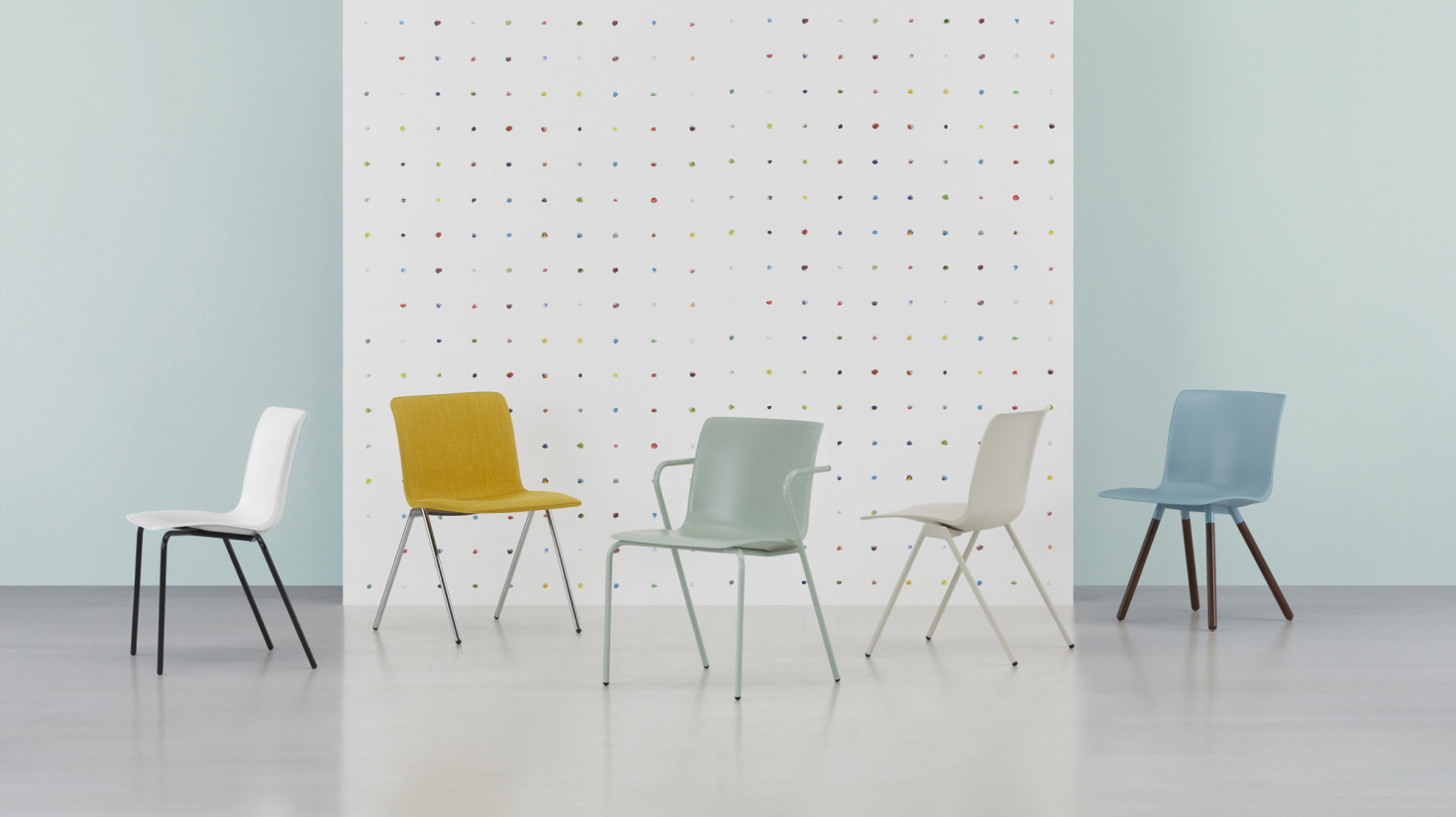
Colorful, spirited and full of fun, the Kitsy collection by Encore delivers a refreshing take on multipurpose seating with stackable, swivel and mobile options in a spectrum of material and finish selections.

Designed by Just Meijer of Indecom Furniture Design, a firm based in the Netherlands and recognized for their focus on sustainability, the series features traditional elements you’d expect to see in Scandinavian design such as a minimalist aesthetic and an airy, light-scale feel, while incorporating modern touches like a uniquely formed shell specifically created with comfort in mind.

In keeping with the design firm’s and Encore’s own commitment to earth-friendly manufacturing processes, polypropylene shells are comprised of 30% recycled materials and come in seven shades ranging from neutrals to brights. Selections include on-trend colors such as mint green, muted blue and warm gray, each of which can be matched to metal base finishes for a monotone appearance or combined with alternate finish colors to achieve a variety of playful combinations. A fully upholstered option is also available to further expand its visual possibilities and ensure a perfect fit for any space.

Base styles include 4-leg metal – available with and without arms, metal A-frame and wood legs in addition to swivel models on glides or on casters. All are engineered to provide flexibility and space-saving benefits via their small footprint and lightweight construction, with A-frame and 4-leg metal versions offering the additional convenience of stacking capabilities for quick and easy storage.

“The Kitsy collection was first and foremost conceived to provide design flexibility, offering the opportunity to create endless combinations with a range of poly colors, upholstery options, base designs and finishes,” states Helen Kim, Encore Vice President of Marketing.

“Maintaining a high level of recycled material was also key, as were space-saving capabilities which have become fundamental in most forward-thinking design plans.”

Swedish furniture maker Offecct has unveiled two new pieces by designer Pauline Deltour, the first to launch since her death last year.

LX Hausys America Introduces New Viatera Quartz Surface Colors And HIMACS Solid Surface Colors at KBIS 2022

LX Hausys America Inc., a manufacturer of building and decorative materials, is introducing several new colors to its Viatera Quartz Surface and HIMACS Solid Surface brands at this year’s Kitchen and Bath Industry Show (KBIS), including two new colors to its highly popular Viatera Calacatta Collection. KBIS attendees can view the new colors at the LX Hausys booth, W1829. Attendees and customers can also view the new colors, gain detailed product information and find several tools to spark inspiration at the new LX Hausys website: www.lxhausys.com/us.

With durability similar to that of natural stone, HIMACS is engineered to withstand everyday wear and tear, and offers a high resistance to stains and chemicals. HIMACS is a non-porous solid surface, ideal for applications where hygiene is essential. It’s easy-to-clean surface does not require sealing or special products for maintenance and is repairable. All HIMACS colors are available in 30” x 145” with ½” thickness and are made with sustainable material and an eco-friendly manufacturing process, HIMACS is backed by LX Hausys’ 15-year limited warranty.

Projects

Christ & Gantenbein aimed to cultivate an open, collaborative space at Roche’s Multifunctional Workspace Building in Grenzach-Whylen, Germany.
“Gone I think are the days of rows of battery-farm desks bankers used to love,” an exec at Citi’s realty services said.
The Parisian base of the Moët Hennessy group is a workspace full of glamour and design ambition, created by Barbarito Bancel Architectes

Noted


Find the best Contract Furniture Industry jobs and hire the best talent.
created in Publicate