Friday, February 25, 2022
News
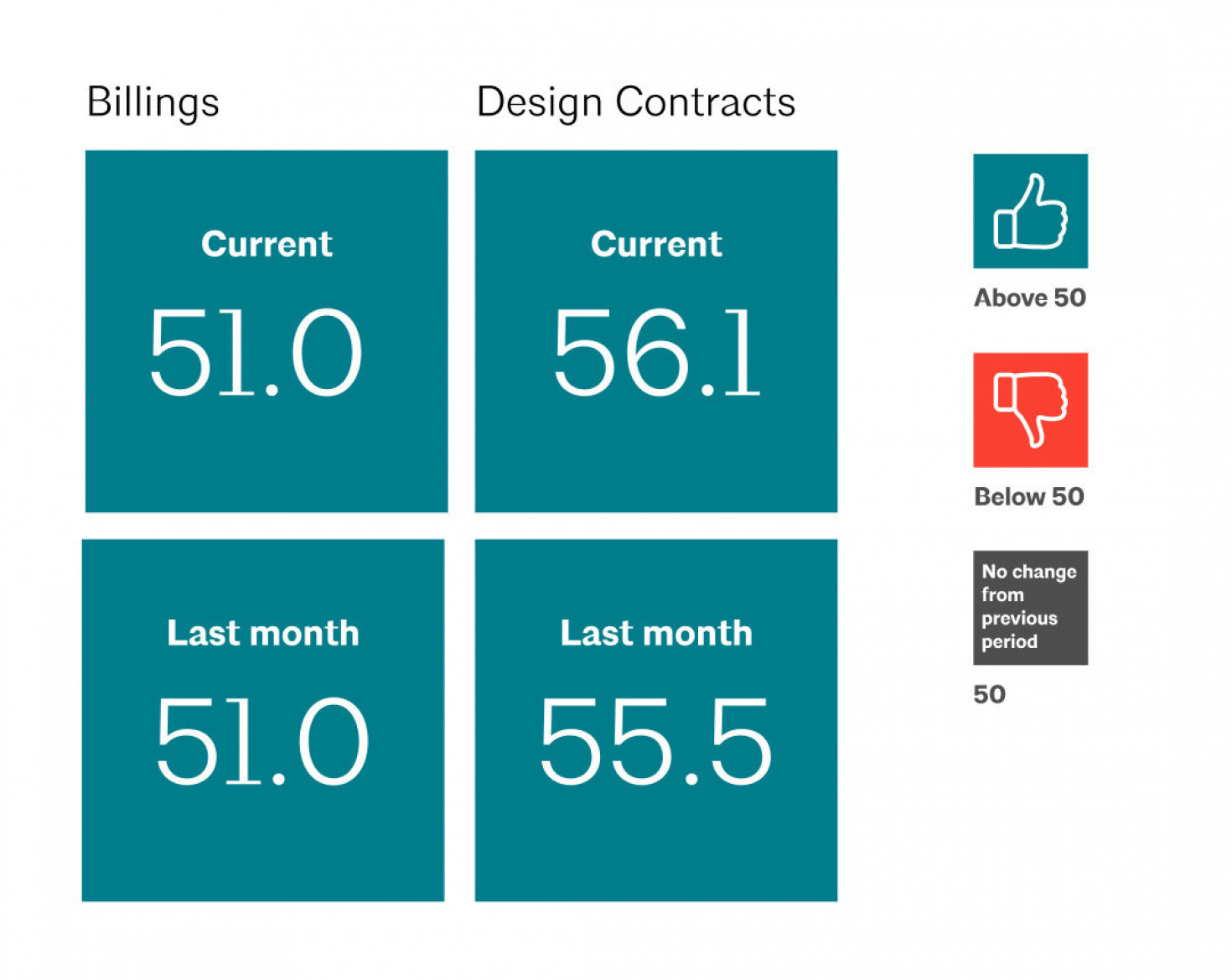
Business conditions at architecture firms entering 2022 were essentially the same as when they ended 2021, with an Architecture Billings Index (ABI) score of 51.0 in January, the same as the revised December score (any score over 50 indicates billings growth). This makes 12 straight months of positive readings for the ABI. However, over this period the pace of growth of the ABI has clearly moderated. For the first nine months of this design recovery, the average ABI score was almost 56, an unusually high level for such an extended period. Over the past three months, the average score was barely over 51. This more modest growth in the ABI no doubt reflects challenges in the construction sector – supply challenges for both labor and materials – as well as ongoing staffing constraints at architecture firms.
In spite of this moderation in ABI scores, workloads at architecture firms should continue to be robust. New project inquiries remain very strong, and new design projects continue to come into architecture firms at a healthy pace. The monthly new design contracts score has exceeded the billings score at firms in ten of the 12 months since the design upturn got underway, suggesting that project backlogs at firms continue to grow. This expanding backlog will serve as a cushion to ensure healthy future workloads over the coming quarters.
Despite these healthy workloads, there remains considerable variation in business conditions geographically and by firm specialization. Firms in the Northeast continue to see the weakest conditions, reporting five straight monthly declines in billings. Firms in the West are also reporting billings declines in recent months. Firms in the South, however, are reporting accelerating growth in billings activity, and in January saw their strongest monthly increase in billings since well before the Great Recession. Likewise with firm specialization, firms focusing on the commercial/industrial market are seeing billings accelerate, institutional firms are reporting billing declines, while multifamily residential firms are reporting stable business conditions.
In spite of this moderation in ABI scores, workloads at architecture firms should continue to be robust. New project inquiries remain very strong, and new design projects continue to come into architecture firms at a healthy pace. The monthly new design contracts score has exceeded the billings score at firms in ten of the 12 months since the design upturn got underway, suggesting that project backlogs at firms continue to grow. This expanding backlog will serve as a cushion to ensure healthy future workloads over the coming quarters.
Despite these healthy workloads, there remains considerable variation in business conditions geographically and by firm specialization. Firms in the Northeast continue to see the weakest conditions, reporting five straight monthly declines in billings. Firms in the West are also reporting billings declines in recent months. Firms in the South, however, are reporting accelerating growth in billings activity, and in January saw their strongest monthly increase in billings since well before the Great Recession. Likewise with firm specialization, firms focusing on the commercial/industrial market are seeing billings accelerate, institutional firms are reporting billing declines, while multifamily residential firms are reporting stable business conditions.




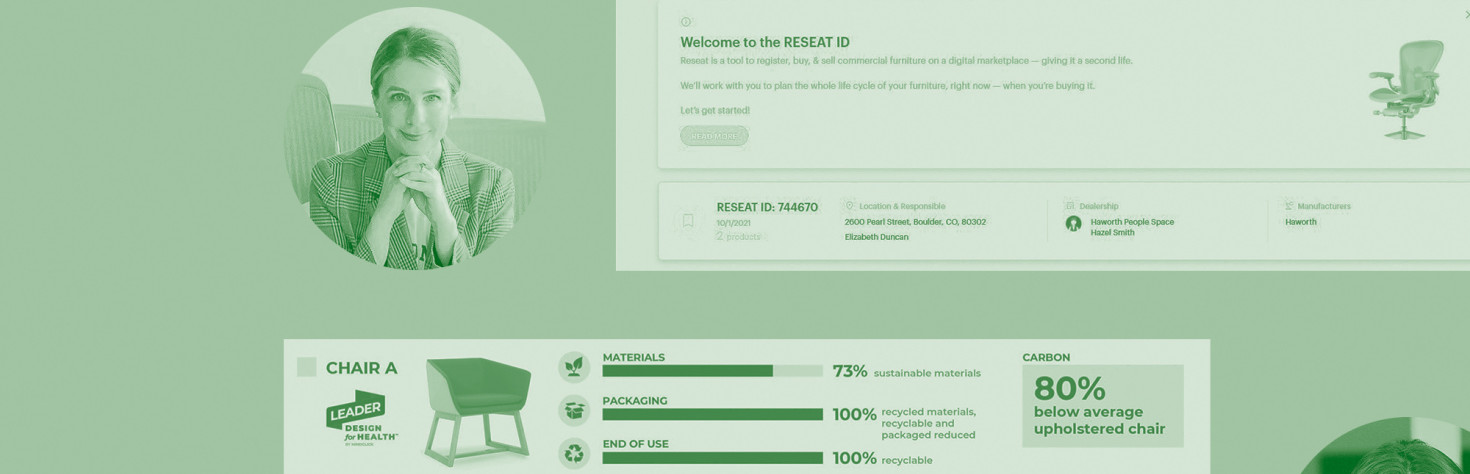
Reseat harnesses the used furniture market to promote reuse, while Design for Health deciphers the sea of sustainability labels and certifications many products boast.
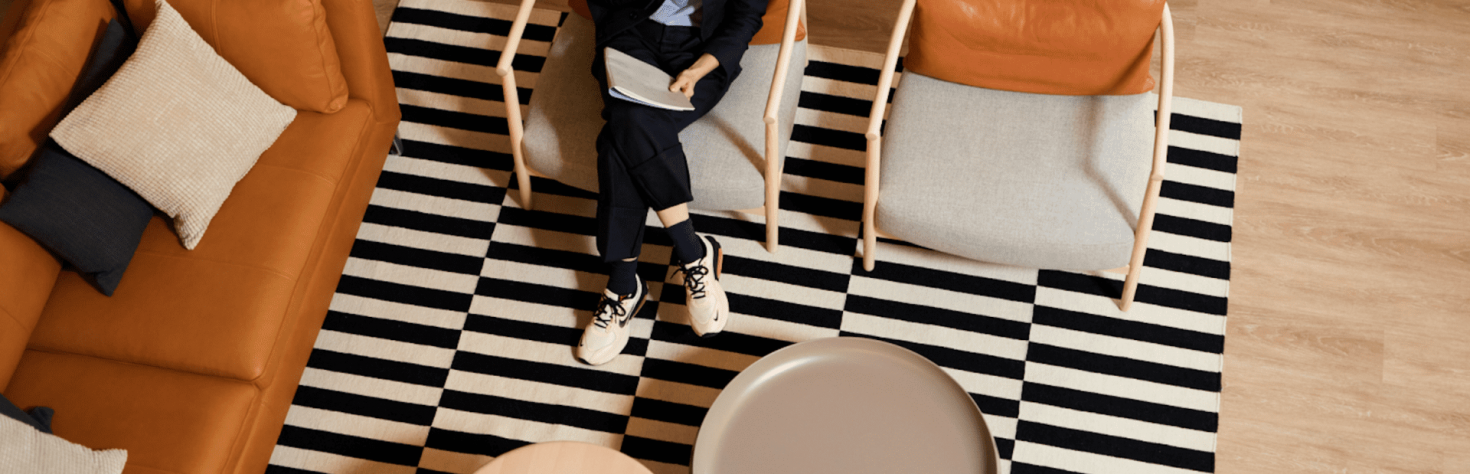
Furnishing an office is time-consuming and frequently wasteful. Now Scandinavian firm Nornorm has come up with a design-led, circular-economy approach that rethinks the whole process.
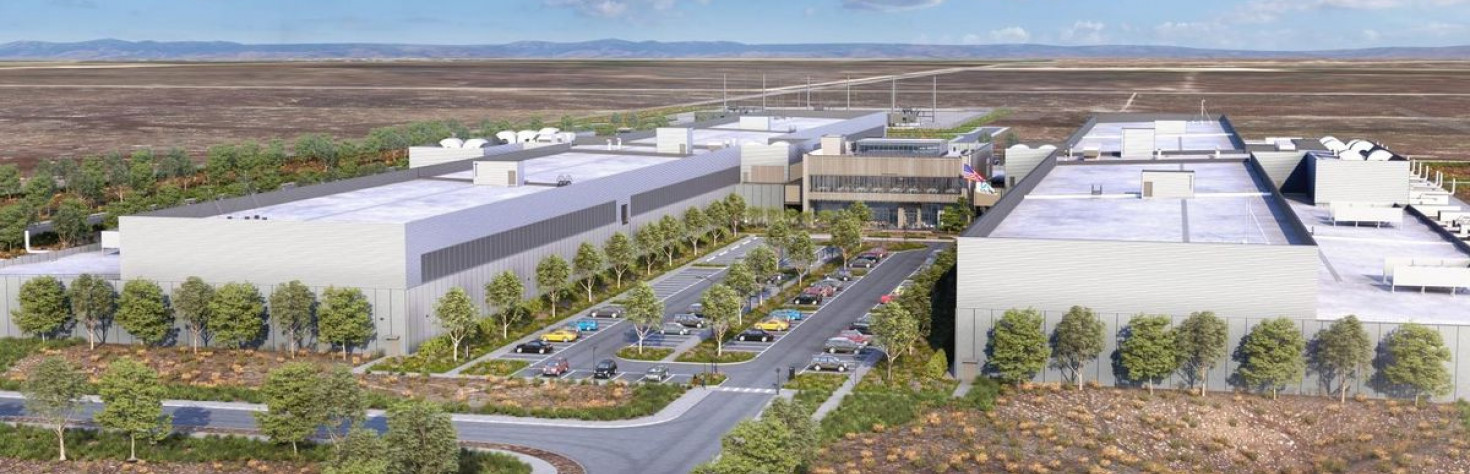
Meta is building a hyperscale data center in Idaho in a development that resembles its other recent projects.

The good news: “a significant share of occupiers are staying the course on longer-term plans for pursuing new leases.”
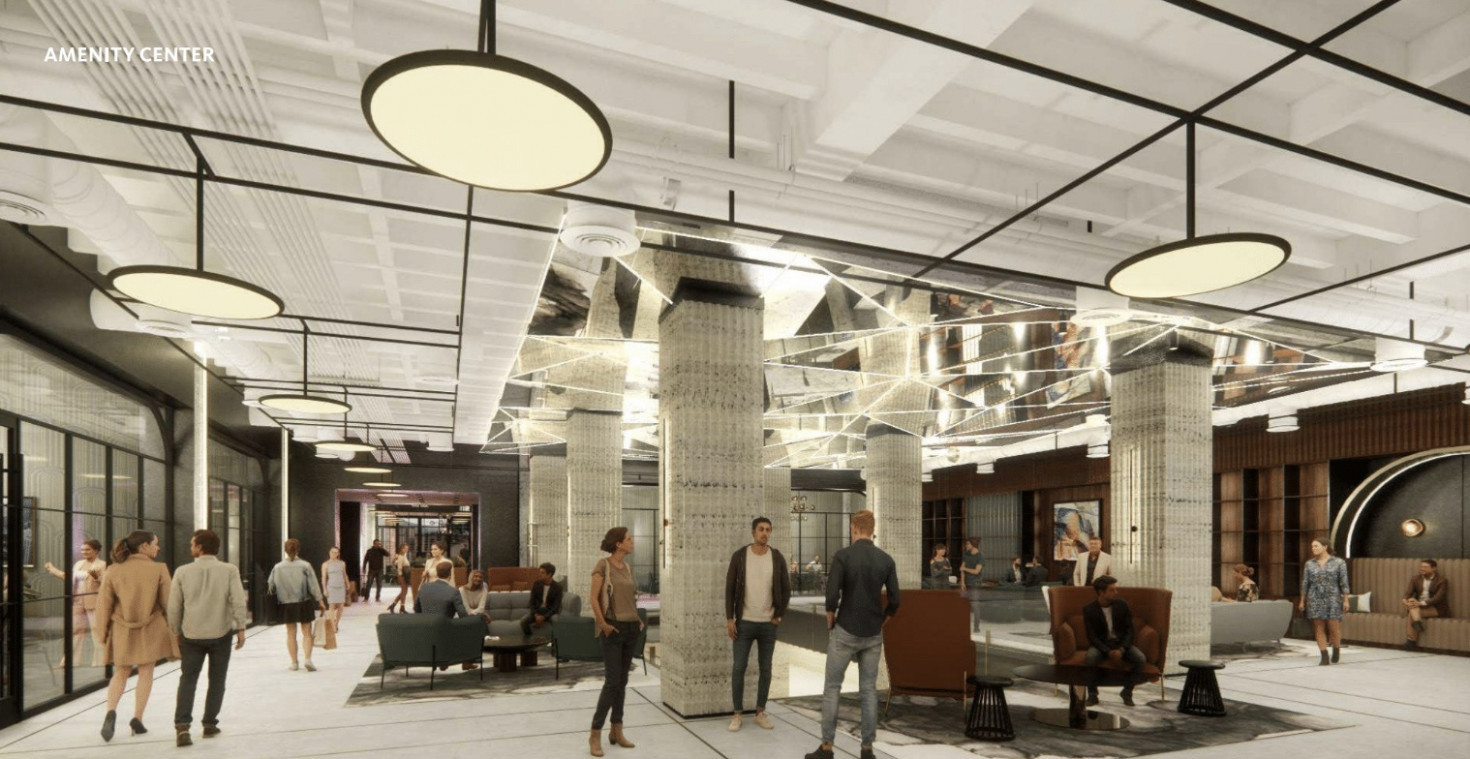
The Workplace
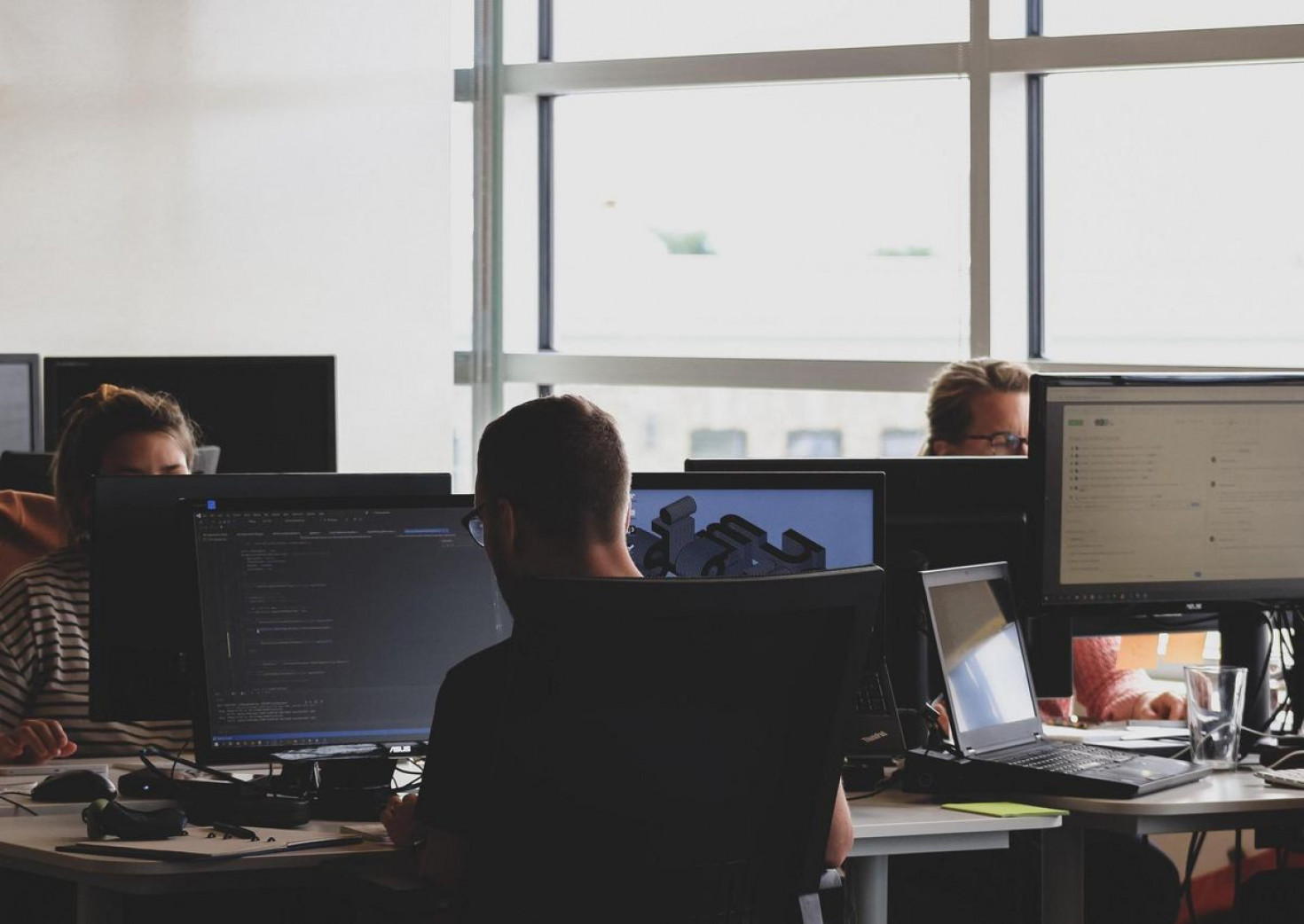
Corporate and political leaders have begun prodding workers to come back to their office desks with the greatest intensity since the onset of the pandemic, potentially inviting an impending showdown with workers who are digging in their heels on remote work.
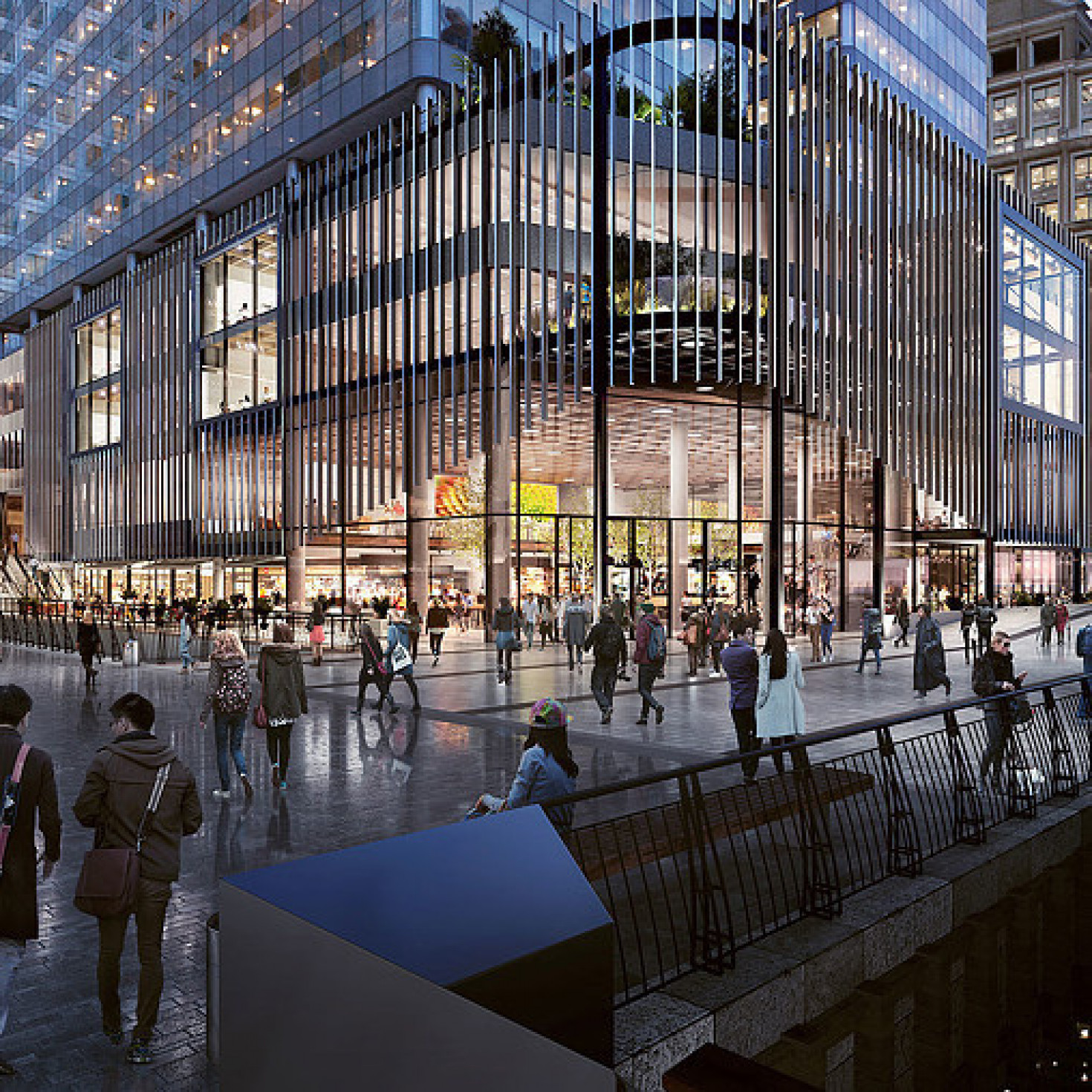
In order to thrive, our downtown cores and buildings need to become more resilient, adaptable, and multiuse — considering efficient use of space and time as valuable factors in the resilience equation.
Hybrid Working

The switch to hybrid working for corporate occupiers seems inevitable now. Even as other activities like travel and entertainment have bounced back after the Omicron surge, office attendance hasn’t. But just because employees seem to want hybrid work, that doesn’t mean companies have it all figured out. That might be because there’s no one-size-fits-all roadmap for what hybrid work looks like. The change in work preference will mean a definite impact on office real estate and landlords will face several challenges, whether they are ready or not.
Most of these changes to the office will be on a tenant-by-tenant basis. A CBRE study examined 42 companies from January through August 2021 occupying more than 350 million square feet of global office space to understand the changing occupancy needs of the hybrid office. Sixty percent of companies were revisiting the design of their workplaces, and more companies are paying close attention to office utilization rates. About 56 percent of companies are also using flex space to supplement office portfolios. Overall, CBRE determined in the report that almost all companies will make changes, large and small, to accommodate employees’ needs in this new hybrid work world.
Perhaps the most significant change is the ‘consumerization’ of the office workplace. This trend was already evident pre-pandemic, but COVID-19 and remote work has accelerated it significantly. Companies are looking at their offices as destinations now that employees can work anywhere. They are competing for employees’ attendance and the competition is fierce: a local cafe, neighborhood library, or the closest couch. This has significant implications for landlords, who will increasingly have to adopt the amenity-rich hospitality mindset to satisfy tenant and employee needs and appeal to the new ‘consumers’ of the office.
Most of these changes to the office will be on a tenant-by-tenant basis. A CBRE study examined 42 companies from January through August 2021 occupying more than 350 million square feet of global office space to understand the changing occupancy needs of the hybrid office. Sixty percent of companies were revisiting the design of their workplaces, and more companies are paying close attention to office utilization rates. About 56 percent of companies are also using flex space to supplement office portfolios. Overall, CBRE determined in the report that almost all companies will make changes, large and small, to accommodate employees’ needs in this new hybrid work world.
Perhaps the most significant change is the ‘consumerization’ of the office workplace. This trend was already evident pre-pandemic, but COVID-19 and remote work has accelerated it significantly. Companies are looking at their offices as destinations now that employees can work anywhere. They are competing for employees’ attendance and the competition is fierce: a local cafe, neighborhood library, or the closest couch. This has significant implications for landlords, who will increasingly have to adopt the amenity-rich hospitality mindset to satisfy tenant and employee needs and appeal to the new ‘consumers’ of the office.

For all the talk about hybrid work, most of the conversation surrounding it seems to imply that it is an either-or proposition. Your office is hybrid, performing well and enabling better productivity, or it is not hybrid at all. But this isn’t how hybrid offices work in reality. Instead, the coming years will see well-executed hybrid offices, poorly-executed ones, and everything in between. Offices that fit for what their occupiers actually want, and ones that were designed like a paint by numbers, hitting all the recommended notes but not working for the people that use them every day. Most importantly, even excellent hybrid offices will be iterative, changing and growing as the needs of their occupiers evolve and more and more data is collected.
No two occupier firms will wind up with exactly the same interior design in their ideal hybrid workplace. Even within industries, there will be changes based on the personalities, preferences, and management styles of the occupants. Over time, things will change as well. As employees get used to the new opportunities and realities of working in a hybrid office, they may come to realize that their preferences change. For instance, someone who went into their newly hybridized office wanting focus space could eventually decide they do better focus work at home, and preferred social working in the office.
Moving into the hybrid era of work will require a long-term flexibility with regard to interior design, company policies, and overall vision, powered by an effective data collection function and performed iteratively as workplaces get closer and closer to their own individual best hybrid workplace.
No two occupier firms will wind up with exactly the same interior design in their ideal hybrid workplace. Even within industries, there will be changes based on the personalities, preferences, and management styles of the occupants. Over time, things will change as well. As employees get used to the new opportunities and realities of working in a hybrid office, they may come to realize that their preferences change. For instance, someone who went into their newly hybridized office wanting focus space could eventually decide they do better focus work at home, and preferred social working in the office.
Moving into the hybrid era of work will require a long-term flexibility with regard to interior design, company policies, and overall vision, powered by an effective data collection function and performed iteratively as workplaces get closer and closer to their own individual best hybrid workplace.

Hybrid working has become commonplace for those employees able to work from home, a survey of firms has suggested. More than 80 percent of people said their employers had adopted hybrid working, most of them since the pandemic, according to the survey for the Chartered Institute of Management (CMI). However a majority of business are also actively encouraging employees to return to the office as part of their new working culture.
Design
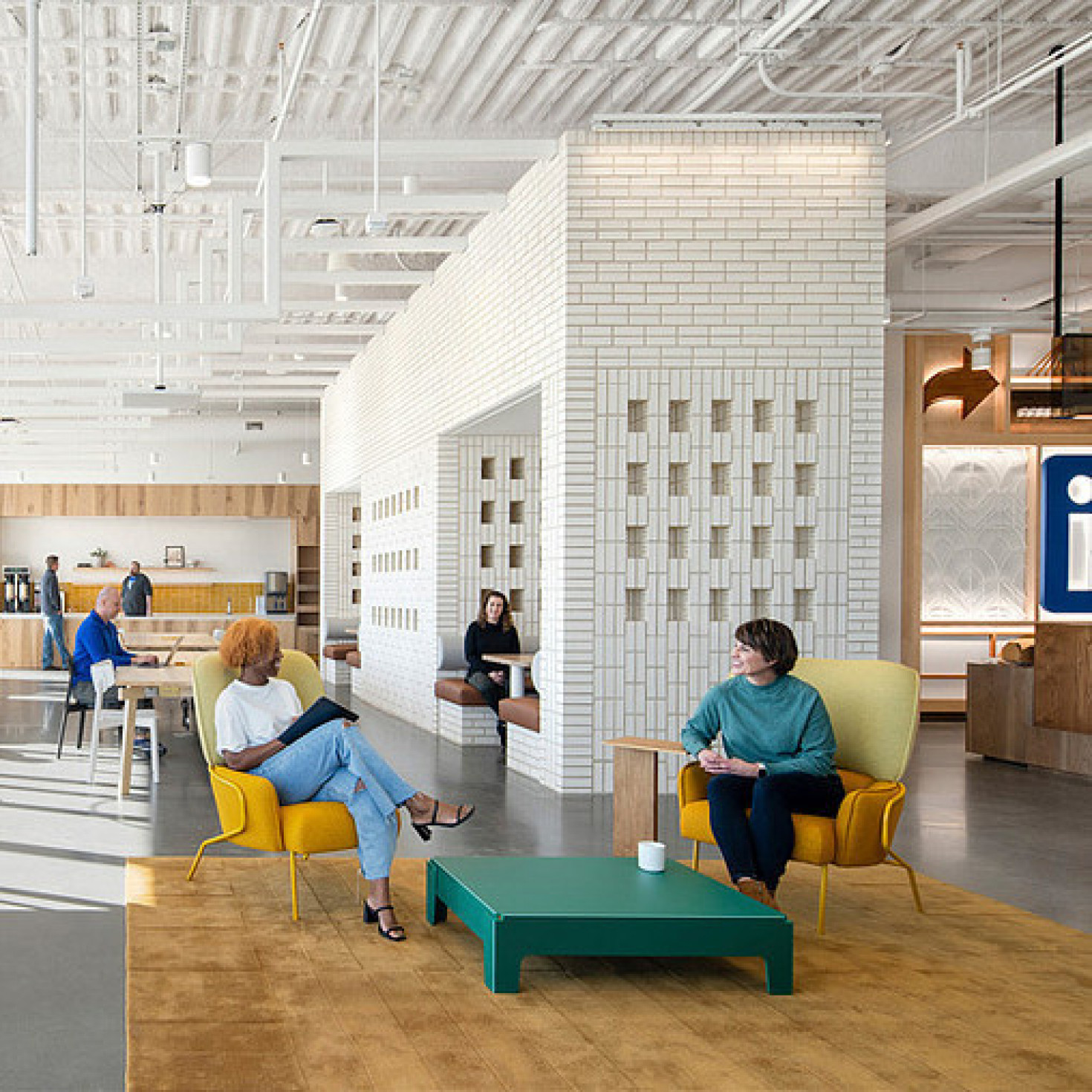
As the first new workplace designed to fully align with LinkedIn’s future vision, the company’s Omaha, Nebraska offices point the way to what a fully dynamic, hybrid work environment looks like.
Metaverse

It’s been close to 50 years since the rock group Queen asked the questions: “Is this the real life? Is this just fantasy?” in the classic Bohemian Rhapsody. Commercial real estate is trying to find some answers.
You can’t blame them in a buzzwordy world where the latest hot entry is metaverse. Graystone Company just announced that it’s created a separate division and budget to buy virtual property. Originally a move planned for Q4 2022, the company decided to move things ahead to February.
You can’t blame them in a buzzwordy world where the latest hot entry is metaverse. Graystone Company just announced that it’s created a separate division and budget to buy virtual property. Originally a move planned for Q4 2022, the company decided to move things ahead to February.
Real Estate
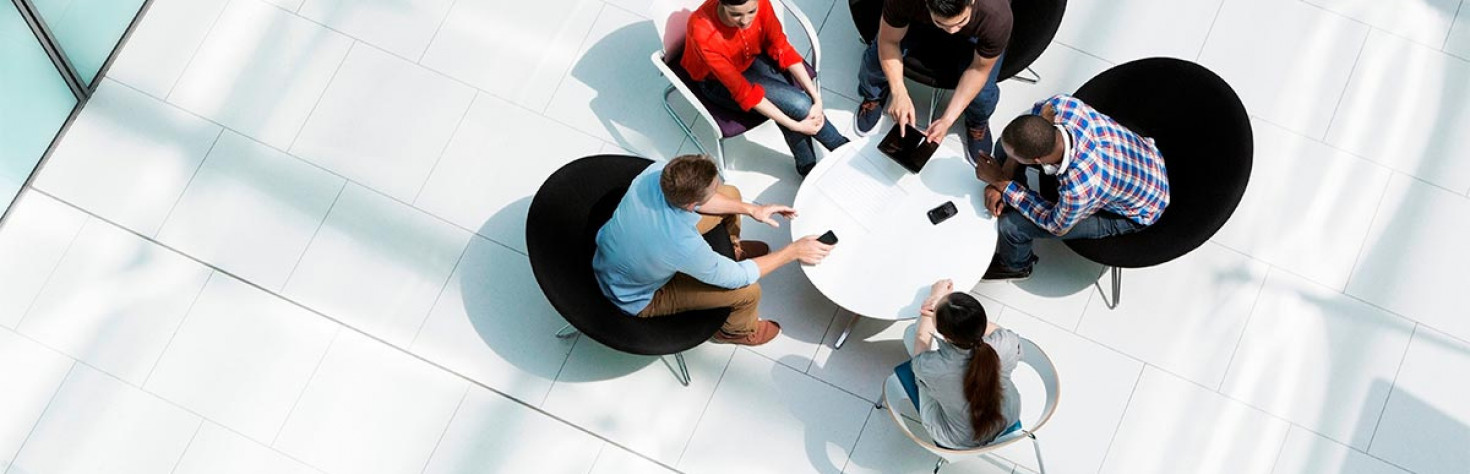
The demand is pushing up rents for modern buildings, which tend to offer tech-forward amenities like uber-fast internet and voice-activated meeting rooms.
Buildings completed after 2015 in the U.S. are commanding a 61 percent rent premium and lower vacancy rates relative to older-vintage assets, JLL data show. While new buildings have always cost more to lease, this gap is widening, especially in growing markets like New York, Boston, D.C., Chicago, and Denver.
“In today’s flight for quality, smart office technology is becoming more of an expectation than a luxury,” says David Barnett, Research Work Dynamics Director at JLL.
Pre-pandemic, many corporates loaded their “war for talent” arsenal by leasing wide-open office space in desirable neighborhoods. The buildings they chose were flush with amenities like corporate gyms, bike storage and coffee bars.
Now they’re looking for things like AI technology that understands daily routines and work habits, smart software that predicts energy consumption, and wow-factors like media rooms designed for video calls. Such technologies are set to make office technology superior to what people had at home amid the rise in hybrid work.
Buildings completed after 2015 in the U.S. are commanding a 61 percent rent premium and lower vacancy rates relative to older-vintage assets, JLL data show. While new buildings have always cost more to lease, this gap is widening, especially in growing markets like New York, Boston, D.C., Chicago, and Denver.
“In today’s flight for quality, smart office technology is becoming more of an expectation than a luxury,” says David Barnett, Research Work Dynamics Director at JLL.
Pre-pandemic, many corporates loaded their “war for talent” arsenal by leasing wide-open office space in desirable neighborhoods. The buildings they chose were flush with amenities like corporate gyms, bike storage and coffee bars.
Now they’re looking for things like AI technology that understands daily routines and work habits, smart software that predicts energy consumption, and wow-factors like media rooms designed for video calls. Such technologies are set to make office technology superior to what people had at home amid the rise in hybrid work.

The future of work. It’s a point of deep uncertainty, and for office owners, it can feel like they are grasping in the dark.
Office owners are having to make decisions now, decisions that might affect the future of their businesses for years to come, boost profitability or put them out of business — all with very little information about how people will choose to work in future and how they will use office real estate. The much-vaunted “return to the office” has been delayed multiple times by new variants of the coronavirus and the reality is that the world is still in the very early stages of a multi-year process of experimenting on how we will work in the months and years to come.
Office owners are having to make decisions now, decisions that might affect the future of their businesses for years to come, boost profitability or put them out of business — all with very little information about how people will choose to work in future and how they will use office real estate. The much-vaunted “return to the office” has been delayed multiple times by new variants of the coronavirus and the reality is that the world is still in the very early stages of a multi-year process of experimenting on how we will work in the months and years to come.

The hybrid office, an arrangement that combines remote and in-office work, seems poised to become the new normal for many white-collar workers. This model aims to use what we learned about workplace productivity and work-life balance during the first year of the COVID-19 pandemic to create a new setup that maximizes the benefits and minimizes the downsides of both in-office and remote work.
Of course, hybrid work will have its own economic pros and cons.
As with any widespread upheaval, the shift to a hybrid model will create economic winners and losers.
Both employers and knowledge economy workers stand to save money with hybrid work.
All of the businesses that help facilitate this new model—such as technology companies and office designers—have an opportunity to increase their revenue.
Workers and companies that used to provide services and space to full-time offices and their employees may have to find new sources of income, and business districts might not return to their pre-pandemic character.
Of course, hybrid work will have its own economic pros and cons.
As with any widespread upheaval, the shift to a hybrid model will create economic winners and losers.
Both employers and knowledge economy workers stand to save money with hybrid work.
All of the businesses that help facilitate this new model—such as technology companies and office designers—have an opportunity to increase their revenue.
Workers and companies that used to provide services and space to full-time offices and their employees may have to find new sources of income, and business districts might not return to their pre-pandemic character.
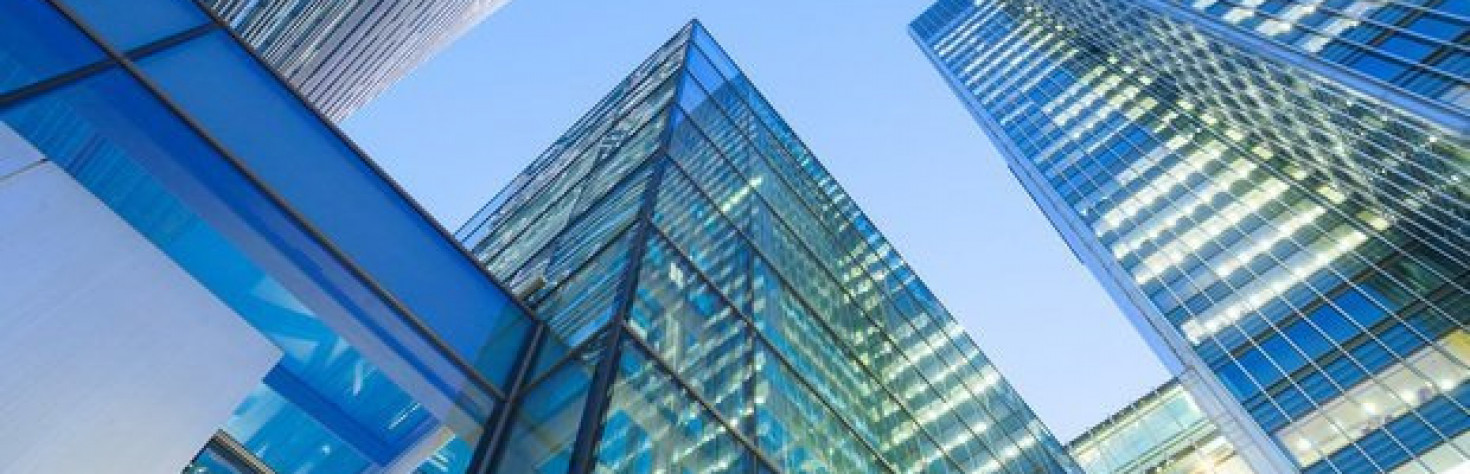
New construction is commanding a significant rent premium of 64% over average Class A submarket rents, and 20% over existing top-tier trophy assets, according to a construction report issued Friday by Cushman & Wakefield, surveying 24 select office projects currently under construction in 12 major US markets and Toronto.
“Tenants are demonstrating a strong bias for the highest quality, newly constructed office projects across major US and Canadian markets—they are looking for a fundamentally different, elevated, office experience,” Rebecca Rockey, Cushman & Wakefield’s Global Head of Economic Analysis & Forecasting, said in prepared remarks.
“Tenants are demonstrating a strong bias for the highest quality, newly constructed office projects across major US and Canadian markets—they are looking for a fundamentally different, elevated, office experience,” Rebecca Rockey, Cushman & Wakefield’s Global Head of Economic Analysis & Forecasting, said in prepared remarks.
WFH

Now that we’re also working from home, where do we have left to escape to?
Before 2020, working from home seemed attractive. It was an exciting employee perk and promised to boost retention. After all, who wouldn’t want to roll out of bed after an extra hour of sleep?
However, as Covid-19 has forced offices to close and employees have taken on a more hybrid approach to work since 2020, homeworking isn’t exactly the perk it once was. Rather, it has highlighted why it isn’t necessarily the dream we thought it would be.
From London to Milan and beyond, domestic spaces around the world have transformed into adaptable workspaces to accommodate the new rise of telecommuting.
The dining table – once a place to socialize with friends or family – has been converted into a makeshift workstation, while ironing boards are our new standing desks. Today, we aren’t going to work anymore; we are waking up inside the office.
However, as Covid-19 has forced offices to close and employees have taken on a more hybrid approach to work since 2020, homeworking isn’t exactly the perk it once was. Rather, it has highlighted why it isn’t necessarily the dream we thought it would be.
From London to Milan and beyond, domestic spaces around the world have transformed into adaptable workspaces to accommodate the new rise of telecommuting.
The dining table – once a place to socialize with friends or family – has been converted into a makeshift workstation, while ironing boards are our new standing desks. Today, we aren’t going to work anymore; we are waking up inside the office.

With COVID concerns declining, Pew Research reported fewer people are working from home, but those who do want it to stick because they are more productive, have better work-life balance.
Makers

DIRTT Environmental Solutions Ltd., last night announced its financial results for the three and twelve months ended December 31, 2021. All financial information is presented in U.S. dollars, unless otherwise stated.
Fourth Quarter 2021
Revenue of $42.9 million
Gross profit margin of 19.6%
Adjusted Gross Profit Margin1 of 25.3%
Net loss of $16.0 million
Net loss margin of (37.3%)
Adjusted EBITDA1 of ($9.7) million
Adjusted EBITDA Margin1 of (22.7%)
Revenue of $42.9 million
Gross profit margin of 19.6%
Adjusted Gross Profit Margin1 of 25.3%
Net loss of $16.0 million
Net loss margin of (37.3%)
Adjusted EBITDA1 of ($9.7) million
Adjusted EBITDA Margin1 of (22.7%)
Fiscal 2021
Revenue of $147.6 million
Gross profit margin of 15.9%
Adjusted Gross Profit Margin1 of 23.1%
Net loss of $53.7 million
Net loss margin of (36.4%)
Adjusted EBITDA1 of ($41.3) million
Adjusted EBITDA Margin1 of (28.0%)
Unrestricted cash balance of $60.3 million
Revenue for the quarter ended December 31, 2021 was $42.9 million, an increase of $0.7 million from $42.2 million for the quarter ended December 31, 2020. Revenues for the year ended December 31, 2021 were $147.6 million, a decline of $23.9 million or 14% from $171.5 million for the year ended December 31, 2020.
"We believe this decrease for the year principally reflects the severe economic and social impact of the COVID-19 pandemic since March 2020, including a major contraction in construction activity levels in North America due to non-essential business closures, work-from-home requirements, lock-down measures and other regulatory responses implemented by governments and public health officials. The majority of the decrease was incurred in the first quarter of 2021 when the full impact of the contraction in construction activity was experienced and with most of our pre-pandemic projects in process completed in 2020. Additionally, in the third quarter of 2021, a resurgence of COVID-19 infections due to the Delta variant delayed return to work plans, customer investment decisions and associated construction activities."
“We have made meaningful changes to every area of our business, including having finalized an organization-wide restructuring of positions that reduced our salaried headcount by 18%, which is expected to contribute meaningfully to the previously announced 14% reduction in fixed operating expenses. We will continue to have manufacturing capacity of close to $500 million in annual revenue.”
“We have made meaningful changes to every area of our business, including having finalized an organization-wide restructuring of positions that reduced our salaried headcount by 18%, which is expected to contribute meaningfully to the previously announced 14% reduction in fixed operating expenses. We will continue to have manufacturing capacity of close to $500 million in annual revenue.”
Dealers
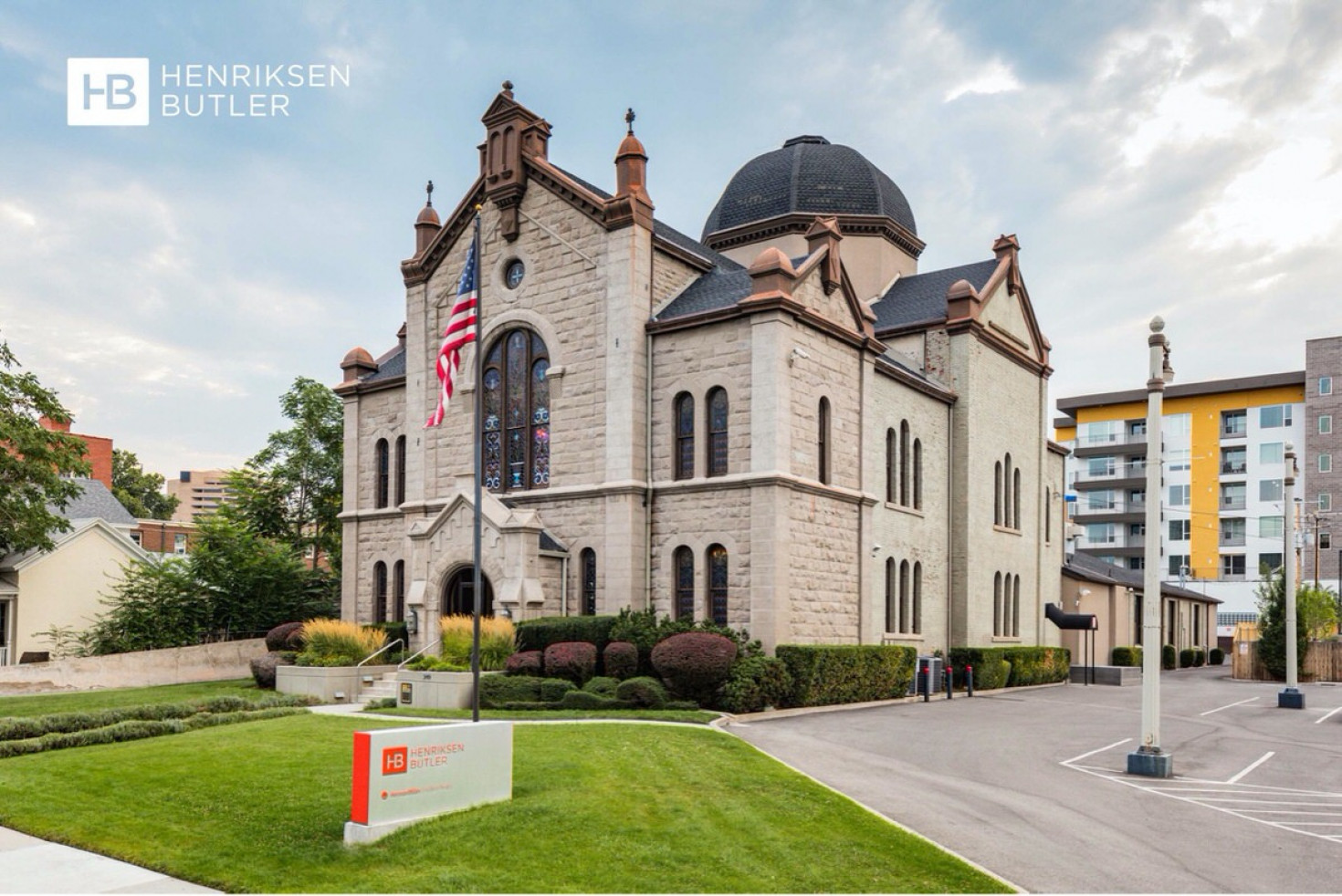
MBI Seattle adds Knoll to their Lineup
MBI Seattle, Washington State’s longest established Herman Miller dealer announced that their brand family has expanded! They have added Knoll to their portfolio of products. Together with Herman Miller and Knoll, MBI Seattle now represents some of the most iconic brands in furniture design.
MBI Seattle President & CEO Jay Harmeyer says, “After 41 years of representing the most creative and innovative brands of furniture with Herman Miller, MBI Seattle is delighted to announce the addition of the Knoll family of products and services to our collection. This is a very exciting time for our industry and a great time to be an MBI customer!"
Products
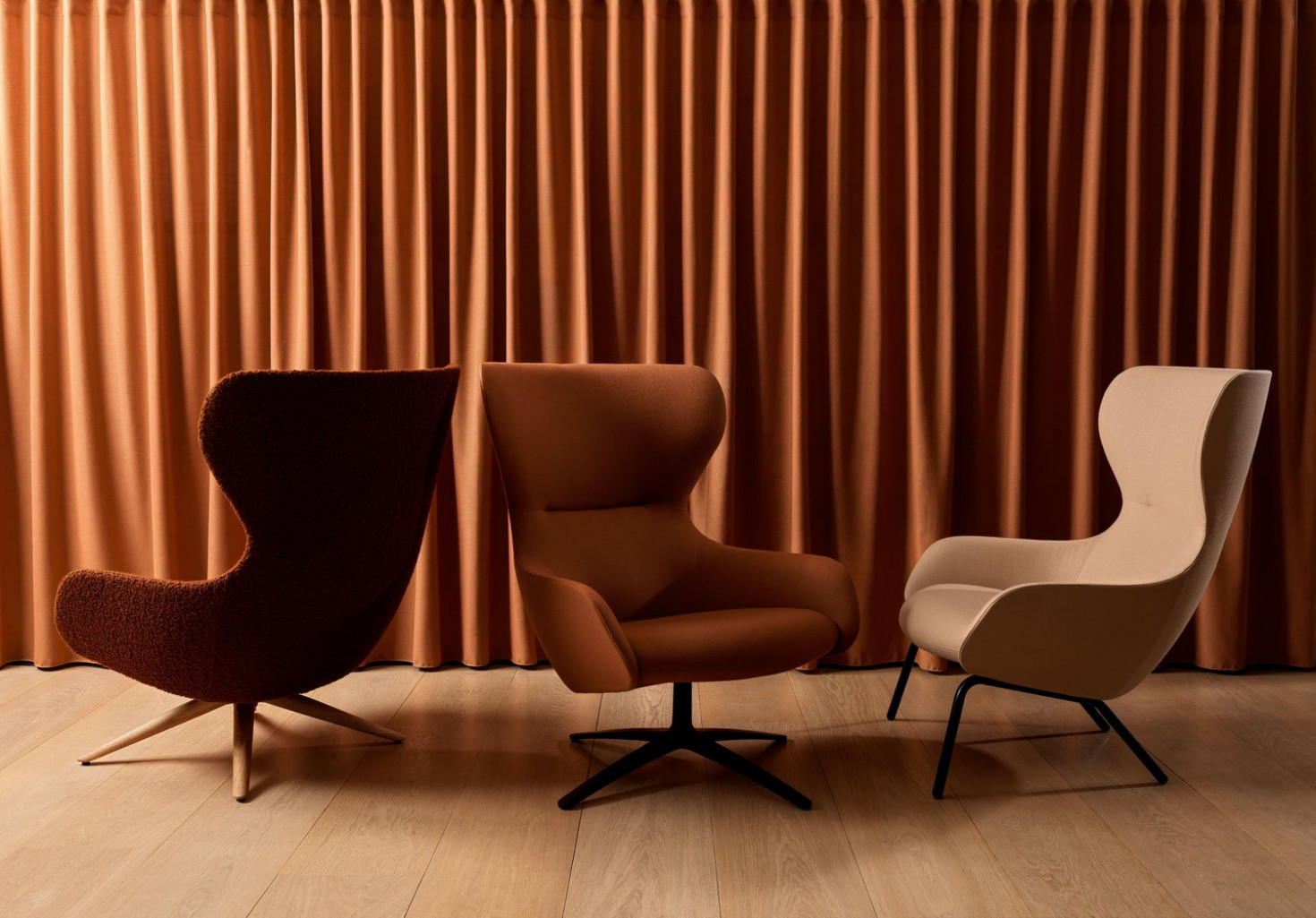
Boss Design introduced Amelia – a modern reimagining of the classic wingback chair, combining timeless elegance with enticing comfort in an appealing slimline form.
Named in celebration of the 1930s aviator, Amelia Earhart, this light and streamlined seating blurs the lines between workplace, hospitality, and domestic living. With a single, organic perimeter line, Amelia gracefully alights in any setting. Light yet durable, the upper section combines the ultimate comfort with functional wings for acoustic and visual privacy.
“Wingback chairs are usually big and cumbersome. We wanted to create something light and contoured. Amelia’s form is driven by a ribbon-like line that defines its edge, for a gentle, elegant, modern outcome,” says Aaron Clarkson, Amelia’s designer.
The design was carefully honed to harmonize with other contemporary lines including Paloma, Manta and DNA, making it easy for interior designers and specifiers to choose beautiful, complimentary seating in their décor schemes.
Named in celebration of the 1930s aviator, Amelia Earhart, this light and streamlined seating blurs the lines between workplace, hospitality, and domestic living. With a single, organic perimeter line, Amelia gracefully alights in any setting. Light yet durable, the upper section combines the ultimate comfort with functional wings for acoustic and visual privacy.
“Wingback chairs are usually big and cumbersome. We wanted to create something light and contoured. Amelia’s form is driven by a ribbon-like line that defines its edge, for a gentle, elegant, modern outcome,” says Aaron Clarkson, Amelia’s designer.
The design was carefully honed to harmonize with other contemporary lines including Paloma, Manta and DNA, making it easy for interior designers and specifiers to choose beautiful, complimentary seating in their décor schemes.
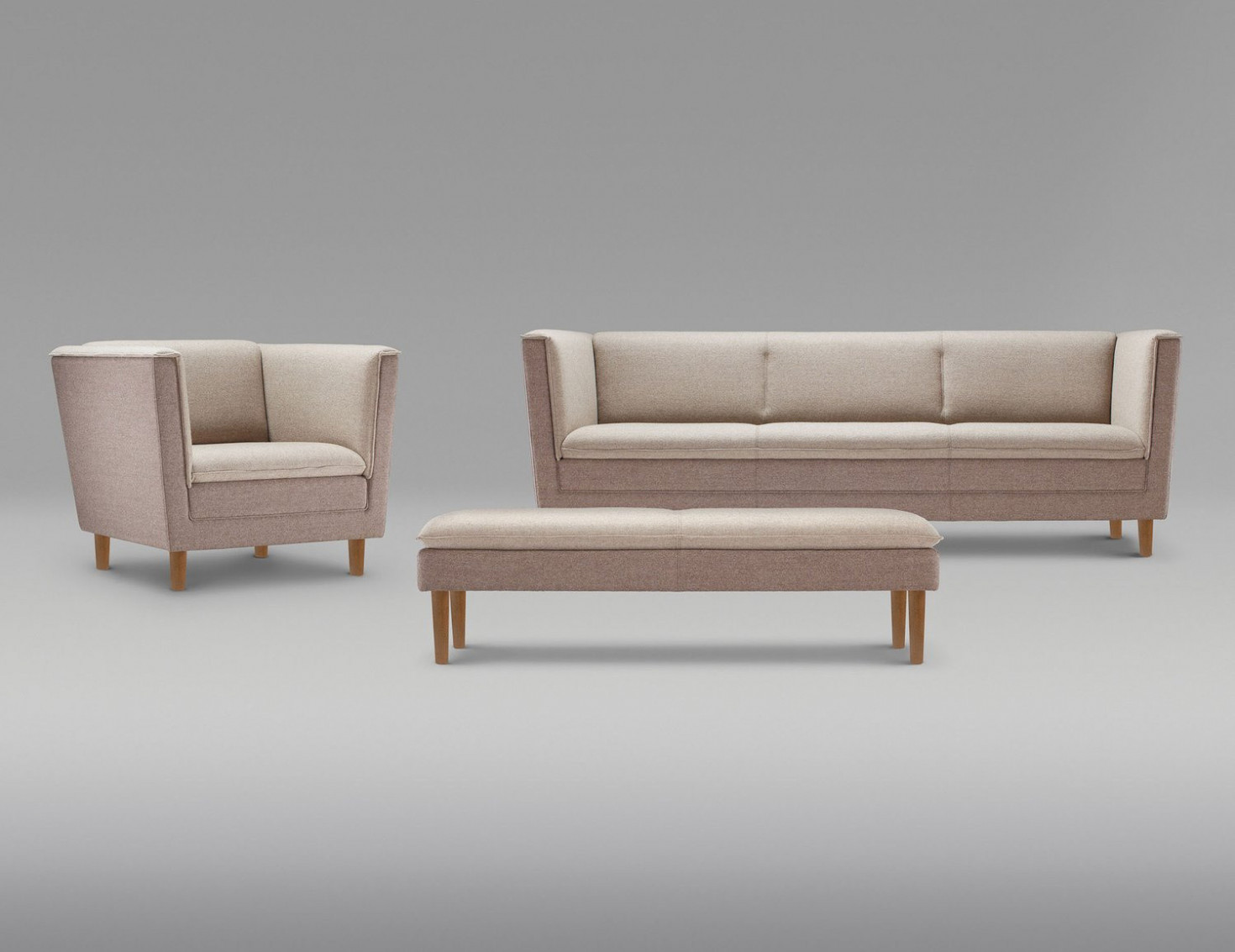
Watson is a ‘resimercial’ style collection consisting of sofa, loveseat, club chair and bench options, each featuring traditional craftsmanship and classic beauty.
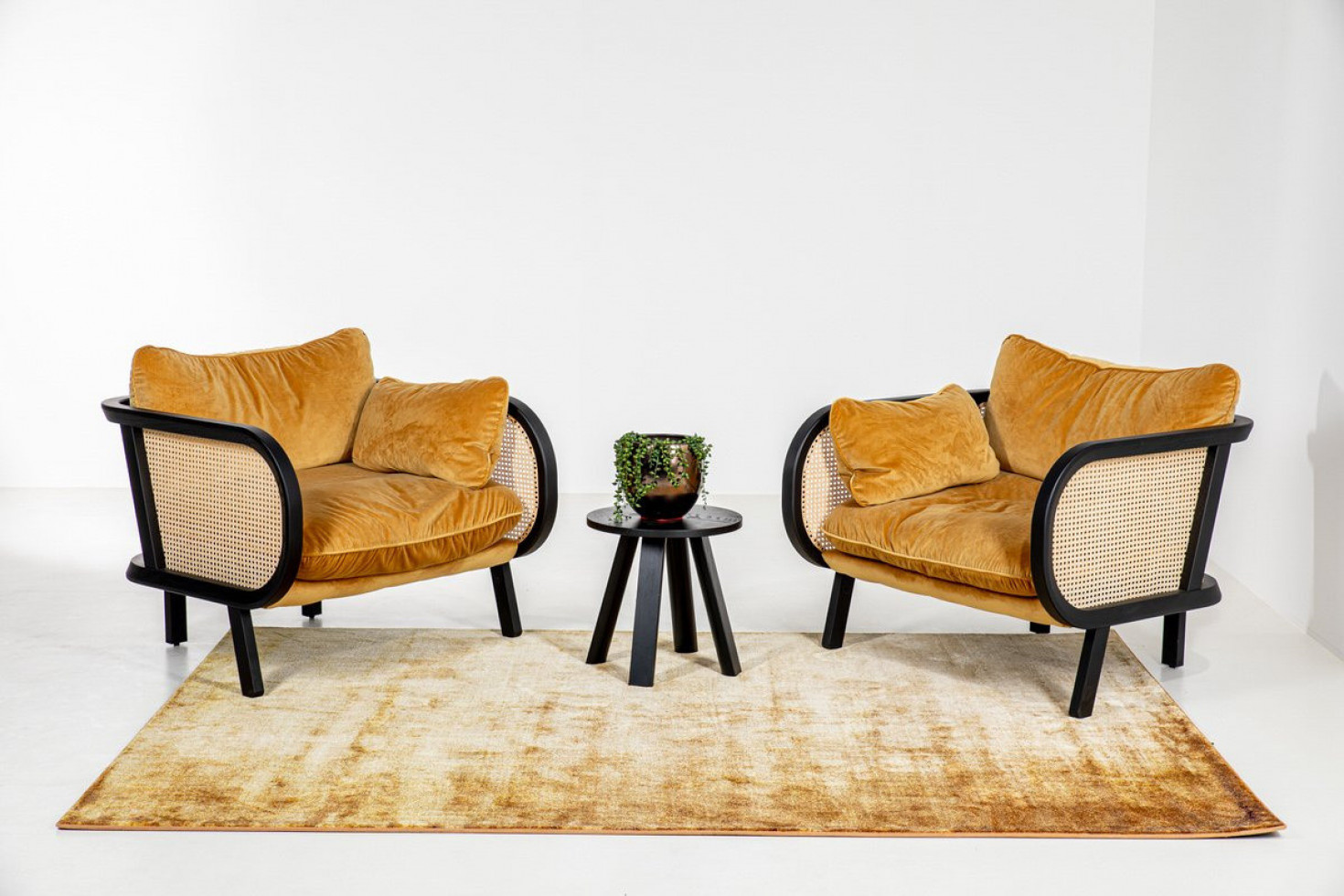
BuzziSpace, the Belgian furniture, acoustic, and lighting company BuzziSpace, introduces its first-ever collection of rugs titled BuzziRugs.
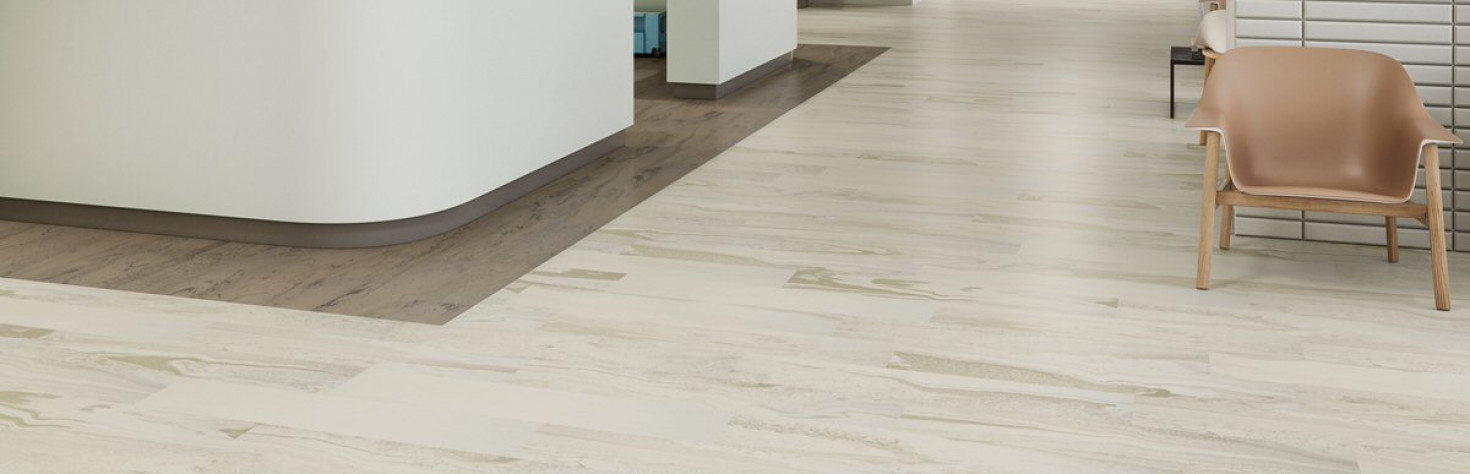
Mannington Commercial introduces the Open Range Collection, a hard-working rubber plank flooring collection designed with the intent to offer a brand-new look to the product category.
Projects
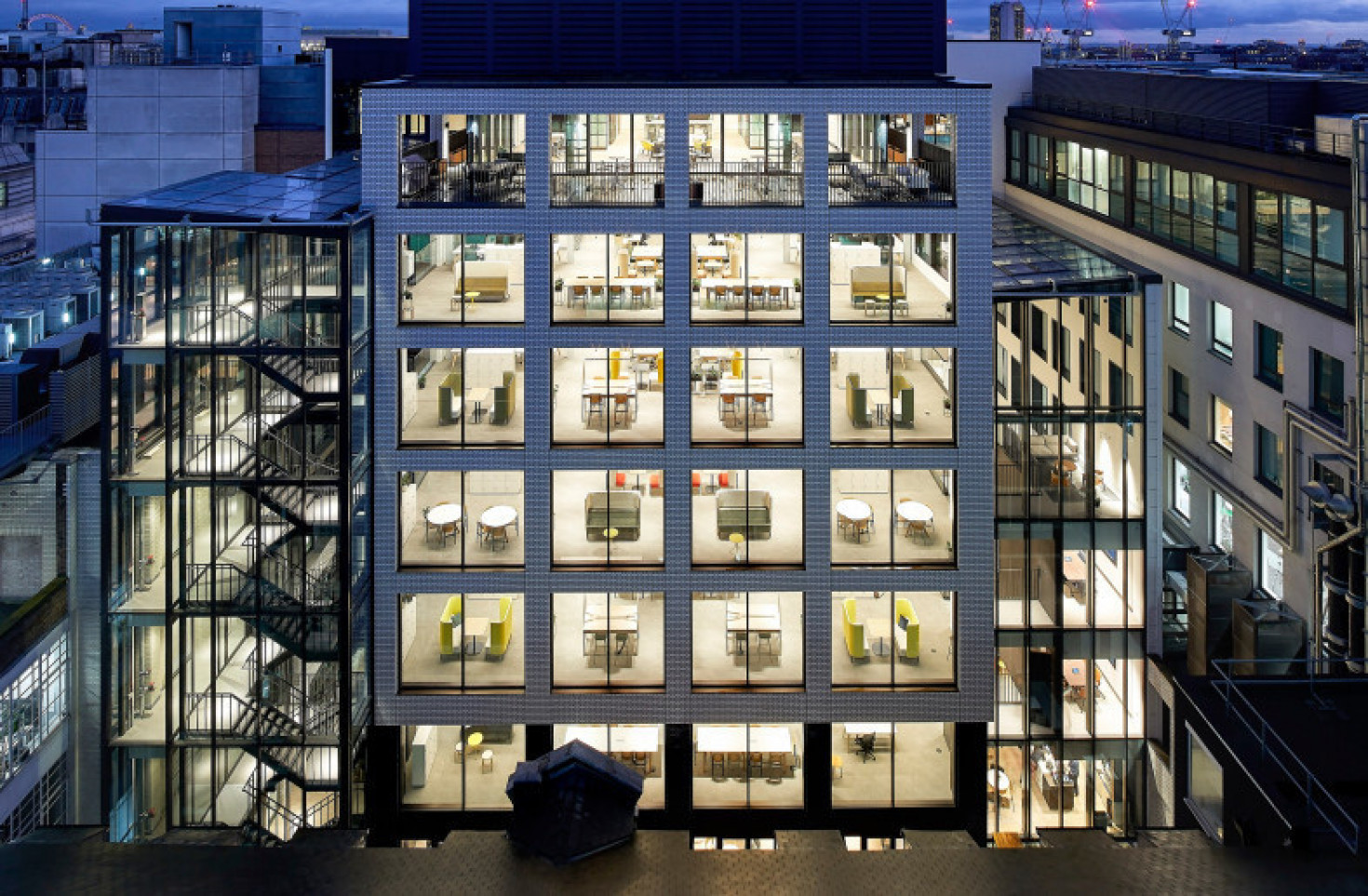
Aiming to design a workplace that could satisfy the professional needs of employees and prioritize their wellbeing, MoreySmith helped to transform and expand the Henrietta House as CBRE’s new London headquarters.

A place to meet and collaborate, the new office for Copus by Aspekt Office hits the mark and is both original and fresh.
Creating a clean and pared back aesthetic, Aspekt Office has achieved a new workplace design that reflects and celebrates the values of Danish brand and communications agency, Copus.
The office is located in the Frederiksberg Municipality of Copenhagen, Denmark, in Müllers Mansion, an historic marble building situated next to Frederiksberg Gardens.
The office is located in the Frederiksberg Municipality of Copenhagen, Denmark, in Müllers Mansion, an historic marble building situated next to Frederiksberg Gardens.
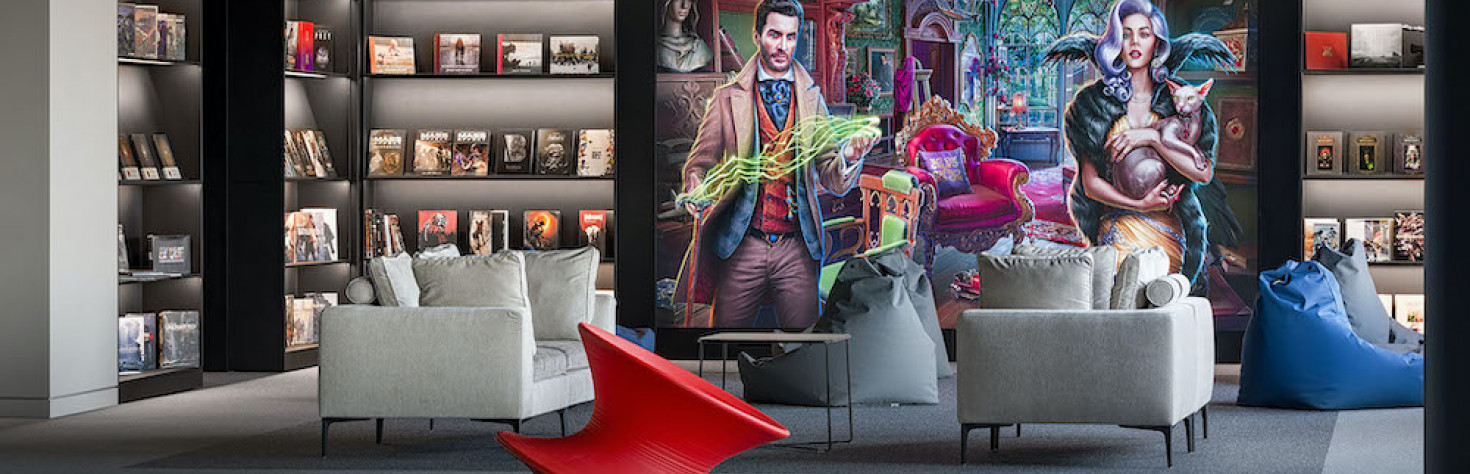
Take a tour of AB Games’ playful and colorful 2800 sqm headquarters in Kyiv, Ukraine designed by Bolshakova Interiors.
Events
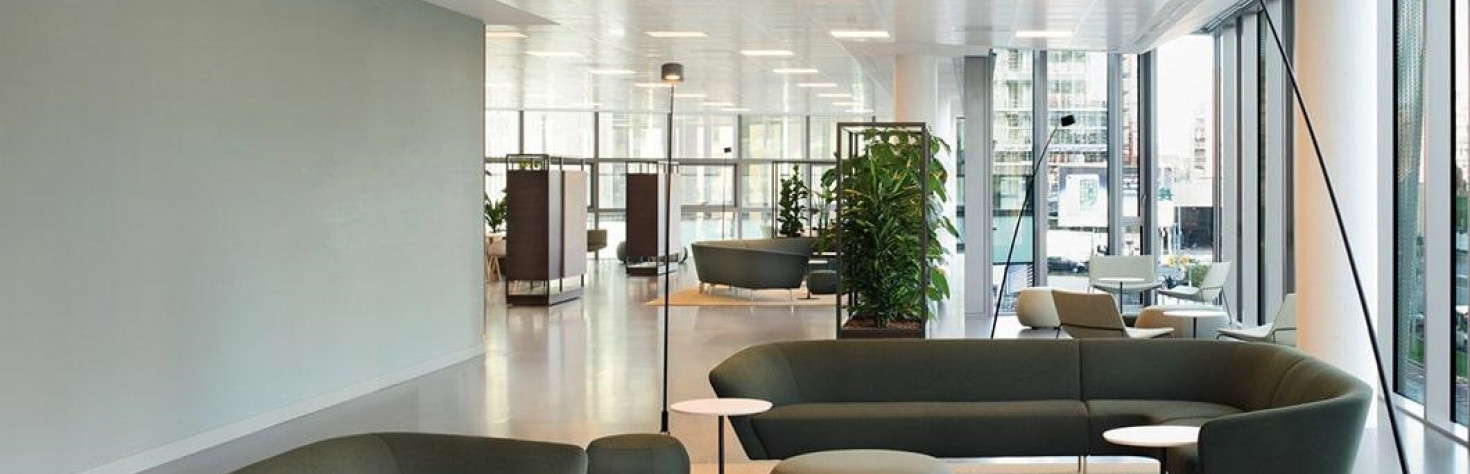
As an spin-off of the leading trade fair ORGATEC in Cologne, ORGATEC TOKYO promises a full-flavoured start to the ORGATEC year 2022. More than 80 leading brands will be showcasing their products and services at the inaugural ORGATEC TOKYO event, which runs from 26 to 28 April. Around six weeks before ORGATEC Tokyo opens its doors, the trade fair has already chalked up its first success: the entire Tokyo Big Sight, South Halls 1+2 exhibition space set aside for ORGATEC Tokyo is now fully booked. Leading brands such as Kokuyo, Okamura, Itoki, Uchida, Plus, Karimoku, Knoll, Wilkhahn, USM, UniFor, Kvadrat, Arper (pictured), Cassina and Häfele have confirmed they will be present.
As the first trade fair of its kind in Japan, ORGATEC Tokyo, which takes place in April, will be focusing on issues surrounding professional and hybrid working environments. The event will showcase forward-looking perspectives on modern and flexible workplaces, which are becoming more and more significant due to extensive digitalisation, automation and the huge increase in co-working spaces in Asia. And in an extensive programme of events that includes high-calibre keynote speakers and special exhibitions, trade visitors to the halls can discover innovative solutions for tomorrow’s workplace design.
As the first trade fair of its kind in Japan, ORGATEC Tokyo, which takes place in April, will be focusing on issues surrounding professional and hybrid working environments. The event will showcase forward-looking perspectives on modern and flexible workplaces, which are becoming more and more significant due to extensive digitalisation, automation and the huge increase in co-working spaces in Asia. And in an extensive programme of events that includes high-calibre keynote speakers and special exhibitions, trade visitors to the halls can discover innovative solutions for tomorrow’s workplace design.
Noted
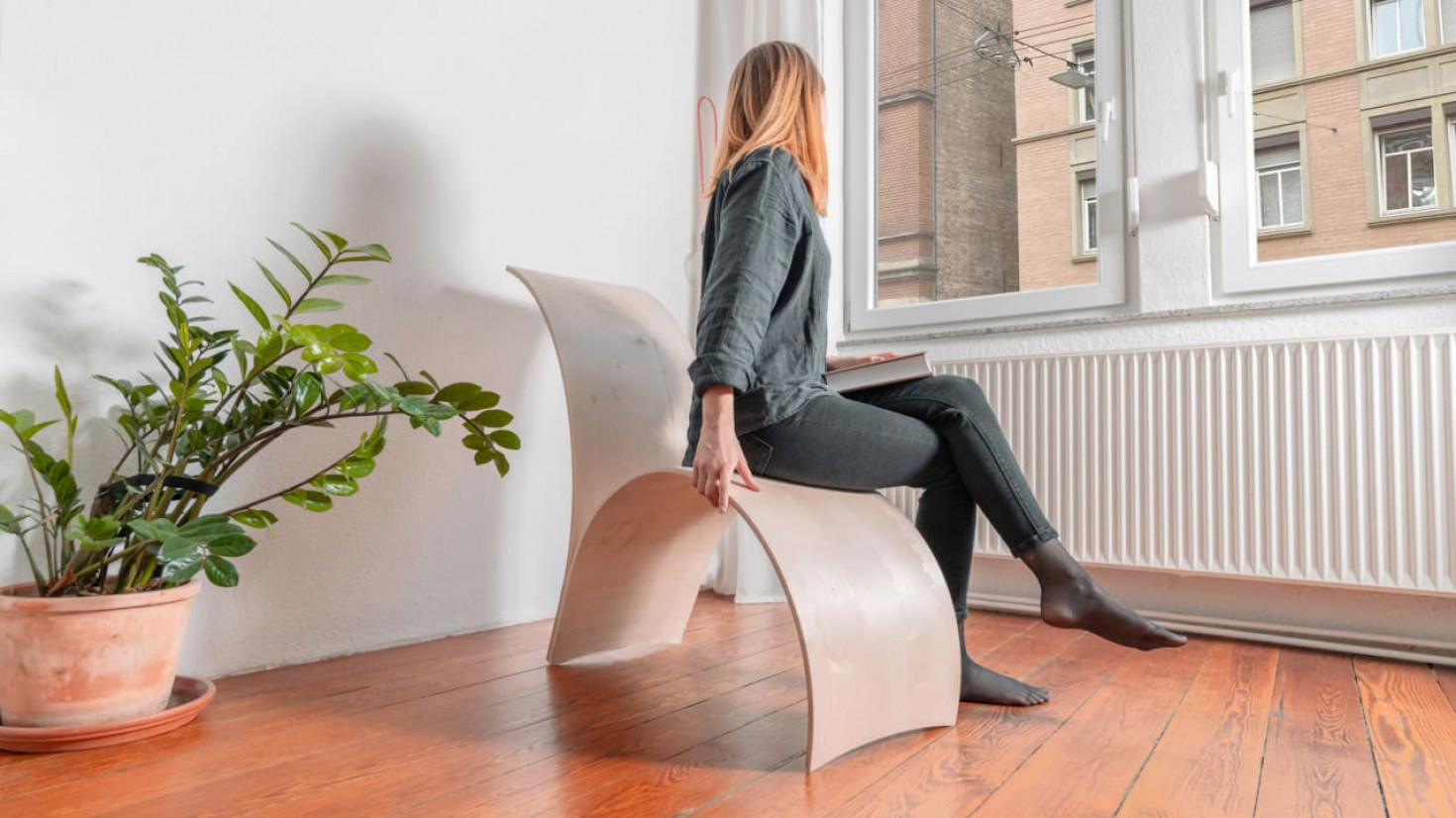
Look out, IKEA. This could be the future of building furniture at home.


Find the best Contract Furniture Industry jobs and hire the best talent.
